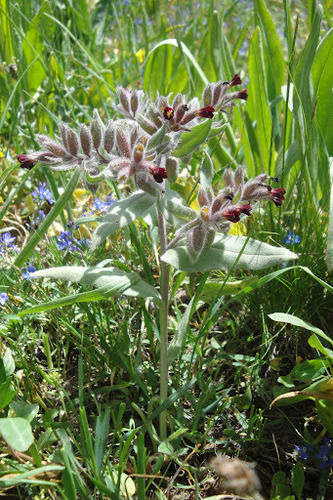
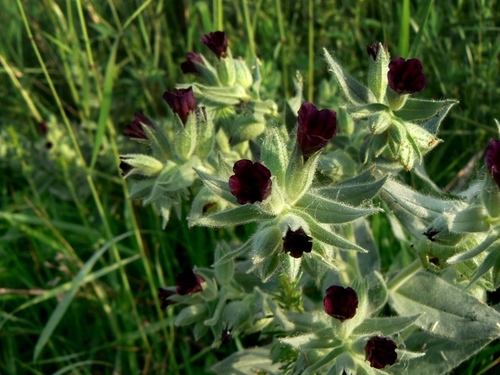
Cynoglossum officinale
L.
Hound's tongue
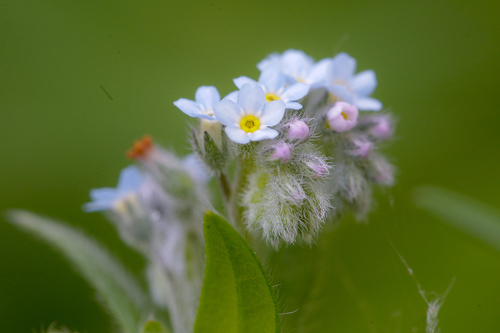
iNaturalist· cc-by-nc-sa
(c) K. Yasuhara, some rights reserved (CC BY-NC-SA)
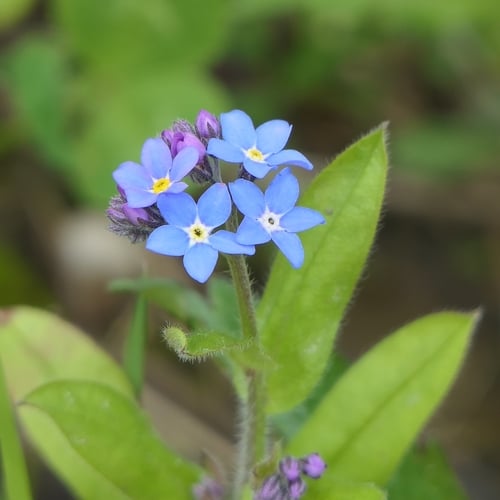
iNaturalist· cc-by-sa
(c) Douglas Goldman, some rights reserved (CC BY-SA), uploaded by Douglas Goldman
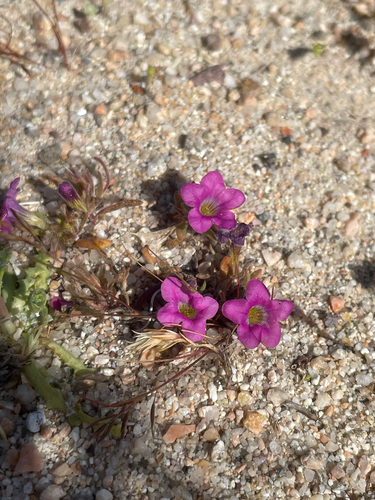
iNaturalist· cc-by-sa
(c) Matt Lavin, some rights reserved (CC BY-SA)
Summary
Source: WikipediaCynoglossum officinale (houndstongue, houndstooth, dog's tongue, gypsy flower, and rats and mice due to its smell) is a herbaceous plant of the family Boraginaceae.
Description
A small plant. It grows 0.5-1 m tall. It is covered with fine downy hairs. The lower leaves are simple and have leaf stalks. They are oblong or sword shaped and 15-30 cm long. The upper leaves are smaller and clasp the stem. The flowers are reddish-purple and small. They are 5-10 mm across. They droop in clusters. The flowers are funnel shaped. The fruit is a small prickly nut.
Edible Uses
Young leaves can be eaten raw or cooked, but have a disagreeable odour and taste. Caution is advised given the plant's toxicity.
Traditional Uses
The young leaves are used as a salad or cooked as a vegetable. They should only ever be eaten in small amounts. Caution: Some hesitancy has been raised about the alkaloids in this plant that can cause cancer.
Medicinal Uses
Hound's tongue has a long history of medicinal use, though it is rarely employed in modern herbalism. The leaves contain allantoin, which speeds up the body's healing process. Large doses taken internally can produce narcotic effects, and the plant is potentially carcinogenic, though it has also been used in cancer treatment. The leaves and roots are analgesic, antihaemorrhoidal, antispasmodic, astringent, digestive, emollient, and slightly narcotic. The plant contains the alkaloids cynoglossine and consolidin, which relieve pain by depressing the central nervous system and are also potentially carcinogenic. It has been used internally for coughs and diarrhoea, but is now mainly applied externally as a poultice for piles, wounds, minor injuries, bites, and ulcers. The root is harvested at the end of the plant's second spring, or according to another report, in autumn, then dried for later use. Leaves and flowering shoots are harvested as the plant comes into flower and dried for later use. The plant has a wide antitumour reputation for various types of cancer. A homeopathic remedy made from the roots is considered very effective for insomnia.
Known Hazards
Cynoglossum officinale contains tumorigenic pyrrolizidine alkaloids. It is toxic to cows and is especially dangerous to pasture owners.
Distribution
It is a temperate plant. It grows in dry fields and waste places. It needs moist, well-drained soil. It can grow in sun or part shade.
Where It Grows
Argentina, Asia, Australia, Britain, Canada, Europe, Germany*, Greece, Indonesia, Luxembourg, Mediterranean, North America, SE Asia, Slovenia, South America, Spain, Switzerland, Tasmania, Turkey, Türkiye,
Cultivation
Plants are grown from seed. They can also be grown from cuttings.
Propagation
Sow seed in situ in early summer. Seed can also be sown in spring or autumn; a period of cold stratification improves germination.
Other Uses
Leaves of Cynoglossum officinale have been used as a mole repellent in gardens and to protect stored vegetables and fruits from rodents.
Notes
There are between 50 and 75 Cynoglossum species. It contains pyrrolizidine alkaloids.
Also Known As
Bunga gipsi, Gypsy flower, Navadni pasji jezik
References (11)
- Bodkin, F., 1991, Encyclopedia Botanica. Cornstalk publishing, p 314
- Brown, D., 2002, The Royal Horticultural Society encyclopedia of Herbs and their uses. DK Books. p 188
- Cormack, R. G. H., 1967, Wild Flowers of Alberta. Commercial Printers Edmonton, Canada. p 278
- Ertug, F, Yenen Bitkiler. Resimli Türkiye Florası -I- Flora of Turkey - Ethnobotany supplement
- Facciola, S., 1998, Cornucopia 2: a Source Book of Edible Plants. Kampong Publications, p 51
Show all 11 references Hide references
- Hibbert, M., 2002, The Aussie Plant Finder 2002, Florilegium. p 79
- MacKinnon, A., et al, 2009, Edible & Medicinal Plants of Canada. Lone Pine. p 270
- Plants for a Future database, The Field, Penpol, Lostwithiel, Cornwall, PL22 0NG, UK. http://www.scs.leeds.ac.uk/pfaf/
- Sp. pl. 1:134. 1753
- Sukarya, D. G., (Ed.) 2013, 3,500 Plant Species of the Botanic Gardens of Indonesia. LIPI p 1101
- Uphof,