Cordia myxa
L.
Assyrian Plum, Sebastan tree
iNaturalist· cc-by-nc
(c) feno, some rights reserved (CC BY-NC), uploaded by feno
iNaturalist· cc-by-nc
(c) Andrius Petrašiūnas, some rights reserved (CC BY-NC)
iNaturalist· cc-by-nc
(c) Andrius Petrašiūnas, some rights reserved (CC BY-NC)
Summary
Source: WikipediaCordia myxa, also called Sebesten plum, Assyrian plum, Indian cherry, Glue berry, Lasura, or Bambar is a mid-sized, deciduous tree in the family Cordiaceae, native to Asia. It produces small, edible fruit and is found in warmer areas across Africa and Asia. It is found growing primarily in Asia, as well as, across the globe especially in tropical regions having the right type of geophysical environment. It is seen coming up naturally and growing abundantly from Myanmar in the east to Lebanon and Syria in the west. Its habitat starts at about 200 metres (660 ft) above mean sea level in the plains and ascends to an altitude around 1,500 metres (4,900 ft) in the hills.
Description
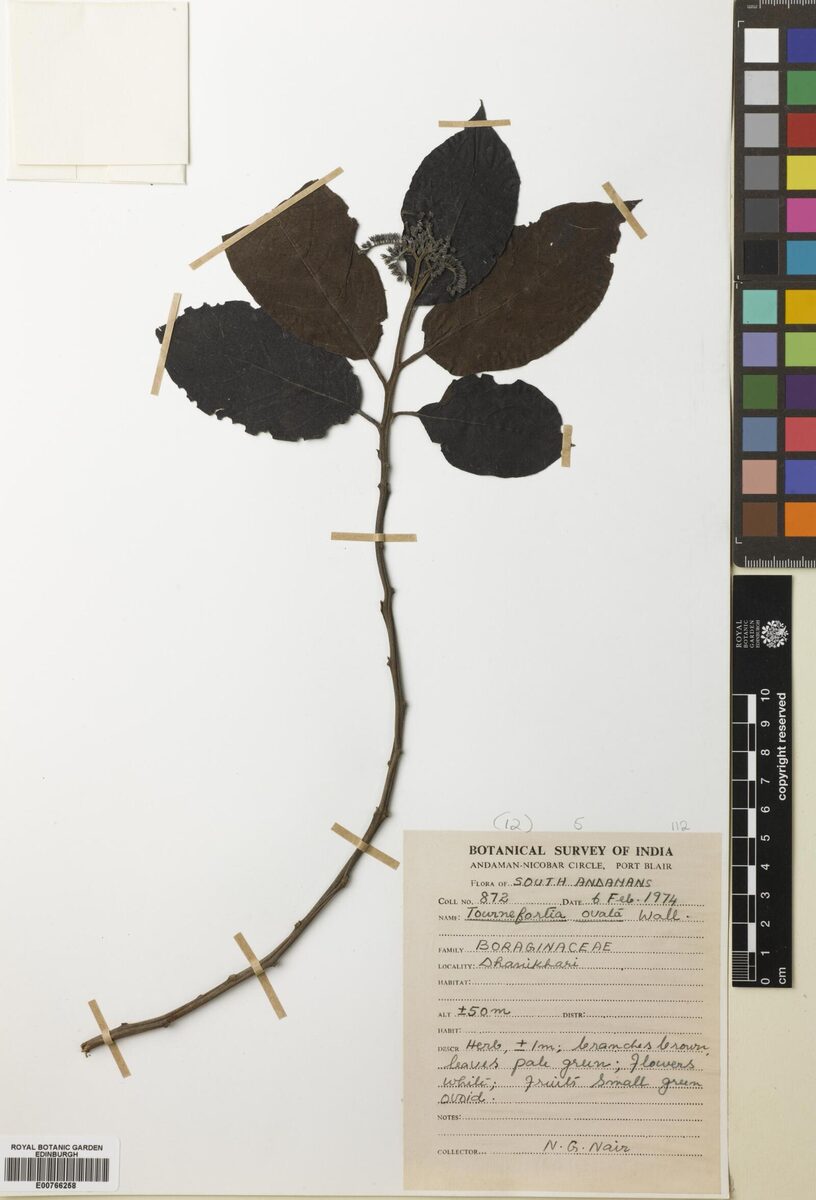
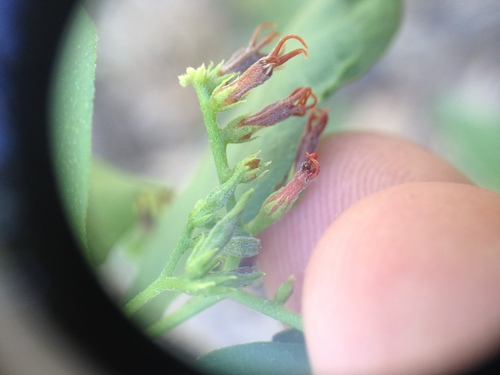
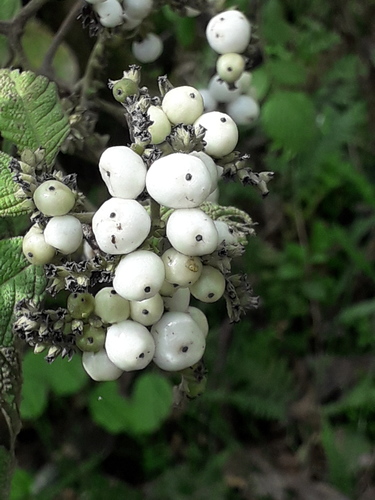
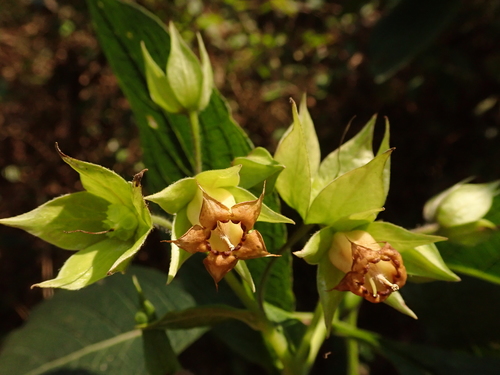
A shrubby evergreen tree. It grows to 12 m high. The trunk can be 1-1.5 m wide. The leaves are broad and pointed and have teeth along the edges. The male and female flowers are white or cream and in loose panicles at the ends of branches. The fruit are small and nutlike. They are yellow, orange-pink or black. It has sweet, sticky flesh.
Edible Uses
The ripe fruit are eaten fresh or mixed with honey to make sweetmeats. Young tender fruit are eaten as a vegetable, pickled, or dried and stored. Seed kernels are eaten. Leaves are boiled in water then mixed with salt and chilli peppers. Flowers are also eaten.
Traditional Uses
The leaves are boiled in water then mixed with salt and chilli peppers. The flowers are also eaten. The ripe fruit are eaten. They are mixed with honey to make a sweetmeat. The seed kernels are eaten. The young tender fruit are eaten as a vegetable. They are also pickled. They can be dried and stored.
Medicinal Uses
The leaves are boiled in water and mixed with salt and chilli peppers in traditional use.
Distribution
A tropical plant. It grows on rocky soils. It grows in dry to moist deciduous forests between 200-1,500 m above sea level. It can grow in deserts and arid conditions. It suits hardiness zones 11-12.
Where It Grows
Africa, Asia, Australia, Benin, Burkina Faso, Cameroon, Central Africa, China*, Comoros, Congo, Côte d'Ivoire, East Africa, Egypt, Ethiopia, Fiji, Gambia, Ghana, Guam, Guinea, Guinée, Guinea-Bissau, India, Indochina, Indonesia, Iraq, Iran, Ivory Coast, Laos, Madagascar, Malawi, Mali, Mauritius, Mediterranean, Middle East, Mozambique, Myanmar, New Caledonia, Nigeria, North Africa, Northeastern India, Pacific, Pakistan, Palestine, SE Asia, Senegal, Seychelles, Sierra Leone, Southern Africa, Sri Lanka, Sudan, Tanzania, Uganda, Vanuatu, Yemen, West Africa, Zambia, Zimbabwe,
Cultivation
Plants can be grown from seed. Seeds are soaked in cold water for 6 hours before planting and then germinate in 40-60 days. Seedlings in a nursery can be planted out after 4-6 months. It can also be grown by stem cuttings.
Propagation
Seed - very slow to germinate, the process can be sped up if the seed is scarified by lightly abrading the seedcoat to allow easier ingress of water. Pre-soak the seed in cold water for 6 hours before sowing - a germination rate of 50 - 80% can be expected, with the seed sprouting within 40 - 60 days. Young plants can be planted in their permanent positions 4 - 6 months later. Cuttings.
Other Uses
A fibre obtained from the stem bark is used to make twine and cordage. The fibre is also used for caulking boats. The fibrous bark is used for cordage. The green leaves are used for dyeing along with Morinda tinctoria. The juice of the fruit is used as a dye. There is a substance in the fruit that will stain linen, but not indelibly. The ash of the young branches is used to make soap. The sticky, mucilaginous pulp of the fruit is used as a glue. The leaves are used as plates. The wood has been used as fire-sticks. The yellow-brown wood is soft but strong, easy to polish. It is used for furniture making, cabinet work, well curbs, boats and agricultural implements. The wood makes an excellent fuel. The plant is used in shelter-belts in semi-arid regions to prevent soil erosion. Used as a shade tree in coffee plantations in Yemen.
Production
It is fairly fast growing. It starts flowering when 3-5 years old. It flowers and fruits all year round. Fruit ripen in 30-45 days. A tree can produce 20 kg of fruit is a year.
Other Information
It is fairly commonly used in West Africa.
Notes
There are about 300 Cordia species.
Nutrition
| Part | Moisture | kJ | kcal | Protein | Vit A | Vit C | Iron | Zinc |
|---|---|---|---|---|---|---|---|---|
| Nuts dried | 5.6 | 2103 | 510 | 34.8 | — | — | — | — |
| Fruit | 66.4 | 577 | 138 | 2.1 | — | — | 0.3 | 0.6 |
| Leaves | 64 | 272 | 65 | 5.1 | — | — | 7.2 | — |
Synonyms
Also Known As
Balatha, Bhokri, Clammy-cherry, Glue berry, Gonda, Goy, Gundi, Idondo, Iriki, Lamotinalika, Lasoda, Lasura, Magora, Nakerachettu, N'tegue, Pohon lasura, Samadjo, Sapistan, Sebesten-plum, Selu, Shelti, Sudan teak, Taung-thanut, Thanat, Vidi maram, Wadganda
References (47)
- Abbiw, D.K., 1990, Useful Plants of Ghana. West African uses of wild and cultivated plants. Intermediate Technology Publications and the Royal Botanic Gardens, Kew. p 46
- Aberoumand, A., 2008, Comparison of protein values from seven wild edible plants of Iran. African Journal of Food Science. Vol 2. pp 73-76
- Aberoumand, A. and Deokule, S. S., 2009, Determination of Elements Profile of Some Wild Edible Plants. Food Anal. Methods. 2:116-119
- Ambe, G., 2001, Les fruits sauvages comestibles des savanes guinéennes de Côte-d’Ivoire : état de la connaissance par une population locale, les Malinké. Biotechnol. Agron. Soc. Environ. 5(1), 43-48
- Angami, A., et al, 2006, Status and potential of wild edible plants of Arunachal Pradesh. Indian Journal of Traditional Knowledge 5(4) October 2006, pp 541-550
Show all 47 references Hide references
- Awas, T., 1997, A Study on the Ecology and Ethnobotany of Non-cultivated Food Plants and Wild Relatives of Cultivated crops in Gambella Region, Southwestern Ethiopia. Addis Ababa University. p 42
- Bailey, F. M., 1913, Comprehensive Catalogue of Queensland Plants. Queensland Government. p 338
- Barwick, M., 2004, Tropical and Subtropical Trees. A Worldwide Encyclopedic Guide. Thames and Hudson p 133
- Bourret, D., 1981, Bonnes-Plantes de Nouvelle-Caledonie et des Loyaute. ORSTOM. p 87
- Burkill, H. M., 1985, The useful plants of west tropical Africa, Vol. 1. Kew.
- Cooper, W. and Cooper, W., 2004, Fruits of the Australian Tropical Rainforest. Nokomis Editions, Victoria, Australia. p 93
- Cribb, A.B. & J.W., 1976, Wild Food in Australia, Fontana. p 27
- Diarra, N. et al, 2016, Etude ethnobotanique des plantes alimentaires utilisées en période de soudure dans les régions Sud du Mali. Int. J. Biol. Chem. Sci. 10(1): 184-197
- Etherington, K., & Imwold, D., (Eds), 2001, Botanica's Trees & Shrubs. The illustrated A-Z of over 8500 trees and shrubs. Random House, Australia. p 225
- Facciola, S., 1998, Cornucopia 2: a Source Book of Edible Plants. Kampong Publications, p 93
- Flora of Pakistan. www.eFloras.org
- Food Composition Tables for use in East Asia FAO http://www.fao.org/infoods/directory No. 465
- Fox, F. W. & Young, M. E. N., 1982, Food from the Veld. Delta Books. p 133
- GAMMIE,
- Gueye, M., et al, 2014, Wild Fruits Traditionally Gathered by the Malinke Ethnic Group in the Edge of Niokolo Koba Park (Senegal). American Journal of Plant Sciences 5, 1306-1317
- Hahn, K., et al, 2018, The Use of Wild Plants for Food: a National Scale Analysis for Burkina Faso (West Africa) Flora et Vegetatio Sudano-Sambesica 21, 25-33
- Hazarika, B. et al. (2020). An overview of the unexplored underutilized fruit crops of Assam, India. Journal of Applied and Natural Science, 12(3): 442 - 453
- Hedrick, U.P., 1919, (Ed.), Sturtevant's edible plants of the world. p 217
- IRVINE,
- Jardin, C., 1970, List of Foods Used In Africa, FAO Nutrition Information Document Series No 2.p 33, 130
- Kala, C. P., 2009, Aboriginal uses and management of ethnobotanical species in deciduous forests of Chhattisgarh state in India. Journal of Ethnobiology and Ethnomedicine. 5:32
- Kannan, M., et al, 2015, Ethnobotanical survey on wild edible plants of Kalrayan Hills, Salem District, Tamil Nadu, India. Global J. Res. Med Plants & Indigen. med. 4(12): 236-246
- Kenneally, K.E., Edinger, D. C., and Willing T., 1996, Broome and Beyond, Plants and People of the Dampier Peninsula, Kimberley, Western Australia. Department of Conservation and Land Management. p 72
- Khan, D. & Shaukat, S.S., 2006, The Fruits of Pakistan: Diversity, Distribution, Trends of Production and Use. Int. J. Biol. Biotech., 3(3):463-499
- Kiple, K.F. & Ornelas, K.C., (eds), 2000, The Cambridge World History of Food. CUP p 1762
- Martin, F.W. & Ruberte, R.M., 1979, Edible Leaves of the Tropics. Antillian College Press, Mayaguez, Puerto Rico. p 179
- Marwat, S. K., 2011, Medico-ethnobotanical studies of edible wild fruit plants species from the flora of northwestern Pakistan (D. I. Khan district). Journal of Medicinal Plants Research Vol. 5(16) pp 3679-3686.
- Oudhia, P., 2007. Cordia myxa L. [Internet] Record from Protabase. Schmelzer, G.H. & Gurib-Fakim, A. (Editors). PROTA (Plant Resources of Tropical Africa), Wageningen, Netherlands. < http://database.prota.org/search.htm>. Accessed 15 October 2009.
- Paul, A., 2013, Minor and uncultivated fruits of Eastern India, 2nd International Symposium on Minor Fruits and Medicinal Plants
- SAXENA,
- SHORTT,
- Singh, D. et al, 2014, Local wild plants from the Thar Desert for improved health and food security. in Promotion of Underutilized Indigenous Food Resources for Food Security and Nutrition in Asia and Pacific. FAO. Bangkok p 147
- Smith, A.C., 1991, Flora Vitiensis Nova, Lawaii, Kuai, Hawaii, Volume 5 p 155
- Sp. pl. 1:190. 1753
- Sukarya, D. G., (Ed.) 2013, 3,500 Plant Species of the Botanic Gardens of Indonesia. LIPI p 209
- Thaman, R. and W. Clarke, Paper on Agroforestry on Aneityum and Tanna, Vanuatu from Internet
- USDA, ARS, National Genetic Resources Program. Germplasm Resources Information Network - (GRIN). [Online Database] National Germplasm Resources Laboratory, Beltsville, Maryland. Available: www.ars-grin.gov/cgi-bin/npgs/html/econ.pl (10 April 2000)
- Vivien, J., & Faure, J.J., 1996, Fruitiers Sauvages d'Afrique. Especes du Cameroun. CTA p 84
- WATT,
- Wheeler, J.R.(ed.), 1992, Flora of the Kimberley Region. CALM, Western Australian Herbarium, p 767
- Wiersema, J. H. & Leon, B., 2013, World Economic Plants. A Standard Reference CRC Press. 2nd Ed. p 199
- World Checklist of Useful Plant Species 2020. Royal Botanic Gardens, Kew