Cordia monoica
Roxb.
Sandpaper cordia, Cork bush
iNaturalist· cc-by-nc
(c) Troos van der Merwe, some rights reserved (CC BY-NC), uploaded by Troos van der Merwe
iNaturalist· cc-by-nc
(c) Benjamin Morris, some rights reserved (CC BY-NC)
iNaturalist· cc-by-nc
(c) Benjamin Morris, some rights reserved (CC BY-NC)
Summary
Source: WikipediaCordia monoica, the sandpaper saucer-berry, or snot berry, is a species of flowering tree in the family Cordiaceae, that is native to India, Sri Lanka and in African countries from Sudan, Ethiopia, Somalia, Kenya, Zimbabwe down to South Africa.
Description
A shrub. It has several stems. It grows up to 6-15 m tall. The bark is blue-grey. It is fibrous and peels off in strips. The leaves are broad and oval. They are 5-8 cm long. The leaf edges are slightly toothed. The upper leaf surface is like sandpaper to touch. It is softly hairy underneath. The leaf stalks is 2 cm long. The small branches, leaf stalks and flower stalks are covered with dense rusty hairs. The flowers are pale yellow. They have a sharp smell. They occur in clusters near the ends of branches. Each flower in the shape of a tube and is about 1 cm across. The fruit are oval and pointed. They are yellow-orange and soft when ripe. They are 2 cm long and held in a case of leaves covering about one third of their length. The pulp of the fruit is edible. There is a single seed inside.
Edible Uses
The ripe fruit pulp is edible and eaten fresh, peeled, with the seed discarded. The fruit are especially popular with children.
Traditional Uses
The ripe fruit are eaten fresh. They are peeled and the seed discarded.
This uses section is brief — help expand it
Medicinal Uses
The leaves are used in the treatment of chest pain. The leaves are used to treat eye diseases. The leaves and stem bark are used in a steam bath to treat leprosy, whilst the body is also washed with a decoction made from the pounded bark. The roots are used tin the treatment of vomiting and malaria. .
Known Hazards
The seed should be discarded before eating.
Distribution
A tropical plant. It grows in wet forest as well as in low lying grassland. In East Africa it grows from sea level to 2,200 m altitude. It can grow in arid places.
Where It Grows
Africa, Angola, Arabia, Asia, Botswana, Burundi, Central Africa, Congo, East Africa, East Timor, Eswatini, Ethiopia, India, Indonesia, Kenya, Mauritius, Middle East, Mozambique, Myanmar, Namibia, SE Asia, Somalia, South Africa, Southern Africa, Sri Lanka, Sudan, Swaziland, Tanzania, Timor-Leste, Uganda, Zambia, Zimbabwe,
Cultivation
Plants can be grown from seed. Seed can be collected from fruit which fall to the ground. The seed should be dried carefully. Soaking seed for 6 hours helps them to grow.
Propagation
Seed - slow to germinate, soaking the seed for 6 hours prior to sowing can improve germination rates.
Other Uses
The leaves are very rough and are used as a sandpaper. The wood is tough and used for building poles, bows, withies, walking sticks, clubs and pestles. The wood is used for fuel.
Production
The plant is slow growing. Fruit are collected during the dry season.
Other Information
The fruit are eaten especially by children.
Notes
There are about 300 Cordia species.
Synonyms
Also Known As
Adebot, Bagalmo, Bagharimo, Kithei, Lilovu lelimnyama, Lilovu lelimnyama, Marergom, Mdawi Msenha, Medero, Mendhero, Mine gure, Msasa, Msowowi, Mugotahozi, Muthii, Nruveli, Nthei, Oseki, Pohon amplas, Pohon teo-tea, Qotte, Somboro, Subula, Taparer, Tole etta, Tolohota, Tolo'ota, Toloqota, Tonta
References (35)
- Addis, G., Asfaw, Z & Woldu, Z., 2013, Ethnobotany of Wild and Semi-wild Edible Plants of Konso Ethnic Community, South Ethiopia. Ethnobotany Research and Applications. 11:121-141
- Addis, G., et al, 2013, The Role of Wild and Semi-wild Edible Plants in Household Food Sovereignty in Hamer and Konso Communities, South Ethiopia. Ethnobotany Research & Applications. 11:251-271
- Anywar, G., et al, 2014, Wild Plants Used as Nutraceuticals from Nebbi District, Uganda. European Journal of medicinal Plants. 4(6):641-660
- Bahru, T., et al, 2013, Wild Edible Plants: Sustainable Use and Management by Indigenous Communities in and the Buffer Area of Awah National Park, Ethiopia. Ethiop. J. Sci., 36(2): 93-108
- Bussman, R. W., 2006, Ethnobotany of the Samburu of Mt. Nyiru, South Turkana, Kenya. Journal of Ethnobiology and Ethnomedicine. 2:35
Show all 35 references Hide references
- Cowie, I, 2006, A Survey of Flora and vegetation of the proposed Jaco-Tutuala-Lore National Park. Timor-Lests (East Timor) www.territorystories.nt/gov.au p 45 (Subsp. subpubescens)
- Cunningham, 1985,
- Feyssa, D. H., et al, 2011, Seasonal availability an consumption of wild edible plants in semiarid Ethiopia; Implications to food security and climate change adaptation. Journal of Horticulture and Forestry 3(5): 138-149
- Ethiopia: Famine Food Field Guide. http://www.africa.upenn.edu/faminefood/category3.htm
- Fowler, D. G., 2007, Zambian Plants: Their Vernacular Names and Uses. Kew. p 15
- Katende, A.B., Birnie, A & Tengnas B., 1995, Useful Trees and Shrubs for Uganda. Identification, Propagation and Management for Agricultural and Pastoral Communities. Technical handbook No 10. Regional Soil Conservation Unit, Nairobi, Kenya. p 206
- Kebebew, M. & Leta, G., 2016, Wild Edible Plant Bio-diversity and Utilization System in Nech Sar National Park, Ethiopia. International Journal of Bio-resource and Stress Management 2016, 7(4):885-896
- Long, C., 2005, Swaziland's Flora - siSwati names and Uses http://www.sntc.org.sz/flora/
- Lovett, J. C. et al, Field Guide to the Moist Forest Trees of Tanzania. p 29
- Lulekal, E., et al, 2011, Wild edible plants in Ethiopia: a review on their potential to combat food insecurity. Afrika Focus - Vol. 24, No 2. pp 71-121
- Lyle, S., 2006, Discovering fruit and nuts. Land Links. p 152
- Maundu, P. et al, 1999, Traditional Food Plants of Kenya. National Museum of Kenya. 288p
- Mbuvi, M. T. E., et al, 2019, Annonated checklist of plant species of Loita Forest Narok County, Kenya. Int. J. Adv. Res. Biol. Sci. (2019). 6(3): 54-110
- Mbuya, L.P., Msanga, H.P., Ruffo, C.K., Birnie, A & Tengnas, B., 1994, Useful Trees and Shrubs for Tanzania. Regional Soil Conservation Unit. Technical Handbook No 6. p 204
- Mutie, F. G., 2020, Conservation of Wild Food Plants and Their Potential for Combatting Food Insecurity in Kenya as Exemplified by the Drylands of Kitui County. Plants 2020, 9, 1017
- Mutie, F. M., et al, 2023, Important Medicinal and Food Taxa (Orders and Families) in Kenya, Based on Three Quantitative Approaches. Plants 2023, 12, 1145
- Newman, 1970,
- Ojelel, S., et al, 2019, Wild edible plants used by communities in and around selected forest reserves of Teso-Karamoja region, Uganda. Journal of Ethnobiology and Ethnomedicine (2019) 15:3
- Pakia, M., 2000, Plant Ecology and Ethnobotany of two sacred forests (Kayas) at the Kenya Coast. M. Sc. Thesis.
- Palmer & Pitman, 1972,
- Peters, C. R., O'Brien, E. M., and Drummond, R.B., 1992, Edible Wild plants of Sub-saharan Africa. Kew. p 71
- Ramachandran, V. S., 2007, Wild edible plants of the Anamalais, Coimbatore district, western Ghats, Tamil Nadu. Indian Journal or Traditional Knowledge. 6(1) pp 173-176
- Royal Botanic Gardens, Kew (1999). Survey of Economic Plants for Arid and Semi-Arid Lands (SEPASAL) database. Published on the Internet; http://www.rbgkew.org.uk/ceb/sepasal/internet [Accessed 4th April 2011]
- Ruffo, C. K., Birnie, A. & Tengnas, B., 2002, Edible Wild Plants of Tanzania. RELMA p 232
- Schmidt, E., Lotter, M., & McCleland, W., 2007, Trees and shrubs of Mpumalanga and Kruger National Park. Jacana Media p 570
- Sivakumar, A. & Murugesan, M., 2005, Ethnobotanical Studies of the wild edible plants used by the tribals of the Anaimalai Hills, the Western Ghats. Ancient Science of Life. XXV(2) Oct-Dec.
- Sukarya, D. G., (Ed.) 2013, 3,500 Plant Species of the Botanic Gardens of Indonesia. LIPI p 208
- Swaziland's Flora Database http://www.sntc.org.sz/flora
- Termote, C., et al, 2014, Assessing the potential of wild foods to reduce the cost of a nutritionally adequate diet: An example from eastern Baringo District, Kenya. Food and Nutrition Bulletin, vol. 35, no. 4
- World Checklist of Useful Plant Species 2020. Royal Botanic Gardens, Kew
More from Boraginaceae
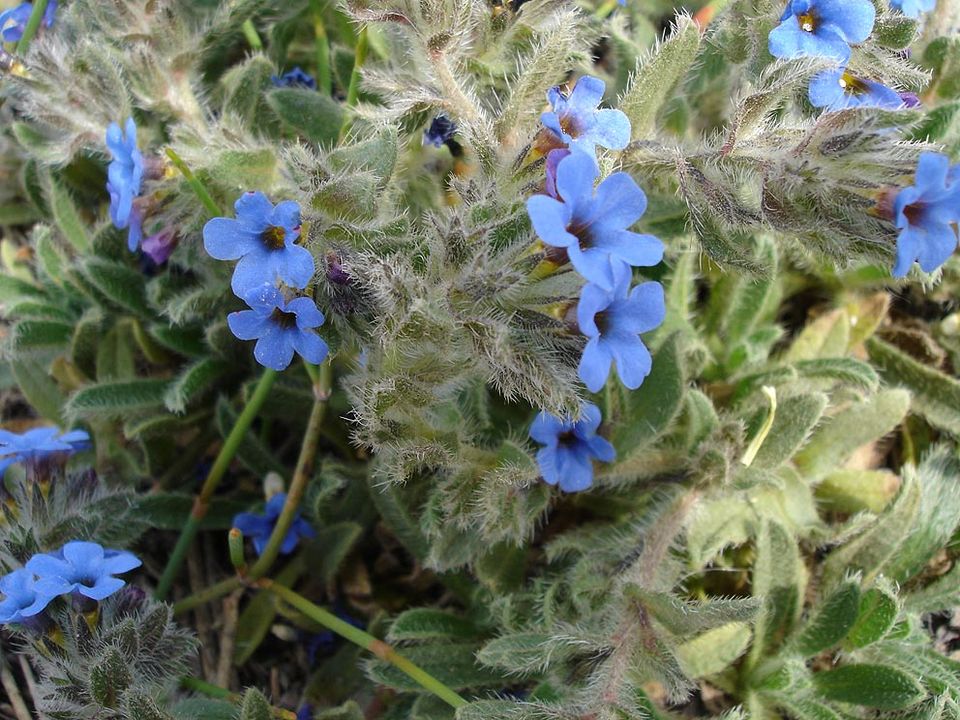
Alkanna lehmannii
Alkanet, Spanish Bugloss, Dyer's Bugloss
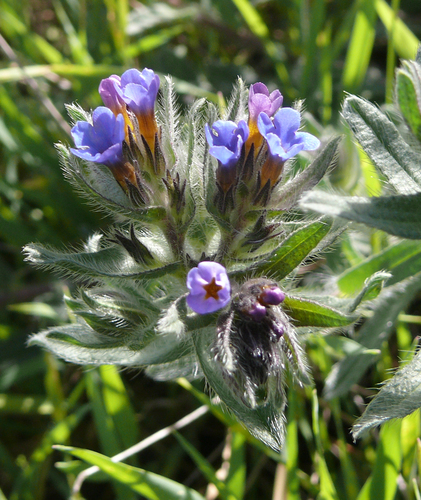
Alkanna tinctoria
Alkanna
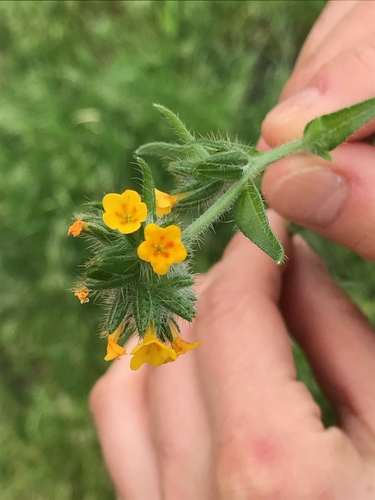
Amsinckia lycopsoides
Yellow Burrweed, Tarweed fiddleneck, Bugloss fiddle-neck
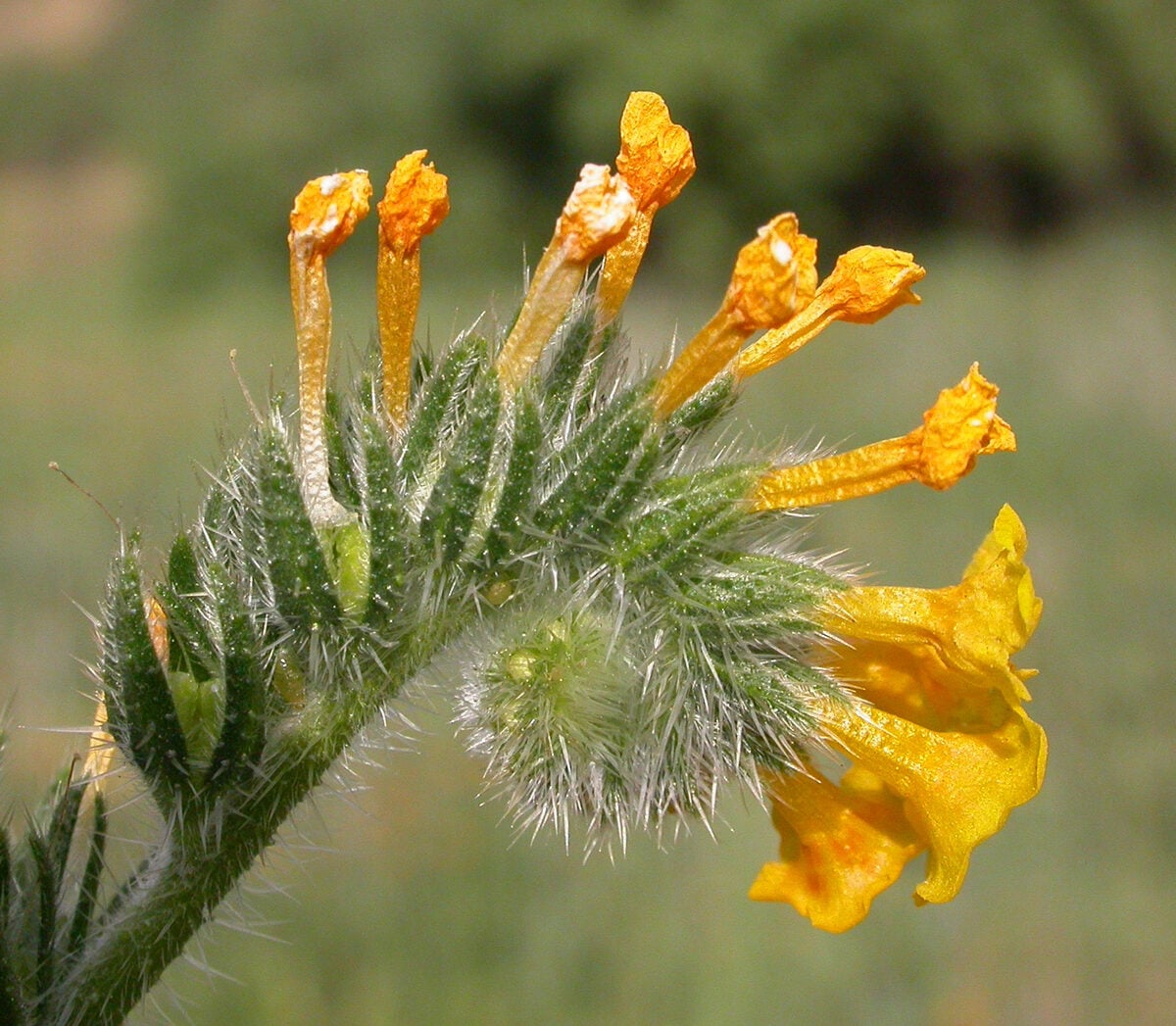
Amsinckia menziesii
Menzies fiddleneck
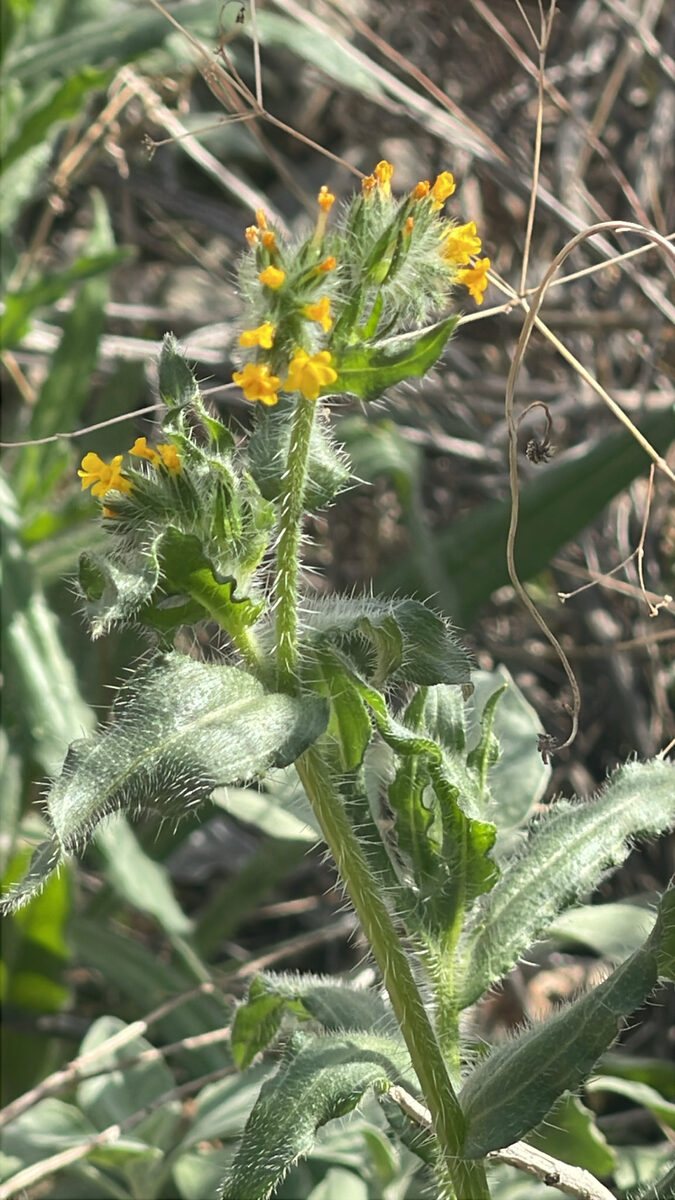
Amsinckia menziesii var. intermedia - (Fisch. & C.A.Mey.) ined.
Common Fiddleneck
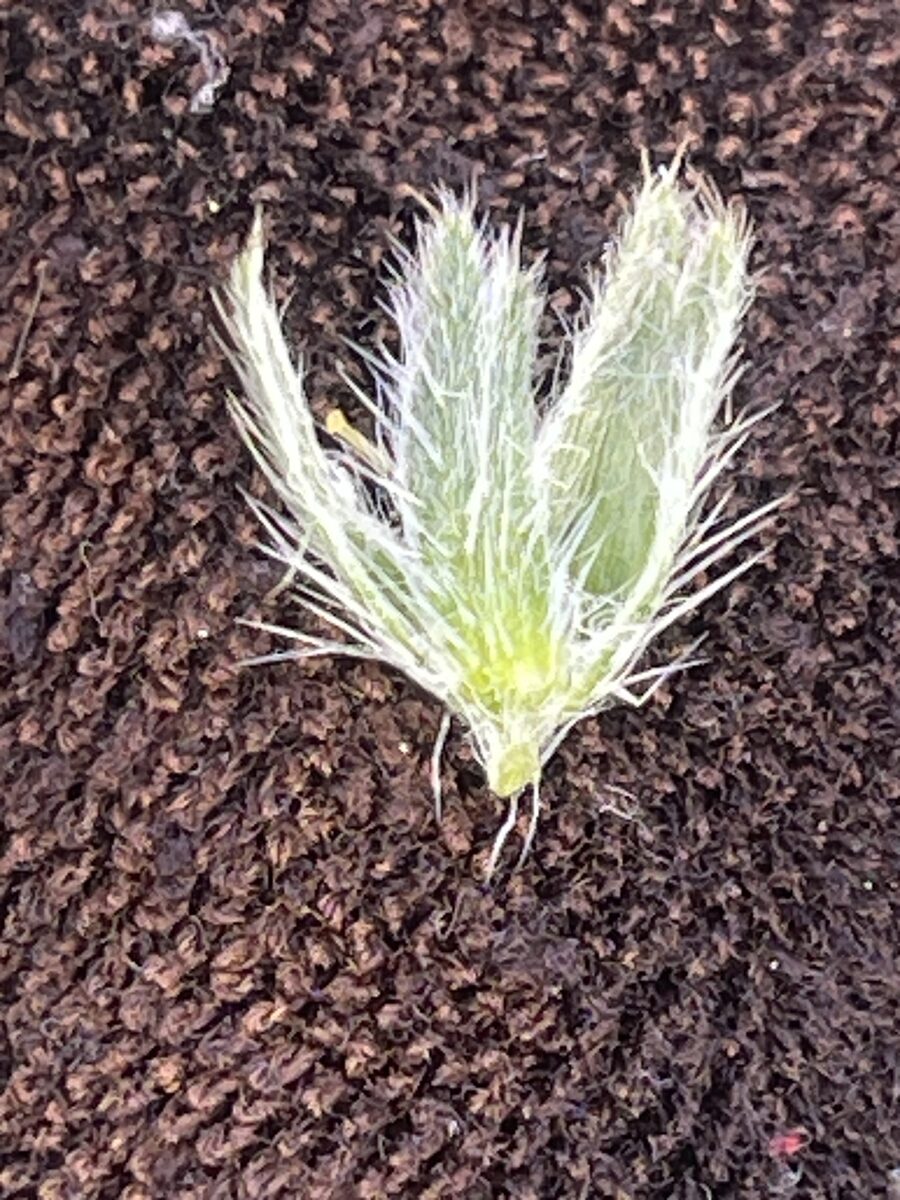
Amsinckia tesselata
Bristly Fiddleneck