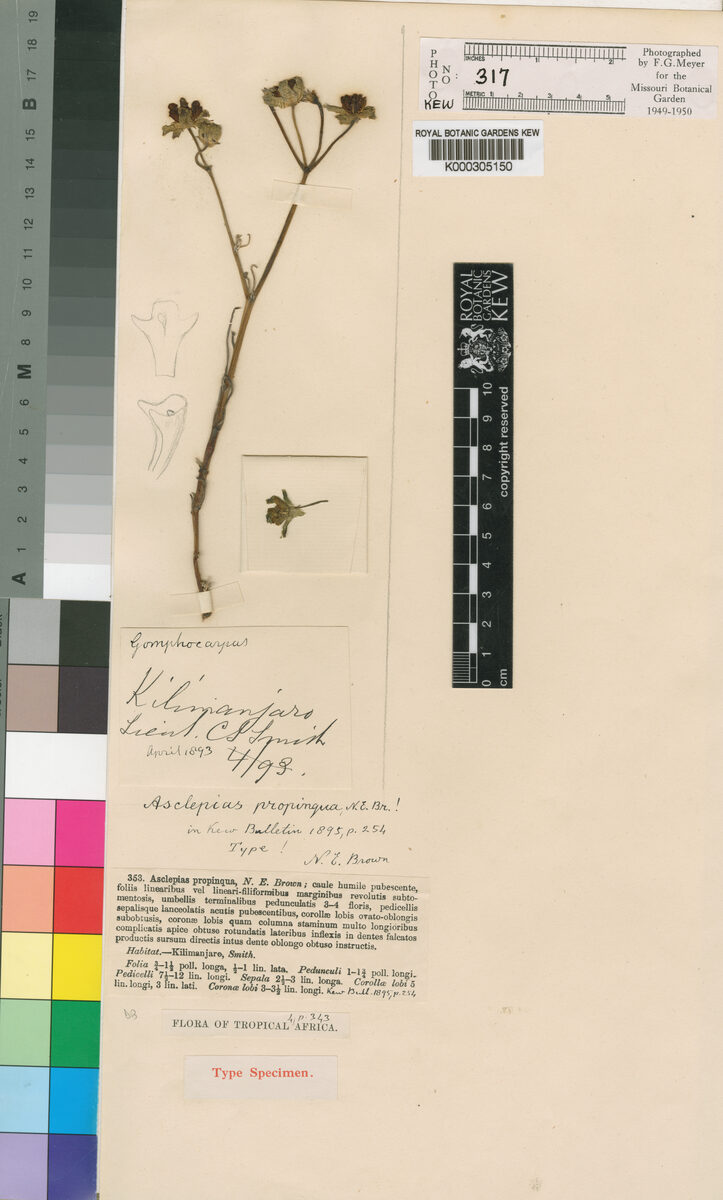
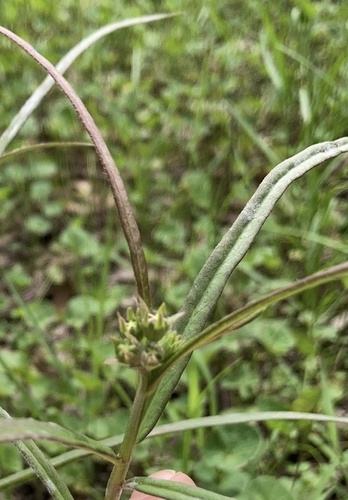
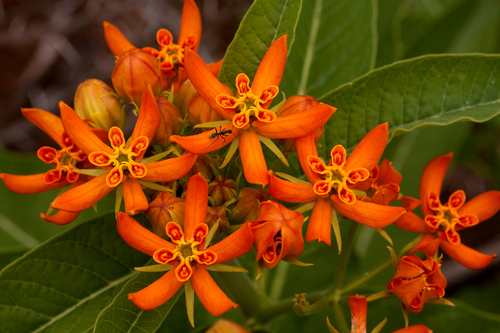
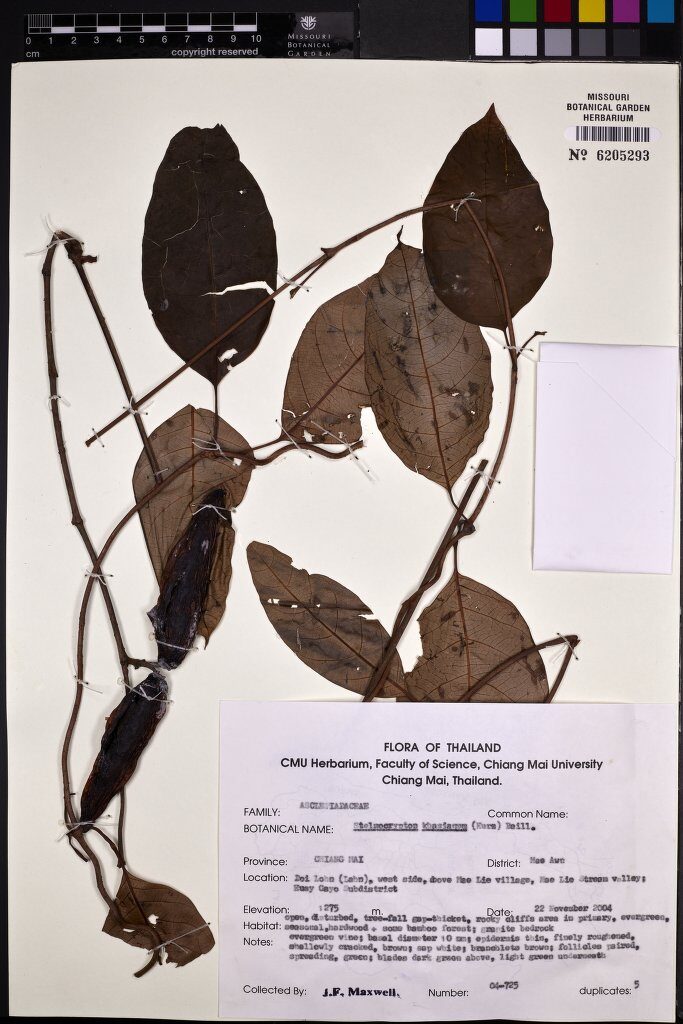
Cynanchum tunicatum
(Retz.) Alston.
Coated swallow-wort, Few flowered cynanchum
iNaturalist· cc-by-nc
(c) Michael and Nancy van der Poorten, some rights reserved (CC BY-NC), uploaded by Michael and Nancy van der Poorten
Description
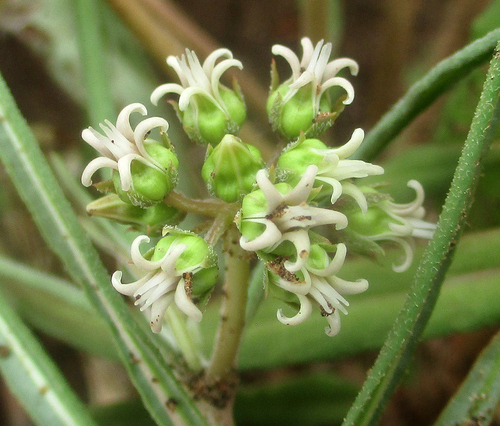
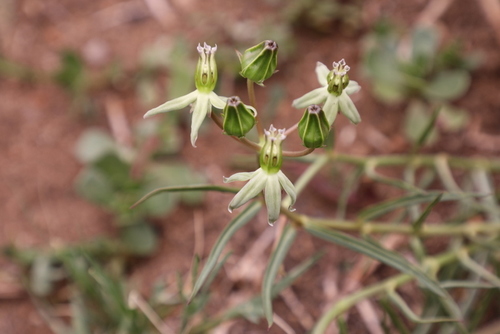
A climbing herb. It grows 1-2 m long. The stems are slender. It contains milky sap. The leaves are oval and 5-7 cm long. They have a heart shaped base and taper towards the tip. The leaf stalk is 2-3 cm long. The flowers are cream to pink and 6-8 mm long. The petals are oblong. The fruit are seed pods 5-6 cm long. They are sword shaped.
Edible Uses
The young leaves are used as a relish or side dish.
Traditional Uses
CAUTION: Many Cynanchum are poisonous. The young leaves are used as a relish.
This uses section is brief — help expand it
Known Hazards
Many Cynanchum species are poisonous; use with caution as this genus contains toxic forms.
Distribution
A tropical plant. It grows in poor soils in drier places at altitudes from 50 to 1200 metres.
Where It Grows
Asia, India, Sri Lanka,
Notes
There are about 150 Cynanchum species.
Synonyms
Also Known As
Chagul-pati, Kang-koombala, Panchali
References (7)
- Ambasta, S.P. (Ed.), 2000, The Useful Plants of India. CSIR India. p 156 (As Cynanchum pauciflorum)
- Burkill, I.H., 1966, A Dictionary of the Economic Products of the Malay Peninsula. Ministry of Agriculture and Cooperatives, Kuala Lumpur, Malaysia. Vol 1 (A-H) p 738 (As Cynanchum pauciflorum)
- Famine foods
- Martin, F.W. & Ruberte, R.M., 1979, Edible Leaves of the Tropics. Antillian College Press, Mayaguez, Puerto Rico. p 177 (As Cynanchum pauciflorum)
- SWARUPANANDAN,
Show all 7 references Hide references
- WATT (Also as Cynanchum pauciflorum)
- World Checklist of Useful Plant Species 2020. Royal Botanic Gardens, Kew