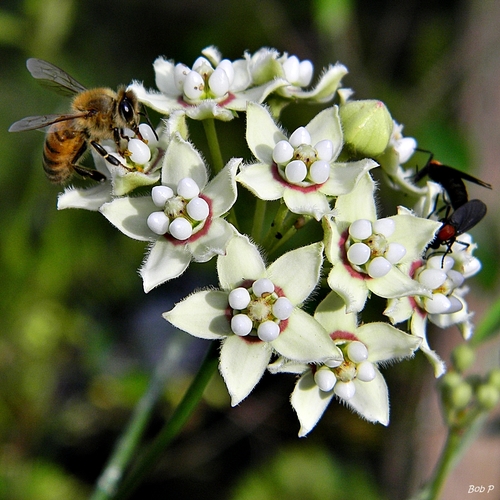
Lacmellea panamensis
(Woodson) Markgr.
Panama lacmellea
iNaturalist· cc-by
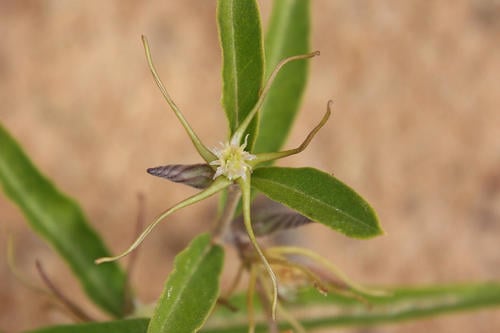
(c) Geoff Shuetrim, some rights reserved (CC BY), uploaded by Geoff Shuetrim
iNaturalist· cc-by-nc
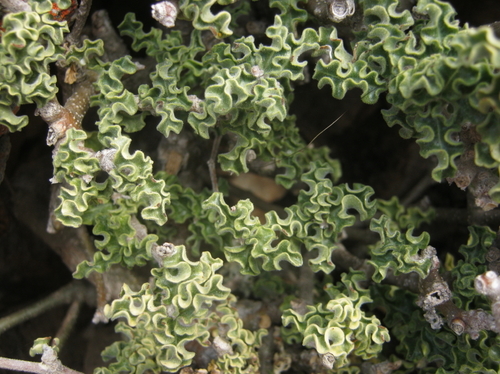
(c) Marvin López M., some rights reserved (CC BY-NC)
iNaturalist· cc-by-nc
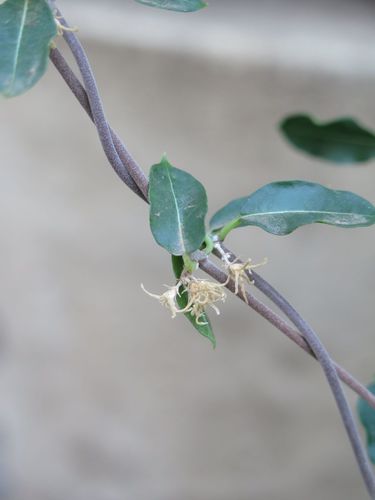
(c) Marvin López M., some rights reserved (CC BY-NC)
Summary
Source: WikipediaLacmellea panamensis is a species of tree in the family Apocynaceae native to Costa Rica, Panama, Nicaragua, Colombia, and Ecuador. It is a medium-sized tree, with a straight trunk, that is scattered with conical spines that are rather blunt, a distinctive feature of the species. Its leaves are around 10 centimetres (3.9 in) long, spaced evenly along branches, simple in shape, dark green and if damaged produce a white latex. Their flowers are white and around 3 centimetres (1.2 in) long thin tubes and develop into yellow berries of 3 cm in diameter. Its seeds weigh around 0.25 grams (0.0088 oz) and when they germinate the cotyledons remains underground, acting as an energy store. In an artificial experiment, 80% of seedlings were able to survive having their leaves removed, or being placed in deep shade (0.08% of full sunlight), making them relatively shade tolerant.
Description
A medium sized tree. The trunk is straight and has cone shaped spines. The leaves are simple and opposite. They are dark green and occur in a flat plane. They are spaced regularly along the branches. Broken leaves produce latex. The flowers are in clusters on the branches near the leaves. The flowers have long white tubes. The fruit are berries.
Edible Uses
Fruit. The fruit is a yellow, spherical berry around 4cm in diameter, containing 2 seeds. The latex has been used as a milk substitute in coffee.
Medicinal Uses
The latex is used as a galactagogue to promote milk production in nursing mothers.
Distribution
It is a tropical plant. It grows in wet, lower mountain regions.
Where It Grows
Belize, Central America, Colombia, Costa Rica, Ecuador, El Salvador, Guatemala, Honduras, Panama, South America,
Cultivation
The plant has a main period of flowering, but also flowers sporadically throughout the year. The fruits ripen slowly and sporadically, with a few falling to the ground sporadically thoughout the year as they become fully ripe. All parts of the plant exude a thick white latex when broken.
Other Uses
We have no specific information for this species, but the latexes of several South American species of Lacmellea have been used as chewing gum, as an additive to rubber, and as a milk substitute in coffee. The wood is hard and of fine quality. It has many uses.
Synonyms
Also Known As
Cerillo, Escupidijo, Espinudo, Iguano, Lagarto negro, Leche de vaca, Lagarto negro, Lirio, Perillo, Pumarejo
References (4)
- Condit, R., et al, 2011, Trees of Panama and Costa Rica. PrincetonField Guides. p 64
- Grandtner, M. M., 2008, World Dictionary of Trees. Wood and Forest Science Department. Laval University, Quebec, Qc Canada. (Internet database http://www.wdt.qc.ca)
- Grandtner, M. M. & Chevrette, J., 2013, Dictionary of Trees, Volume 2: South America: Nomenclature, Taxonomy and Ecology. Academic Press p 340
- Roa, J. A. G. & Boada, D. S. G., 2018, Fundación para el Fortalecimiento de la Fruticultura y Plantas Alimenticias no Convencionales en Colombia.