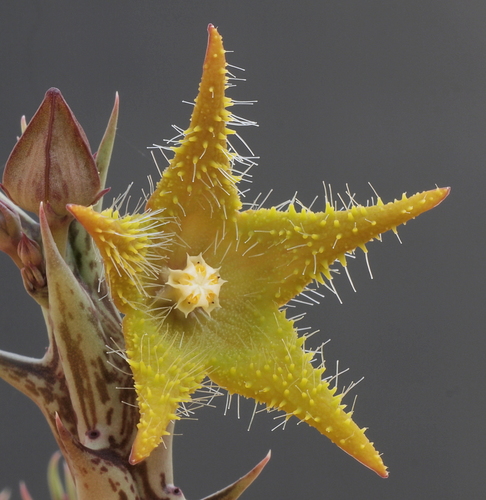
Cynanchum caudatum
(Miq.) Maxim.
Vincetoxin
iNaturalist· cc-by
(c) Andrea Gantzer, some rights reserved (CC BY)
iNaturalist· cc0
no rights reserved
iNaturalist· cc0
no rights reserved
Summary
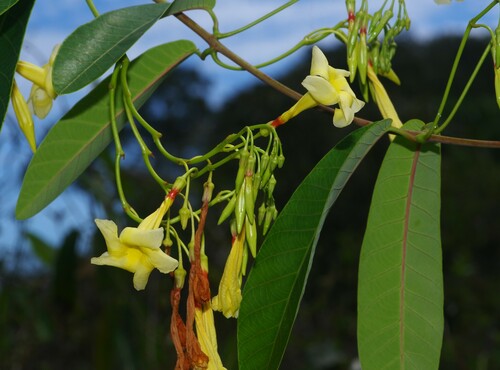
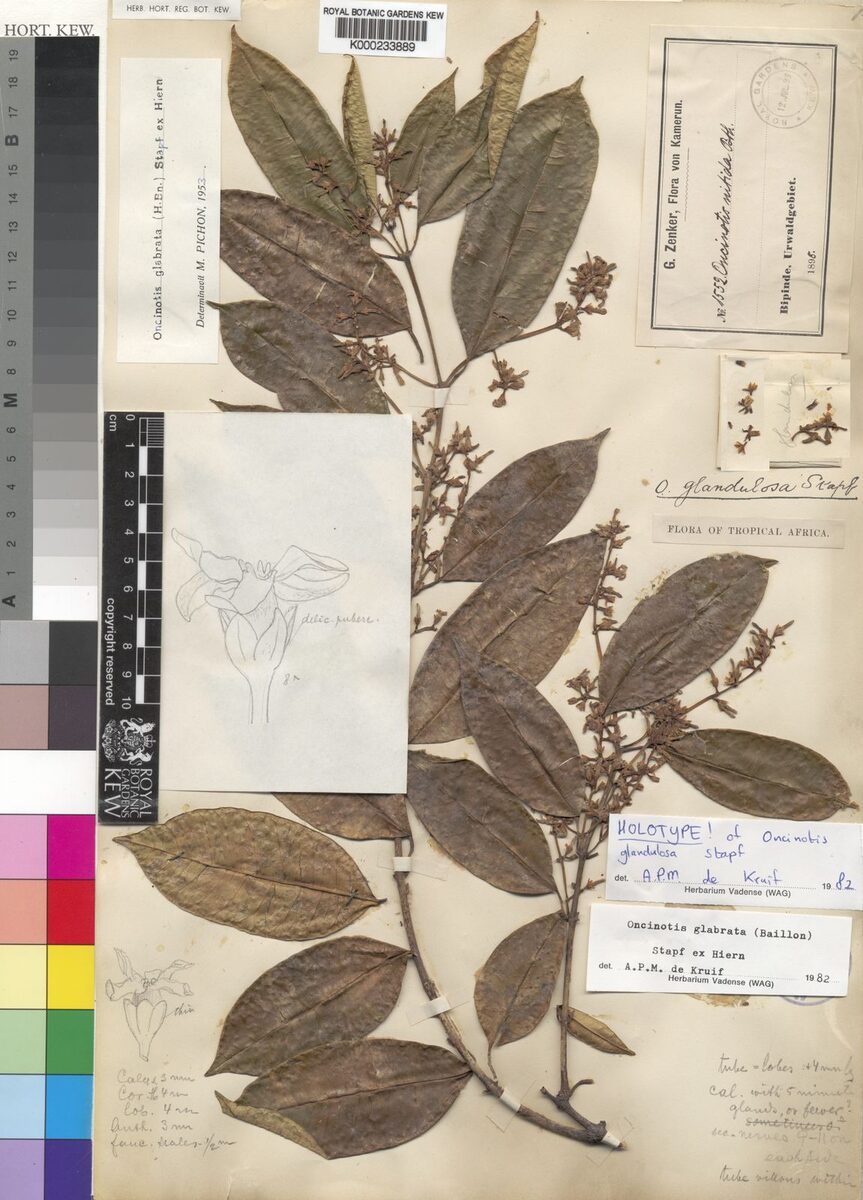
Perennial climber flowering July to August with hermaphrodite insect-pollinated flowers. Accommodates light sandy, medium loamy, and heavy clay soils at mildly acidic to basic pH levels. Grows in semi-shade or full light with preference for moist soil.
Description
Perennial climber flowering July to August with hermaphrodite insect-pollinated flowers. Accommodates light sandy, medium loamy, and heavy clay soils at mildly acidic to basic pH levels. Grows in semi-shade or full light with preference for moist soil.
Edible Uses
The root can be eaten after cooking, but must be thoroughly leeched first in order to remove its toxins and reduce bitterness.
Traditional Uses
CAUTION: The root contains cynanchotoxin, which can induce paralysis. The root is peeled, sliced, and boiled in several changes of water then washed and boiled again.
Medicinal Uses
The rhizome is diuretic. A decoction is used in the treatment of liver cirrhosis, ascites, poor digestion, accumulation-caused abdominal pain, gonorrhoea, and leucorrhoea.
Distribution
It is a temperate plant. It grows in open woodland, thickets at 2500 m altitude in China.
Where It Grows
Afghanistan, Asia, Australia ?, Bhutan, China, Himalayas, India, Japan, Kashmir, Nepal, Pakistan, Russia, SW Asia,
Propagation
Sow seed in spring in a greenhouse. Once seedlings are large enough to handle, prick them out into individual pots and grow on under cover for at least their first winter before planting into permanent positions in late spring or early summer, after the last expected frosts. Division can be carried out in spring.
Other Uses
None known
Notes
The root contains cynanchotoxin, which can induce paralysis. There are about 150 Cynanchum species. An unresolved name in The Plant List.
Synonyms
References (6)
- Burkill, I.H., 1966, A Dictionary of the Economic Products of the Malay Peninsula. Ministry of Agriculture and Cooperatives, Kuala Lumpur, Malaysia. Vol 1 (A-H) p 738
- Li Ping-tao; Michael G. Gilbert, W. Douglas Stevens, ASCLEPIADACEAE Flora of China.
- Lim, T. K., 2015, Edible Medicinal and Non Medicinal Plants. Volume 9, Modified Stems, Roots, Bulbs. Springer p 31
- Plants for a Future database, The Field, Penpol, Lostwithiel, Cornwall, PL22 0NG, UK. http://www.scs.leeds.ac.uk/pfaf/
- READ
Show all 6 references Hide references
- Williams, D., 2017, Ainu Ethnobiology. Contributions in Ethnobiology. Society of Ethnobiology.