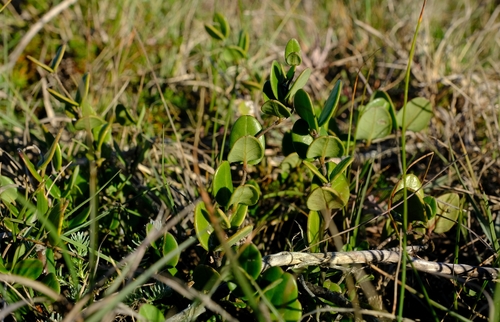
Asclepias eriocarpa
Benth.
Indian milkweed, Woollypod milkweed
iNaturalist· cc-by-nc
(c) A. Gray, some rights reserved (CC BY-NC), uploaded by A. Gray
iNaturalist· cc-by-nc
(c) Chris Nelson, some rights reserved (CC BY-NC), uploaded by Chris Nelson
iNaturalist· cc-by-nc
(c) nathantay, some rights reserved (CC BY-NC)
Summary
Source: WikipediaAsclepias eriocarpa is a species of milkweed known by the common names woollypod milkweed, Indian milkweed, and kotolo. It is a perennial herb that grows in many types of habitats.
Description
A herb. It grows erect and keeps growing from year to year. It grows 90 cm tall. It usually have thick white hairs. The leaves are sword shaped and pairs or rings or 3 to 4. The flowers are in a large flattened cluster. They are white or cream with a pink tinge. The fruit is a large woolly follicle.
Edible Uses
Edible Parts: Edible Uses: Gum Edible parts (after boiling): Sap (as gum), possibly young shoots and flowers. Traditional Use in US: Luiseño (Payómkawichum) people made chewing gum from dried sap. Flavor: Limited reports; likely bitter-acrid if not thoroughly boiled [2-3]. A gum obtained from the latex in the stems can be used for chewing. It is usually boiled in water first until it coagulates and is sometimes mixed with oil.
Traditional Uses
The latex has been used as a chewing gum. It is boiled in water until it coagulates.
This uses section is brief — help expand it
Medicinal Uses
Antiasthmatic Skin Sternutatory Warts A decoction of the plant, and a salve made from it, is used in the treatment of colds. The milky sap is applied on a regular basis to corns in order to gradually remove them. It is also applied to cuts, sores and warts. The powdered dried roots are inhaled to cause sneezing. Smoke from the burning dried plant is inhaled as a treatment for asthma.
Known Hazards
Although no specific reports have been seen for this species, many, if not all, members of this genus contain toxic resinoids, alkaloids and cardiac glycosides. They are usually avoided by grazing animals. The plant is said to be poisonous to sheep.
Distribution
It is a Mediterranean climate plant. It grows in dry areas. It suits USDA hardiness zones 7-10.
Where It Grows
Mexico, North America, USA,
Cultivation
Prefers a well-drained light rich or peaty soil in full sun. Succeeds in poor soils. This species is not very hardy in Britain, the plants may need root protection in severe winters but if this is applied as a mulch then it should be removed before new growth begins in the spring because plants are particularly at risk from slugs. Many members of this genus seem to be particularly prone to damage by slugs. The young growth in spring is especially vulnerable, but older growth is also attacked and even well-established plants have been destroyed in wet years. Plants resent root disturbance and are best planted into their final positions whilst small. The flower of many members of this genus can trap insects between its anther cells, the struggles of the insect in escaping ensure the pollination of the plant.
Propagation
Seed - best sown in a greenhouse as soon as it is ripe in the autumn or in late winter. We have also had good results from sowing the seed in the greenhouse in early spring, though stored seed might need 2 - 3 weeks cold stratification. Germination usually takes place in 1 - 3 months at 18°c. As soon as the seedlings are large enough to handle, prick them out into individual pots and grow them on in the greenhouse for their first winter. Plant out when they are in active growth in late spring or early summer and give them some protection from slugs until they are growing away strongly. Division in spring. With great care since the plant resents root disturbance. Pot the divisions up and place them in a lightly shaded position in the greenhouse until they are growing away strongly, then plant them out in the summer, giving them some protection from slugs until they are established.. Basal cuttings in late spring. Use shoots about 10cm long with as much of their white underground stem as possible. Pot them up individually and place them in a lightly shaded position in a greenhouse until they are rooting and growing actively. If the plants grow sufficiently, they can be put into their permanent positions in the summer, otherwise keep them in the greenhouse until the following spring and when they are in active growth plant them out into their permanent positions. Give them some protection from slugs until they are established.
Other Uses
Fibre Gum Latex A fibre from the stems is used for ropes, clothing etc. The fresh stems are soaked in water, or the dried and decaying stems basted with boiling water, in order to remove the fibre. Rubber can be made from latex in the stems and leaves. The leaves contain up to 2.4% latex. Special Uses
Notes
There are 100 Asclepias species. It is used as medicine.
Synonyms
Also Known As
Woollypod Milkweed (Asclepias eriocarpa)
References (4)
- Beckstrom-Sternberg, Stephen M., and James A. Duke. "The Foodplant Database." http://probe.nalusda.gov:8300/cgi-bin/browse/foodplantdb.(ACEDB version 4.0 - data version July 1994)
- Ferns, Plants For a Future
- Kermath, B. M., et al, 2014, Food Plants in the Americas: A survey of the domesticated, cultivated and wild plants used for Human food in North, Central and South America and the Caribbean. On line draft. p 95
- Pl. hartw. 323. 1849