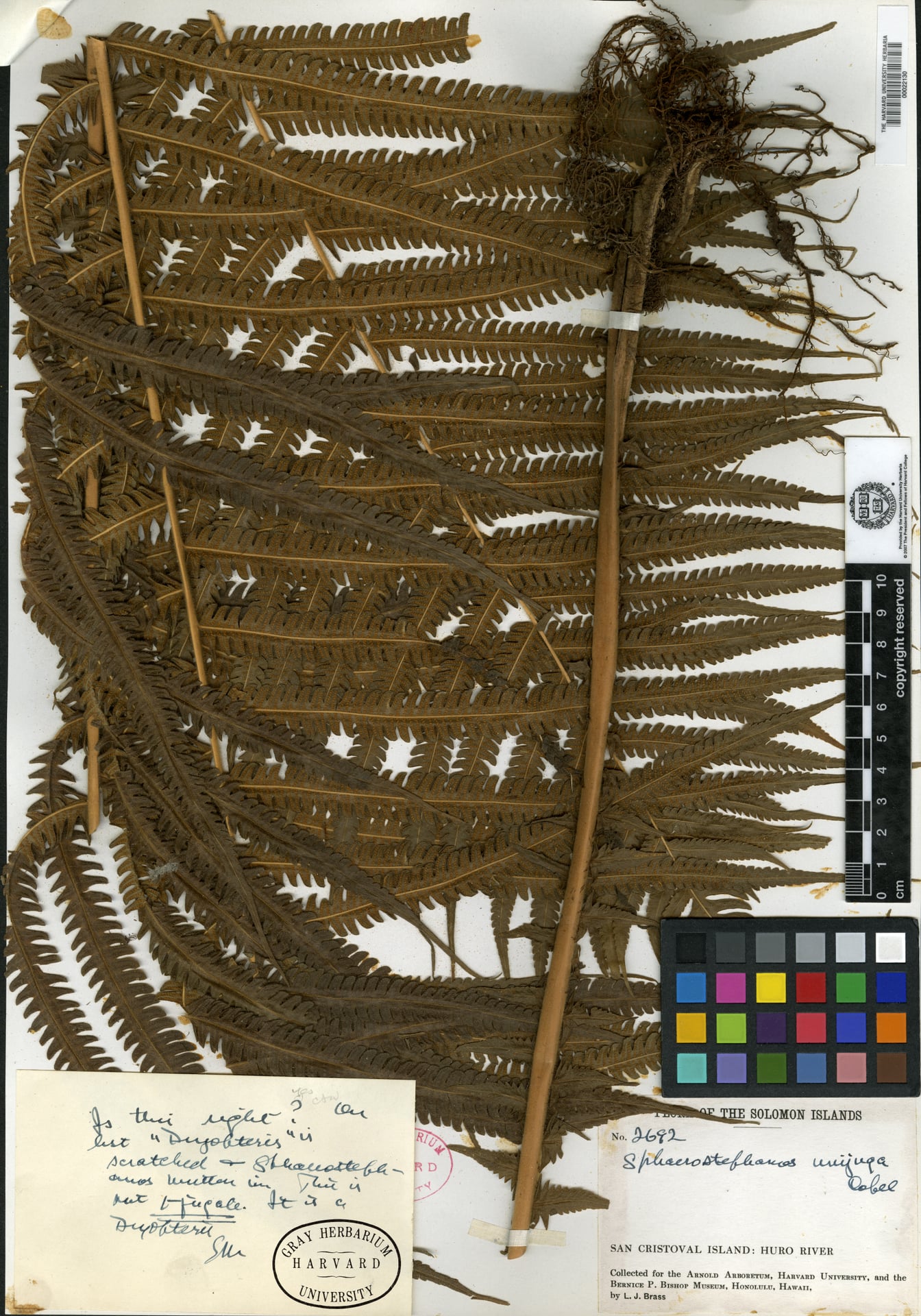
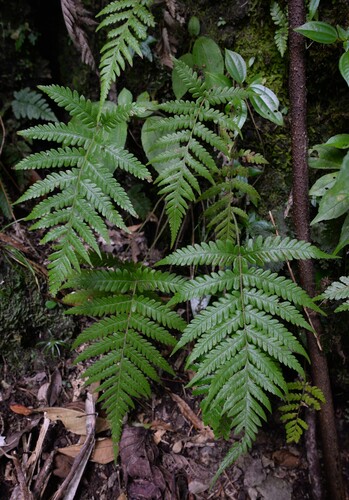
Cyclosorus interruptus
(Willd.) H. Ito
Hottentot fern, Willdenow's fern
iNaturalist· cc0
no rights reserved, uploaded by 葉子
iNaturalist· cc-by-nc
(c) Carrie Tribble, some rights reserved (CC BY-NC)
Summary
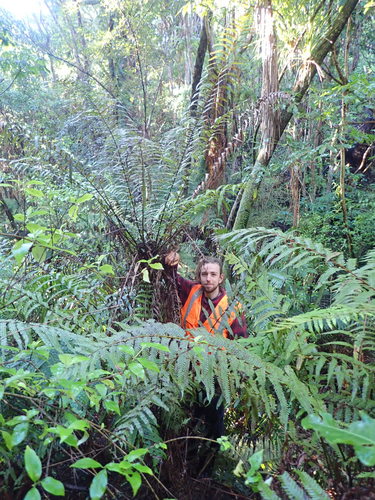
Source: WikipediaCyclosorus interruptus, the Hottentot fern or swamp shield-fern, is a fern in the family Thelypteridaceae. It is native to the tropics and subtropics in many parts of the world. In the New World, it is found from Mexico to Argentina, and in the Antilles. In the Old World, it is found in India, China, Malaysia, Sri Lanka and South Africa. It is also found in Australia, New Zealand, Hawaii and other islands in the Pacific Ocean. The various populations differ with respect to genetic cytotypes, glands, pubescence, and frond size. Its habitat is the vicinity of freshwater swamps and it may reach 1 m (3 ft 3 in) in height.
Description
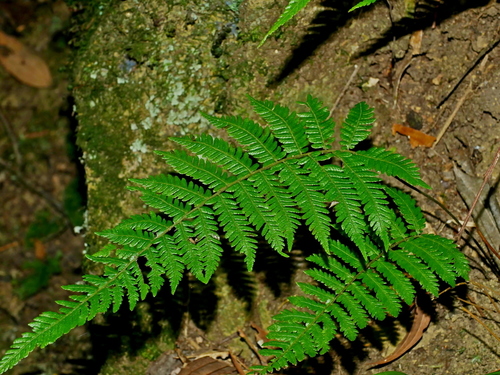
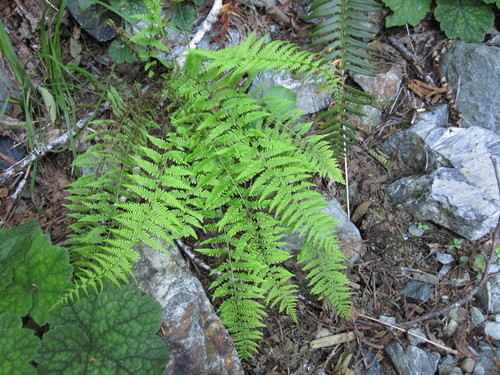
A medium sized fern. It grows 0.5-1.6 m high. It forms extensive spreading patches. The rootstock is creeping and has many branches. The fronds are erect, leathery and dark green. They can be 1 m long. The segments of the fronds are lobed and sword shaped. They are largest at the base of the frond. The largest leaflets are 8-15 cm long by 1-1.8 cm wide. They are leathery. There are hairs on the veins underneath the leaf. The stalk has papery scales on it. The fruit spot of spores are under the leaf in a zigzag line along the edge of the leaf.
Edible Uses
The young growing point, young fronds, and roasted roots are eaten.
Traditional Uses
The young growing point and young fronds have been recorded as eaten. The roots are roasted and eaten.
This uses section is brief — help expand it
Medicinal Uses
C. interruptus is used in herbal medicine for sores, liver diseases, gonorrhea, cough, and malaria.
Distribution
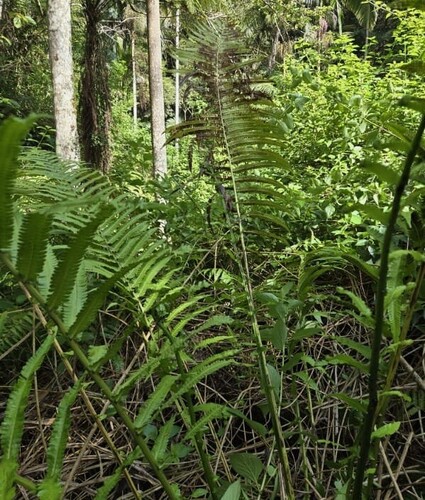
A tropical plant. It grows in swamps. It can grow in wet clay soil and sunny locations. It can grow in drier areas with shade. It can stand frost. In Papua New Guinea it grows from sea level to 1,500 m altitude but mostly it is at low altitudes below 50 m. Geelong Botanical Gardens.
Where It Grows
Africa, Algeria, American Samoa, Angola, Argentina, Asia, Australia, Botswana, Brazil, Central America, Chad, China, Congo DR, East Africa, East Timor, Eswatini, Ethiopia, Gambia, Kenya, Indochina, Madagascar, Malawi, Malaysia, Maldives, Mauritius, Mexico, Mozambique, New Zealand, Nicaragua, North America, Pacific, Panama, Papua New Guinea, PNG, SE Asia, Senegal, South Africa, Southern Africa, Sri Lanka, Sudan, Swaziland, Taiwan, Tanzania, Timor-Leste, USA, Venezuela, Vietnam, Zambia, Zimbabwe,
Cultivation
It can be grown from division of the rhizome or from spores.
Notes
There are now only 2 recognised Cyclosorus species. Others are now in other genera.
Synonyms
Also Known As
Kulhlhahavaali, Vao tuaniu
References (18)
- Andrews, S.B., 1990, Ferns of Queensland. A handbook to the ferns and fern allies. Queensland DPI p 359
- Chaffey, C.H., 1999, Australian Ferns. Growing them successfully. Kangaroo Press. p 134
- Chai, T., et al, 2015, Cytotoxicity and Antiglucosidase Potential of Six Selected Edible and Medicinal ferns. Acta Poloniae Pharmaceutica ñ Drug Research, Vol. 72 No. 2 pp. 297- 401.
- Cherikoff V. & Isaacs, J., The Bush Food Handbook. How to gather, grow, process and cook Australian Wild Foods. Ti Tree Press, Australia p 194
- Cowie, I, 2006, A Survey of Flora and vegetation of the proposed Jaco-Tutuala-Lore National Park. Timor-Lests (East Timor) www.territorystories.nt/gov.au p 53
Show all 18 references Hide references
- Crowe, A., 1997, A Field Guide to the Native Edible Plants of New Zealand. Penguin. p 159
- Elliot, W.R., & Jones, D.L., 1984, Encyclopedia of Australian Plants suitable for cultivation. Vol 3. Lothian. p 150
- Kenneally, K.E., Edinger, D. C., and Willing T., 1996, Broome and Beyond, Plants and People of the Dampier Peninsula, Kimberley, Western Australia. Department of Conservation and Land Management. p 51
- Leach, G.J., Osborne, P.L., 1985, Freshwater Plants of Papua New Guinea. UPNG Press, p 72
- Lim, T. K., 2015, Edible Medicinal and Non Medicinal Plants. Volume 9, Modified Stems, Roots, Bulbs. Springer p 30
- Paczkowska, G. & Chapman, A.R., 2000, The Western Australian Flora. A Descriptive Calatogue. Western Australian Herbarium. p 27
- Pham-Hoang Ho, 1999, An Illustrated Flora of Vietnam. Nha Xuat Ban Tre. p 131
- Setshogo, M. P., 2005, Preliminary checklist of the plants of Botswana. Southern African Botanical Diversity Network Report No. 37. SABONET, Pretoria and Gaborone.
- Sujanapal, P., & Sankaran, K. V., 2016, Common Plants of Maldives. FAO & Kerala FRI, p 102
- Swaziland's Flora Database http://www.sntc.org.sz/flora
- Topp, J. M. W., 1988, An Annotated Check List of the Flora of Diego Garcia, British Ocean Territory. Atoll Research Bulletin No. 313
- World Checklist of Useful Plant Species 2020. Royal Botanic Gardens, Kew (As Thelypteris interrupta)
- www.eFloras.org Flora of China