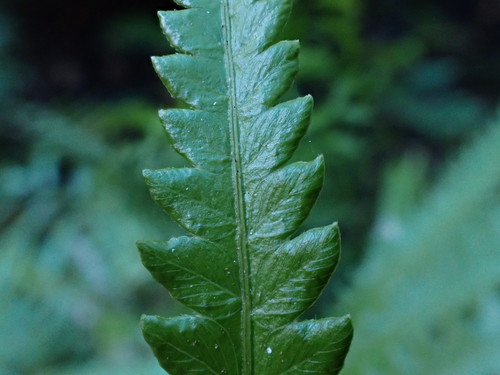
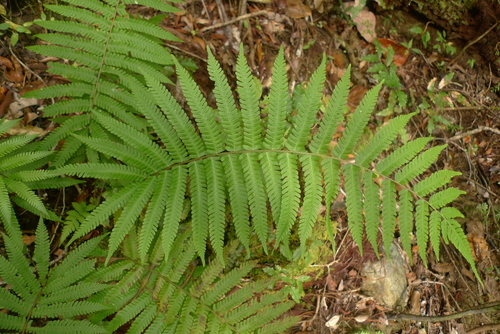
Christella dentata
(Forssk.) Brownsel & Jermy
Binung fern
iNaturalist· cc-by-nc
(c) Simon Nicholas, some rights reserved (CC BY-NC), uploaded by Simon Nicholas
iNaturalist· cc0
no rights reserved, uploaded by Peter de Lange
iNaturalist· cc-by-nc-sa
(c) Nick Lambert, some rights reserved (CC BY-NC-SA), uploaded by Nick Lambert
Summary
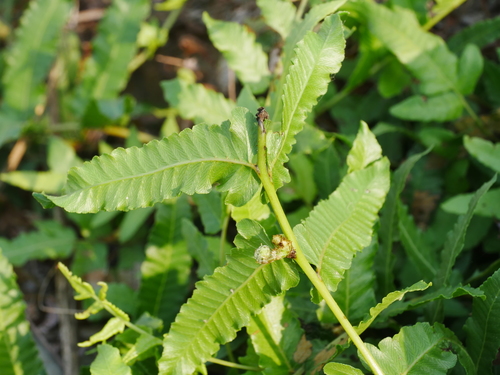
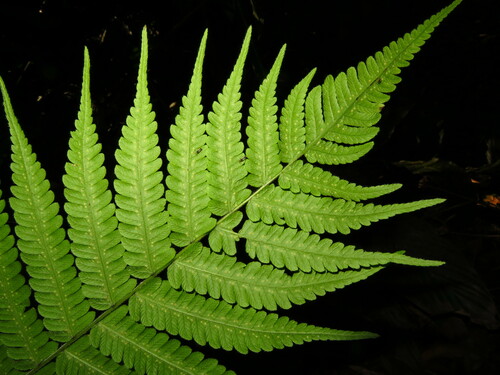
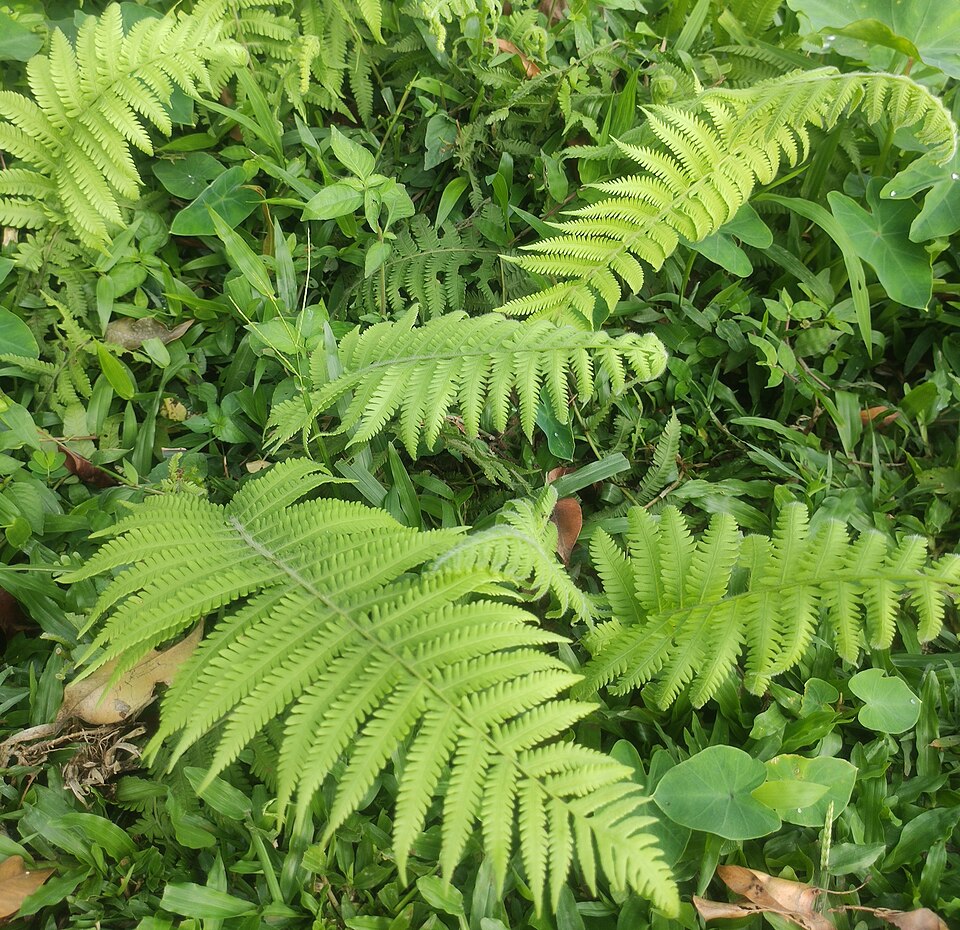
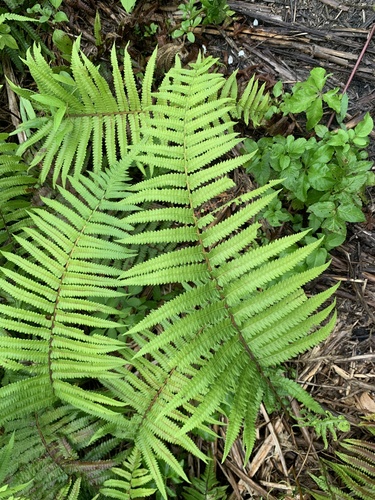
Source: WikipediaChristella dentata is a small fern with widespread distribution in Australia and islands in the south Pacific Ocean. There are many local common names. In New South Wales it grows north from the southern Illawarra region and is known as binung. Found on the margins of rainforest, by streams or in more open forests with adequate moisture. Sori are circular in shape, with a hairy closed covering. It was the first species of fern to become naturalised on the Hawaiian Islands, recorded initially in Oahu in 1887 and now found on all major islands there. There it interbreeds with the local species C. cyatheoides, with the resultant hybrid offspring sterile. Christella dentata is an edible fern, and also a folk remedy for skin diseases. Pharmacological study found that water extract of the fern was as toxic as anticancer drug 5-fluorouracil against human chronic myelogenous leukemia cell line (K562).
Description
A fern that grows in soil. It has a short creeping rhizome. The fronds have leaflets along the stalk. The fronds are 50 cm long. It has long sori.
Edible Uses
The young leaves or fronds are cooked as a vegetable.
Traditional Uses
The young leaves or fronds are cooked as a vegetable.
This uses section is brief — help expand it
Distribution
It is a tropical plant. It grows in open forests and lightly shaded areas. It grows beside streams and in moist areas up to 1,500 m above sea level.
Where It Grows
Africa, American Samoa, Angola, Asia, Benin, Brazil, Cameroon, Canary Islands, Cape Verde, Central Africa, Central African Republic, CAR, Congo DR, Côte d'Ivoire, Equatorial Guinea, Eswatini, Ghana, Guinea-Bissau, Indonesia, Ivory Coast, Kenya, Liberia, Madagascar, Madeira, Malaysia, Middle East, Mozambique, Nigeria, SE Asia, Sierra Leone, South Africa, South America, Swaziland, Tanzania, Uganda, West Africa, Yemen, Zambia, Zimbabwe,
Cultivation
It can be grown from spores or rhizomes.
Synonyms
Also Known As
Anole, Pakis binung
References (4)
- Chai, T., et al, 2015, Cytotoxicity and Antiglucosidase Potential of Six Selected Edible and Medicinal ferns. Acta Poloniae Pharmaceutica ñ Drug Research, Vol. 72 No. 2 pp. 297- 401.
- Harris, D. J., 2002, The vascular plants of the Dzanga-Sangha Reserve, Central African Republic. National Botanic Garden of Belgium, 2002. – 274 pages p 33
- Maroyi, A., 2014, Not just minor wild edible forest products: consumption of pteridophytes in sub-Saharan Africa. Journal of Ethnobiology and Ethnomedicine. 10:78
- Sukarya, D. G., (Ed.) 2013, 3,500 Plant Species of the Botanic Gardens of Indonesia. LIPI p 859