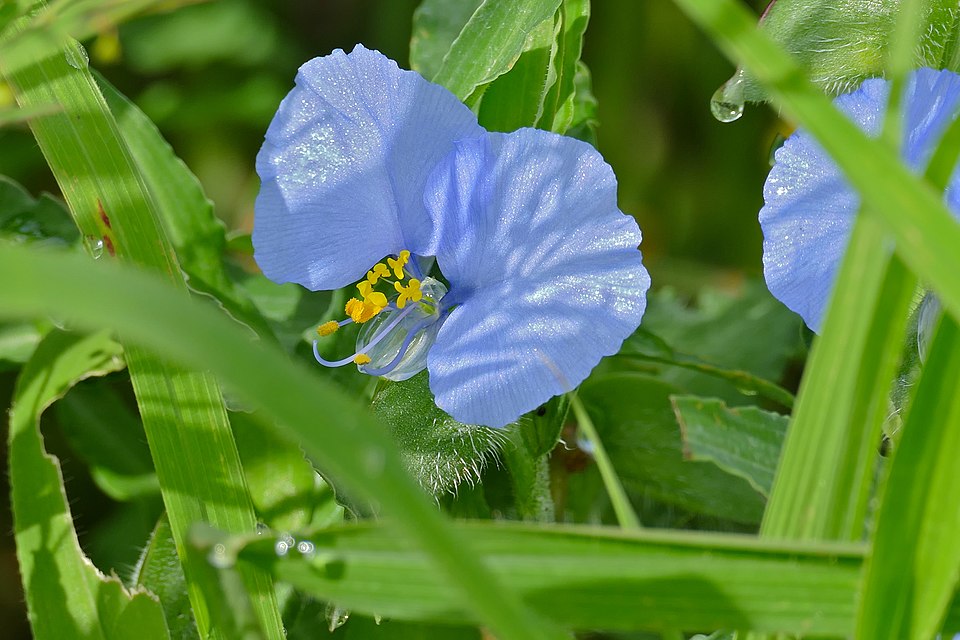
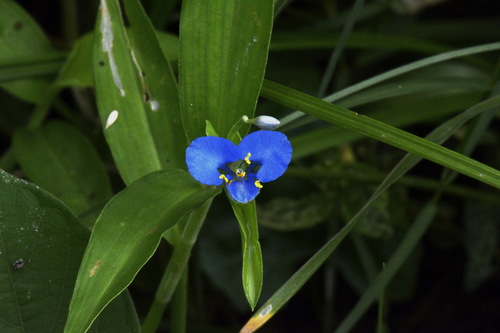
Cyanotis cristata
(L.) D. Don
Petungan
iNaturalist· cc-by
(c) sunnyjosef, some rights reserved (CC BY), uploaded by sunnyjosef
iNaturalist· cc-by
(c) Jay Horn, some rights reserved (CC BY)
Summary
Source: WikipediaCyanotis cristata is a species of perennial plant in the family Commelinaceae. It is native to the Indian subcontinent, southern China, Southeast Asia, Ethiopia, Socotra, Mauritius, Java, and the Philippines. Cyanotis cristata is a creeping herb found in sandy or grassy spots. It is common in eastern hills of Nepal.
Description
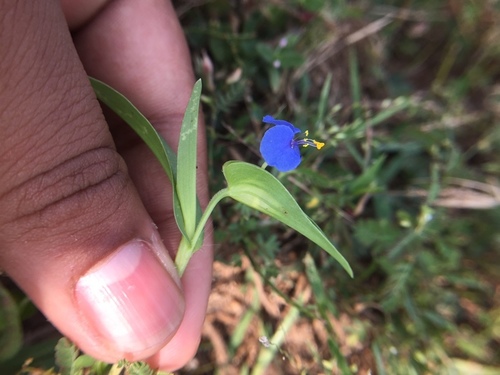
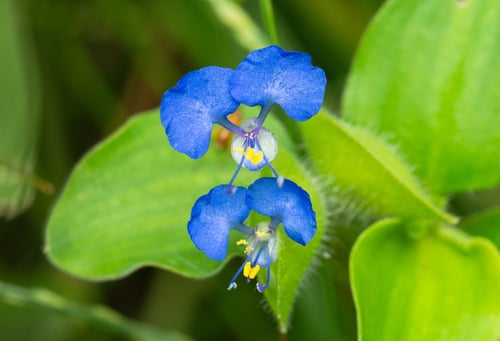
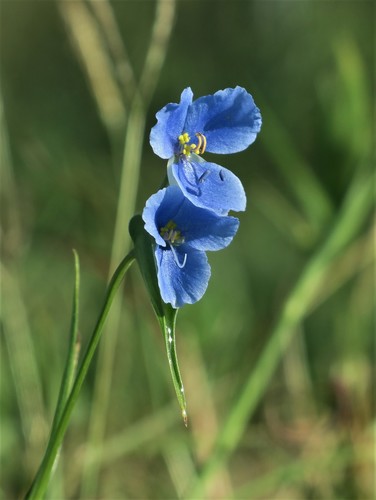
An annual creeping herb. It is 15-30 cm long. The leaves are oblong and do not have a leaf stalk. They are 5-10 cm long by 1-1.5 cm wide. The flowers are blue and in clusters near the ends of branches. The fruit are 3 sided capsules. They usually have 6 seeds.
Edible Uses
The young leaves and tips are steamed and eaten.
Traditional Uses
The young leaves and tips are steamed and eaten.
This uses section is brief — help expand it
Distribution
A tropical plant. It grows by streams in ravines or open humid places from near sea level to 2000 m in southern China. It is best in a rich, well-drained soil. It needs a protected, shaded position. It is damaged by drought or frost.
Where It Grows
Africa, Asia, Australia, Bhutan, Cambodia, China, Guam, Himalayas, India, Indochina, Indonesia, Laos, Malaysia*, Myanmar, Nepal, Northeastern India, Pacific, Philippines, SE Asia, Sikkim, Sri Lanka, Thailand, Vietnam,
Cultivation
It can be grown from cuttings.
Production
It grows slowly.
Synonyms
References (9)
- Ambasta, S.P. (Ed.), 2000, The Useful Plants of India. CSIR India. p 153
- Bodkin, F., 1991, Encyclopedia Botanica. Cornstalk publishing, p 309
- Burkill, I.H., 1966, A Dictionary of the Economic Products of the Malay Peninsula. Ministry of Agriculture and Cooperatives, Kuala Lumpur, Malaysia. Vol 1 (A-H) p 726
- Flora of Pakistan. www.eFloras.org
- Hong Deyuan; Robert A. DeFilipps, COMMELINACEAE, Flora of China
Show all 9 references Hide references
- Martin, F.W. & Ruberte, R.M., 1979, Edible Leaves of the Tropics. Antillian College Press, Mayaguez, Puerto Rico. p 183
- Ochse, J.J. et al, 1931, Vegetables of the Dutch East Indies. Asher reprint. p 114
- Prodr. Fl. Nep. 46. 1825
- World Checklist of Useful Plant Species 2020. Royal Botanic Gardens, Kew