Vernicia montana
Lour.
Mu oil tree
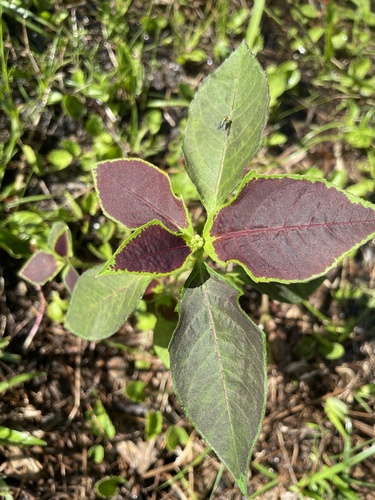
iNaturalist· cc-by-nc-nd
(c) Yu Ching Tam, some rights reserved (CC BY-NC-ND), uploaded by Yu Ching Tam
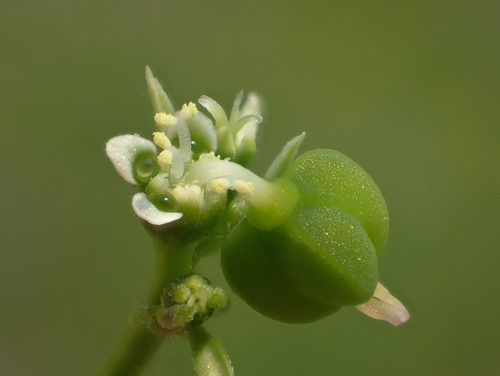
iNaturalist· cc-by-nc
(c) frank0804, some rights reserved (CC BY-NC)
Summary
Source: WikipediaVernicia montana is a species of flowering plant in the spurge family, Euphorbiaceae. It is sometimes referred to by the common name mu oil tree, or chine wood oil tree.
Description
A tree. It grows 20 m tall. The leaves are large and have 3 lobes. The flowering shoots contain both male and female flowers. The petals are white. The fruit are 5-7 cm long. Each fruit contains 3 seeds. The seeds are rich in oil.
Edible Uses
An oil is obtained from the seeds, though no further details are provided on its edible use.
Medicinal Uses
The oil is used to treat parasitic and other skin diseases and acts as a strong purgative. It is a component of nearly all Chinese plasters. The oil contains eleostearic acid, which is a virulent purgative when taken internally. Other constituents of the fruits include tannins, phytosterols, and a poisonous saponin.
Known Hazards
The oil contains a virulent purgative (eleostearic acid) and a poisonous saponin. The press cake is poisonous and cannot be used as animal feed.
Distribution
It is a tropical plant.
Where It Grows
Asia, China, Myanmar, SE Asia, Thailand, Vietnam,
Cultivation
It grows best in areas that are frost-free, with an average annual temperatures in the range 15 - 27°c; and where the mean annual rainfall is 850 - 2,000mm. The plants requirement for low temperatures in order to initiate flowering is less than that of Vernicia fordii. Prefers a slightly acid soil, tolerating a pH in the range 5.5 - 8. Adequate soil fertility is needed for good production. It is often grown on slopes, but grows well on flat land provided it is well-drained. Harvesting by manual collection of the fallen fruits is the most common method, but in China green fruits are also picked from the trees. Careful selection of clones can extend the harvesting season. During the rainy season, fruits should be collected every 10 days, and during the dry season about once a month. Average yields of seeds are 3.5 tonnes per hectare in China and 1.8 tonnes in Malawi. In Malawi annual yields of air-dry seed of the best clonal material gradually increase from 280 kg/ha in 3 - 6-year-old plantations to 2.200 kg/ha in 11 - 14-year-old plantations and 3,000 kg/ha in 20-years-old plantations; yields of plantations of unselected seedling material are about half these amounts. Plantations with a close planting system reach maximum production at an earlier age, but the maximum yields are the same as those from trees that are more widely spaced. Regular weeding around the plants is needed for ease of harvesting. In hedgerow systems, pruning and training are recommended to obtain a frame of a few main branches and open crown. There are two main forms of this species, recognized in Malawi as types A and B. Similar types are also recognized in Indonesia as the Indo-China type and the China type:- Type A is a fast-growing tree with a tall, straight trunk forming tiers of 5 spreading branches at regular intervals. Secondary branches form at relatively long intervals. The trees take 3 - 5 years to come into bearing. Type B is more shrub-like. When the main stem has produced 1 or 2 tiers of branches, it loses its dominance. Secondary branches are formed at short intervals. The trees come into bearing after 3 years. Several high-yielding vigorously growing clones have been selected from this form. This species can hybridize with Vernicia fordii in the wild. Occasionally monoecious, but more normally a dioecious species, in which case both male and female forms need to be grown if fruit and seed are required.
Propagation
Seed germinates quickly when sown fresh. Stored seed develops a hard coat and may benefit from scarification before sowing. This is done by pouring a small amount of nearly boiling water over the seeds (taking care not to cook them) and then soaking in warm water for 12–24 hours. Seeds that have not swollen after this time should have a small nick made in the seedcoat (without damaging the embryo) and be soaked for a further 12 hours before sowing. When the loop of the hypocotyl becomes visible above ground, seedlings are transferred from the germination bed to the nursery. Seedlings are transplanted to the field at one year old. In Malawi, budding is carried out in the nursery using the simple shield method at 5–7.5cm above ground level.
Other Uses
Young trees are often intercropped with food crops such as maize, groundnut, or soya bean in China. In Malawi, intercropping with annuals or planting cover crops is common practice, though prolonged intercropping with annual crops may damage the shallow root system; in China, even mature trees are sometimes intercropped with winter crops. The seeds contain 14–20% of a quick-drying oil called 'abrasin oil' or 'Chinese wood oil'. Because of its similarity to tung oil from Vernicia fordii, the two are often grouped together under the name tung oil. Traditionally this oil has been used in the manufacture of paints and Chinese black ink, for waterproofing cloth and paper, caulking and painting ships, and as a lamp oil. It was formerly used to insulate electric wires. Currently its main use is in paints and inks, while lower-quality oil is processed into soap or linoleum. Teak oil sold for maintaining fine furniture is usually refined tung oil. Increasing environmental and health regulations have driven greater use of tung oil for lining food, beverage, and medicine containers with an insulating coating. The main fatty acid is alpha-eleostearic acid, in which three conjugated double bonds make it highly reactive. Under the influence of light or catalysts such as sulphur and iodine, alpha-eleostearic acid converts to beta-eleostearic acid, which is even more reactive and spontaneously polymerises into a solid mass. The fatty acid composition is: alpha-eleostearic acid 75–80%, oleic acid 15%, palmitic acid 4%, and stearic acid about 1%. Traditionally, fruits are collected while still green, piled and covered with straw or grass, and left to rot until seeds can be easily removed. Seeds are then crushed, briefly roasted in shallow iron pans, thoroughly steamed, and pressed to yield commercial wood oil. In modern processing, fruits are hulled by hand or mechanically, seeds dried and shelled mechanically, and kernels ground with some shell added to aid oil extraction. Cold expression in screw presses yields a clear, light-coloured oil. The press cake may then be warm-pressed or solvent-extracted to increase yield, though the product is of lower quality. The press cake is a good fertiliser after oil extraction but is poisonous and cannot be used as animal feed. The wood is white, soft, and perishable, suitable only for simple construction, core stock for plywood, or paper pulp, and is also used as fuel.
Synonyms
Also Known As
abrasin, abrasin-oil-tree, arbre à l'huile de bois, cantonese wood-oil-tree, chinese tung-oil-tree, chinese wood-oil-tree, chinesischer tungölbaum, falso-castanheiro, mu you tong, mu-oil-tree, mu-yu, wood-oil-tree
References (1)
- World Checklist of Useful Plant Species 2020. Royal Botanic Gardens, Kew