Curculigo ensifolia
R. Br.
Grass potato, Ngambiri
iNaturalist· cc-by-nc
(c) toohey-forest-wildlife, some rights reserved (CC BY-NC), uploaded by toohey-forest-wildlife
iNaturalist· cc-by-nc
(c) JA, some rights reserved (CC BY-NC), uploaded by JA
iNaturalist· cc-by
(c) coenobita, some rights reserved (CC BY), uploaded by coenobita
Summary
Source: WikipediaCurculigo ensifolia is a plant species in the Hypoxidaceae, endemic to Australia. Varieties Curculigo ensifolia var. ensifolia – Queensland, New South Wales, Northern Territory, Western Australia Curculigo ensifolia var. longifolia Benth. – Northern Territory
Description
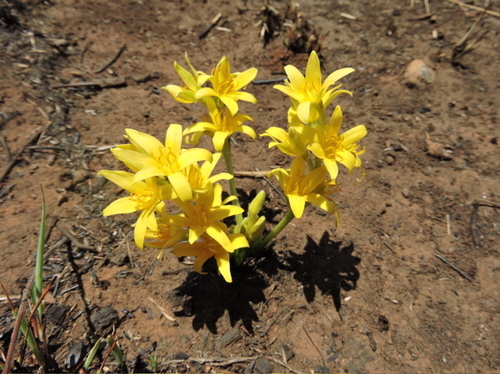
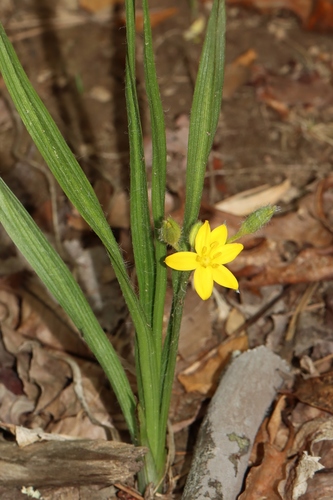
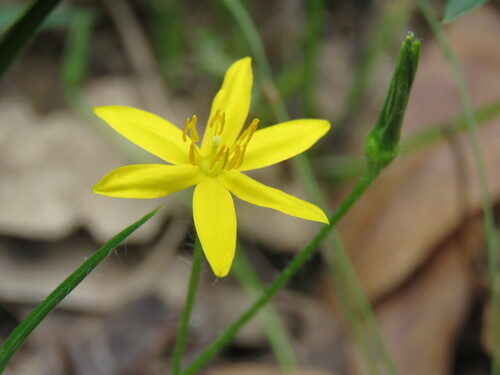
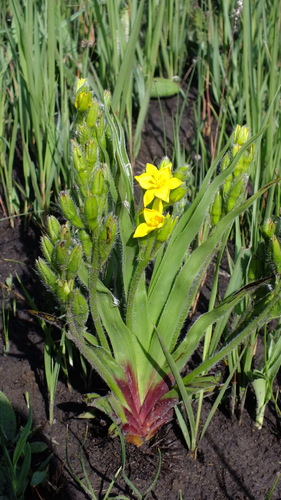
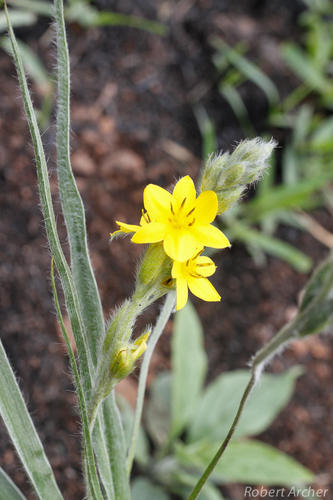
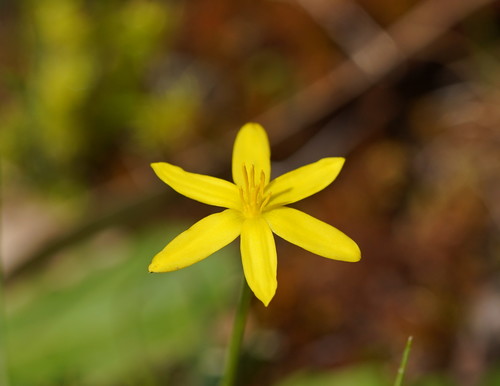
A grass-like herb. It has long fattened tubers or corms. The plant can re-grow from these. It grows 20-50 cm high. There is a creeping rhizome. The leaves are 20-50 cm long by 1-2 cm wide. They are erect. They are dark green with prominent veins. The flowers are in short spikes. These have few flowers but many papery bracts. The flowers are 1.5 cm across. They are yellow and hairy. They have a long slender perianth tube. The fruit is a capsule about 0.5 cm long. It is enclosed in a bract.
Edible Uses
The long fleshy tubers are dug up, roasted in coals, peeled, and eaten.
Traditional Uses
The long fleshy tubers are dug up and roasted in coals then peeled and eaten.
This uses section is brief — help expand it
Distribution
It suits subtropical and warm temperate climates. It grows in moist areas and rainforests. It grows in litter on rocky slopes. It needs a well drained soil and protected location.
Where It Grows
Australia*,
Cultivation
Plants are grown from seed or by dividing the rhizome.
Notes
There are 10 Curculigo species. There are 2-5 species in South America.
Nutrition
| Part | Moisture | kJ | kcal | Protein | Vit A | Vit C | Iron | Zinc |
|---|---|---|---|---|---|---|---|---|
| Root | 64.7 | 300 | 72 | 2.2 | — | — | 50 | 3.7 |
Also Known As
Anburda, Andjay, Anmulbirrik, Brahmin ginseng, Lunduru
References (18)
- Beasley, J., 2011, Plants of Tropical North Queensland - the compact guide. Footloose publications. p 77
- Cherikoff V. & Isaacs, J., The Bush Food Handbook. How to gather, grow, process and cook Australian Wild Foods. Ti Tree Press, Australia p 198
- Crawford, I. M., 1982, Traditional Aboriginal Plant Resources in the Kalumburu Area: Aspects in Ethno-economics. Records of the Western Australian Museum Supplement No. 15
- Cribb, A.B. & J.W., 1976, Wild Food in Australia, Fontana. p 160
- Elliot, W.R., & Jones, D.L., 1984, Encyclopedia of Australian Plants suitable for cultivation. Vol 3. Lothian. p 134
Show all 18 references Hide references
- Garde, M., et al, 2003, A Preliminary List of Kundedjnjenghmi Plant Names. Northern Land Council. (Arnhem Land, Australia)
- Jackes, B.R., 2001, Plants of the Tropics. Rainforest to Heath. An Identification Guide. James Cook University. p 61
- Lazarides, M. & Hince, B., 1993, Handbook of Economic Plants of Australia, CSIRO. p 70
- Lim, T. K., 2015, Edible Medicinal and Non Medicinal Plants. Volume 9, Modified Stems, Roots, Bulbs. Springer p 29
- Low, T., 1991, Wild Food Plants of Australia. Australian Nature FieldGuide, Angus & Robertson. p 104
- Low, T., 1992, Bush Tucker. Australia’s Wild Food Harvest. Angus & Robertson. p 117
- Morley, B.D., & Toelken, H.R., (Eds), 1983, Flowering Plants in Australia. Rigby. p 338
- Paczkowska, G. & Chapman, A.R., 2000, The Western Australian Flora. A Descriptive Catalogue. Western Australian Herbarium. p 69
- Prodr. 290. 1810
- RIRDC, 2010, New Root Vegetables for the Native Food Industry, Australian Government RIRDC Publication 9/161
- Vigilante, T., et al, 2013, Island country: Aboriginal connections, values and knowledge of the Western Kimberley islands in the context of an island biological survey. Records of the Western Australian Museum Supplement 81: 145-182
- Wheeler, J.R.(ed.), 1992, Flora of the Kimberley Region. CALM, Western Australian Herbarium, p 993
- Yunupinu Banjgul, Laklak Yunupinu-Marika, et al. 1995, Rirratjinu Ethnobotany: Aboriginal Plant Use from Yirrkala, Arnhem Land, Australia. Northern Territory Botanical Bulletin No 21. Parks and Wildlife Commission of the Northern Territory. p 30