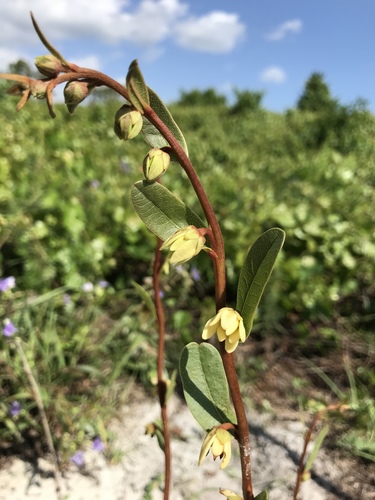
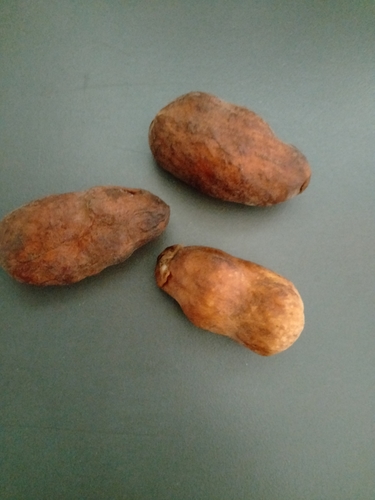
Unonopsis guatterioides
(A. DC.) R. E. Fr.
iNaturalist· cc-by-nc
(c) Marcel Carita Vaz, some rights reserved (CC BY-NC), uploaded by Marcel Carita Vaz
iNaturalist· cc-by
(c) Thomaz Ricardo Favreto Sinani, some rights reserved (CC BY)
Summary
Source: WikipediaUnonopsis guatterioides, also known as envieira, is a species of the genus Unonopsis. It is a tree native to tropical Southern America which produces white flowers, and is known to be used in both construction, and tropical medicine
Description
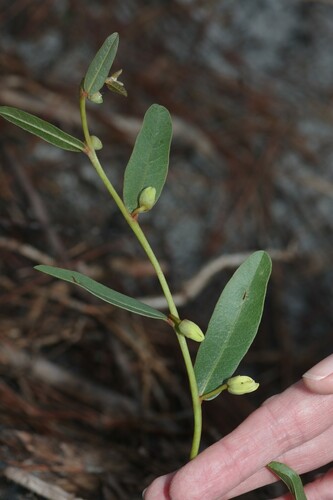
A tropical tree in the Annonaceae family growing 4–7 m tall with a dense round crown and red fruit, found at elevations between 150–200 m above sea level.
Edible Uses
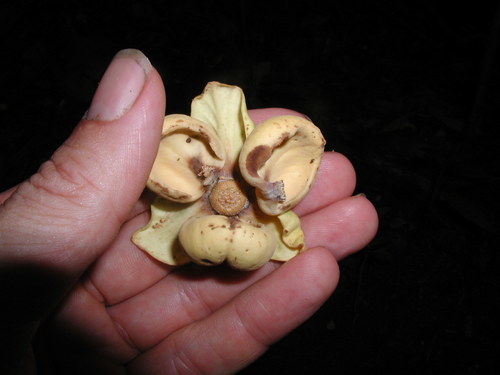
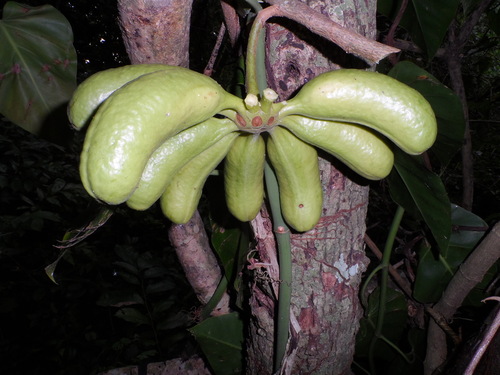
Fruit. The fruit consistis of 1 - 15, red to black, ellipsoid to globose monocarps each around 6 - 25mm x 6 - 15mm.
Medicinal Uses
There are a number of documented uses for U. guatterioides. An extract made from the bark, and the bark itself are known to be used to treat snakebite and fevers respectively. One source cites that the trunk is used for construction, however, other sources cite that the wood is of low quality, not used for construction or for fuel. The wood is light, and can be used for the construction of light boxes. In addition to use in medicine, the bark is documented to be used as strapping for carrying objects, or to make rudimentary fibre.
Distribution
It is a tropical plant. It grows between 150-200 m above sea level.
Where It Grows
Amazon, Bolivia*, Brazil, Colombia, Guiana, Guianas, Guyana, Peru, South America, Suriname, Venezuela,
Cultivation
Grows best in a sunny position.
Propagation
Seed - it has a hard seedcoat and may benefit from scarification before sowing to speed up and improve germination. This can usually be done by pouring a small amount of nearly boiling water on the seeds (being careful not to cook them!) and then soaking them for 12 - 24 hours in warm water. By this time they should have imbibed moisture and swollen - if they have not, then carefully make a nick in the seedcoat (being careful not to damage the embryo) and soak for a further 12 hours before sowing. Sow the treated seed as soon as it is ripe in a partially shaded position in a nursery seedbed. A germination rate can be expected, even if the seed is treated, with the seed sprouting within 50 - 70 days.
Other Uses
A fibre is obtained from the inner bark. The sapwood and heartwood are not clearly demarcated. The wood is light in weight with a low resistance to insect attack. Of low quality, it is only used for making light boxes. The wood is of low value as a fuel.
Synonyms
Also Known As
Ariticum, Ata do igapo, Atinha, Cundutu, Envira surucucu da varzea, Invira, Mejo de porco, Mutambi, Muxiba, Pindaiba, Pindaiba preta
References (2)
- Lopez-Diago, D. & Garcia, N., 2021, Wild edible fruits of Colombia. Biota ColomBiana 22 (2) p 29
- Philips, O., 1992, The potential for harvesting fruits in tropical rainforests: new data from Amazonian Peru. Biodiversity and Conservation 2, 18-38 (As Unonopsis mathewsii)