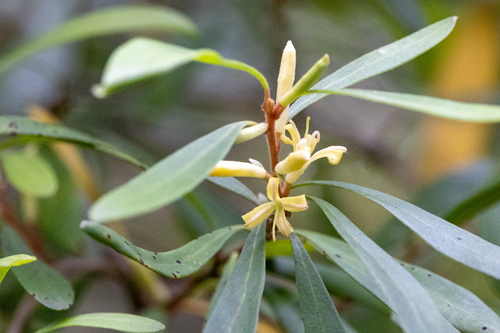
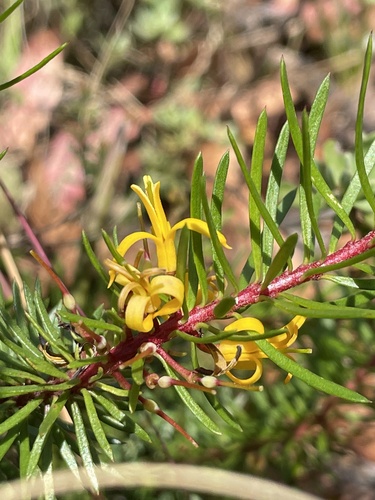
Faurea rochetiana
(R. Rich.) Chiov. ex Pic. Serm.;
iNaturalist· cc-by-sa
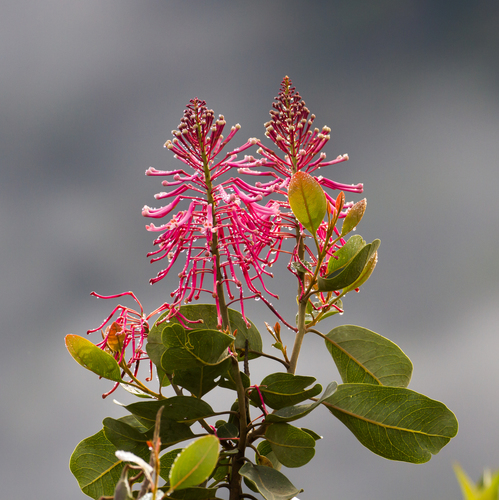
(c) Tony Rebelo, some rights reserved (CC BY-SA), uploaded by Tony Rebelo
iNaturalist· cc-by-sa
(c) Tony Rebelo, some rights reserved (CC BY-SA)
Summary
Source: WikipediaFaurea rochetiana, also known as the broad-leaved beechwood, is a tree found in much of Africa from Sudan south to Limpopo, Mpumalanga and northern KwaZulu-Natal. The tree is small and leafy. It has wider leaves, larger flowers and flower veins and also denser hairy twigs than the bushveld beechwood. The tree's national number is 76.
Description
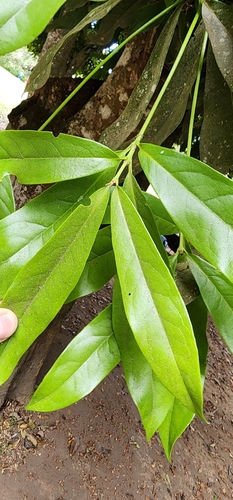
A shrub or small tree. It grows 10 m tall. It is spreading and crooked. The leaves are mid green. They are oval to sword shaped and 21 cm long by 9 cm wide. The flower spikes are 22 cm long. They are usually at the ends or branches or near the ends. The flowers are 2-2.5 cm long. They have white hairs.
Edible Uses
The flower nectar is eaten as a snack.
Traditional Uses
The flower nectar is eaten as a snack.
This uses section is brief — help expand it
Distribution
It is a subtropical plant.
Where It Grows
Africa, Angola, East Africa, Eswatini, Ethiopia, Mozambique, Nigeria, South Africa, Southern Africa, Swaziland, Zimbabwe,
Cultivation
A plant of the drier tropics and subtropics, where it is found at elevations from 600 to almost 2,500 metres. A very variable species with respect to leaf width and pubescence.
Other Uses
The wood is yellowish-brown to red or red-brown, often figured, hard and durable. It is said to be termite-proof. It is used in fine turnery and furniture.
Synonyms
References (2)
- Ruiters-Welcome, A. K., 2019, Food plants of southern Africa. Ph.D. thesis. Univ. of Johannesburg p 91
- Welcome, A. K. & Van Wyk, B.-E., 2019, An inventory and analysis of the food plants of southern Africa. South African Journal of Botany 122 (2019) 136–179