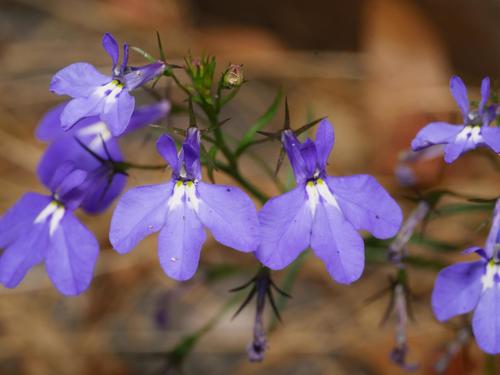
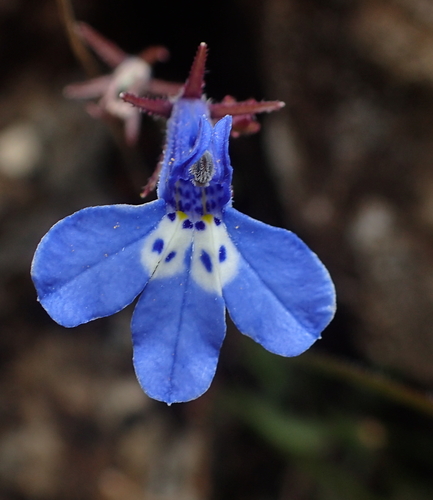
Adenophora divaricata
Franch & Sav ?Kitagawa,
Nolbunjandae
iNaturalist· cc-by-nc
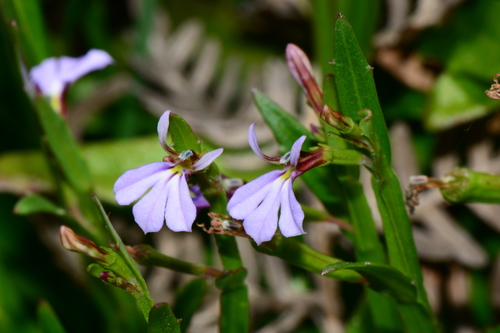
(c) V.S. Volkotrub, some rights reserved (CC BY-NC), uploaded by V.S. Volkotrub
iNaturalist· cc-by
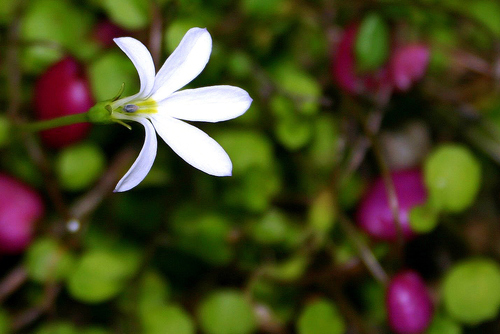
(c) Oleg Kosterin, some rights reserved (CC BY), uploaded by Oleg Kosterin
iNaturalist· cc-by-nc
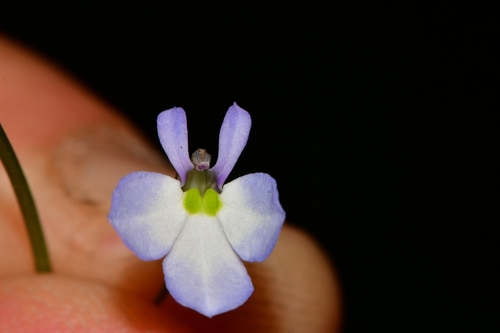
(c) Шильников Дмитрий Сергеевич, some rights reserved (CC BY-NC), uploaded by Шильников Дмитрий Сергеевич
Summary
Source: WikipediaAdenophora divaricata, also known as spreading-branch ladybell, is a flowering perennial plant of the genus Adenophora, in the Bellflower family. It is distributed in East Asia, including China, Japan, Korea, and the Russian Far East.
Description
A perennial herb. It grows 1 m tall. The roots can be 2-4 cm across. The leaves on the stem are arranged in rings of 3-5. They are 4-11 cm long by 2-6 cm wide. There are coarse teeth along the edge. The branches on the flowering stalks are in rings. The flowers are blue or pale purple.
Edible Uses
Young leaves are edible and should be cooked before eating.
Traditional Uses
The young leaves are eaten cooked.
This uses section is brief — help expand it
Medicinal Uses
None known
Distribution
It is a temperate plant. It grows best in a light rich slightly alkaline soil. It needs a sunny position. It does not like having its roots disturbed. In north China is grows on grassy slopes and in forests between 400-1,800 m above sea level.
Where It Grows
Asia, China, Japan, Korea, Russia,
Cultivation
We have very little information on this species and do not know if it will be hardy in Britain, though judging by its native range it should succeed outdoors in many parts of the country. The following notes are based on the general needs of the genus. Prefers a light rich slightly alkaline soil that is not too dry, and a warm sunny position. Intolerant of root disturbance. The young growth is extremely attractive to slugs, they have been known to destroy even mature plants.
Propagation
Seed is best sown in a cold frame as soon as it is ripe, though spring sowing is also possible. Surface sow 2–3 seeds per pot in spring to avoid the need for transplanting. When transplanted at a very small size, seedlings establish without difficulty. Germination takes 1–3 months at 10°C. Plant out into permanent positions while young. Basal cuttings can be taken in spring. Division in spring is possible but very difficult, as the plant dislikes root disturbance.
Other Uses
None known
Notes
There are about 40 Adenophora species. They are temperate plants.
Synonyms
References (3)
- Hwang, HS, et al, 2014, Distribution characteristics of plant in the Ungseokbong Mountain, Gyeongsangnam-do, Korea. Journal of Asia-Pacific Biodiversity. 7(2014) e164-e178
- Pemberton, R. W. & Lee, N. S., 1996, Wild Food Plants in South Korea: Market Presence, New Crops, and Exports to the United States. Economic Botany, Vol. 50, No. 1, pp. 57-70
- Plants for a Future database, The Field, Penpol, Lostwithiel, Cornwall, PL22 0NG, UK. http://www.scs.leeds.ac.uk/pfaf/