Lobelia erinus
L.
Edging blue lobelia
iNaturalist· cc-by
(c) Alexis Tinker-Tsavalas, some rights reserved (CC BY), uploaded by Alexis Tinker-Tsavalas
iNaturalist· cc-by-nc
(c) Courtney Roark, some rights reserved (CC BY-NC)
iNaturalist· cc0
no rights reserved
Summary
Source: WikipediaLobelia erinus (edging lobelia, garden lobelia or trailing lobelia) is a species of flowering plant in the bellflower family Campanulaceae, native to southern Africa.
Description
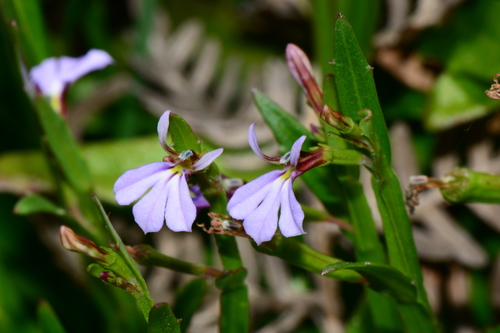
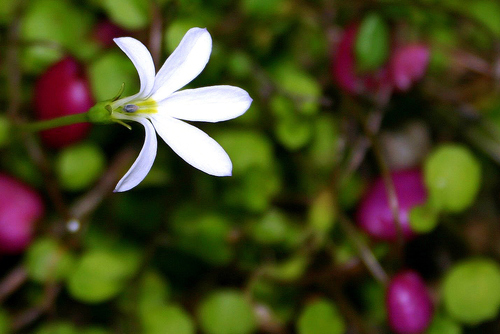
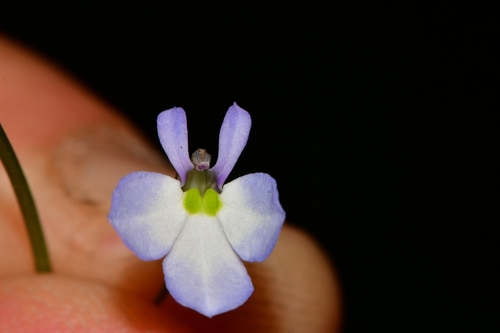
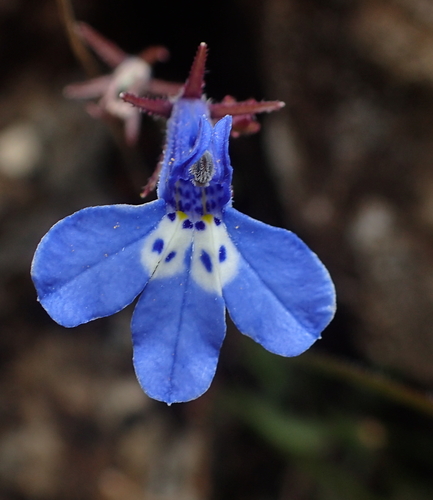
A herb. It can be an annual or keep growing from year to year. It is a slender erect plant. It grows 30 cm high. The leaves are scattered. They are narrow and taper to both ends. There are a few teeth along the edge. The leaves are 6 cm long by 6 mm wide. The flowers are well spaced along stalks at the ends of branches. They are blue and white.
Edible Uses
The leaves are eaten as a vegetable.
Traditional Uses
The leaves are eaten as a vegetable.
This uses section is brief — help expand it
Distribution
It is a subtropical plant. It grows in swamps and along river banks. In Zimbabwe it grows between 1.500-2.300 m above sea level.
Where It Grows
Africa, Australia, Botswana, East Africa, Eswatini, Hawaii, Madagascar, Malawi, Mozambique, Pacific, South Africa, Southern Africa, Swaziland, Tasmania, Zambia, Zimbabwe,
Notes
They have also been put in the family Lobeliaceae.
Synonyms
Also Known As
Kimangamanga, Swilamphana
References (11)
- Baker, M. L. & de Salas, M. F., 2012, A Census of the Vascular Plants of Tasmania. (On line)
- Guillarmod, J., 1971,
- Jardin, C., 1970, List of Foods Used In Africa, FAO Nutrition Information Document Series No 2.p 87 (As Lobelia filiformis)
- Marker & Sheape, (As Lobelia filiformis)
- Martin, F.W. & Ruberte, R.M., 1979, Edible Leaves of the Tropics. Antillian College Press, Mayaguez, Puerto Rico. p 180 (As Lobelia filiformis)
Show all 11 references Hide references
- Okigbo, B.N., Vegetables in Tropical Africa, in Opena, R.T. & Kyomo, M.L., 1990, Vegetable Research and development in SADCC countries. Asian Vegetable Research and development Centre. Taiwan. p 38 (As Lobelia filiformis)
- Peters, C. R., O'Brien, E. M., and Drummond, R.B., 1992, Edible Wild plants of Sub-saharan Africa. Kew. p 141
- Ruiters-Welcome, A. K., 2019, Food plants of southern Africa. Ph.D. thesis. Univ. of Johannesburg p 73
- Shackleton, S. E., et al, 1998, Use and Trading of Wild Edible Herbs in the Central Lowveld Savanna Region, South Africa. Economic Botany, Vol. 52, No. 3, pp. 251-259
- Swaziland's Flora Database http://www.sntc.org.sz/flora
- Welcome, A. K. & Van Wyk, B.-E., 2019, An inventory and analysis of the food plants of southern Africa. South African Journal of Botany 122 (2019) 136–179