Adenocaulon himalaicum
Edgeworth;
Gnalep
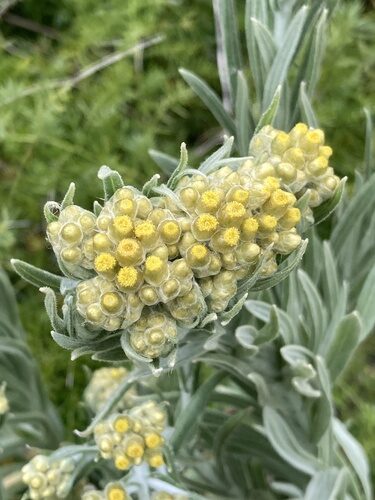
iNaturalist· cc-by
(c) Oleg Kosterin, some rights reserved (CC BY), uploaded by Oleg Kosterin
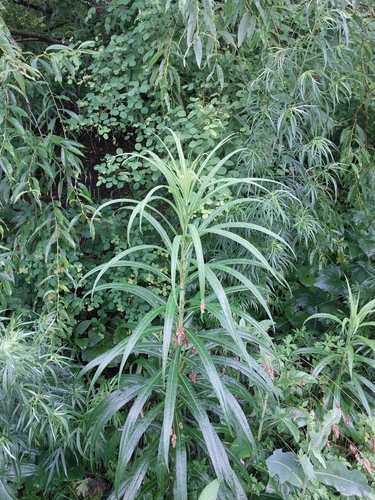
iNaturalist· cc-by-nc
(c) Maria Nosova, some rights reserved (CC BY-NC), uploaded by Maria Nosova
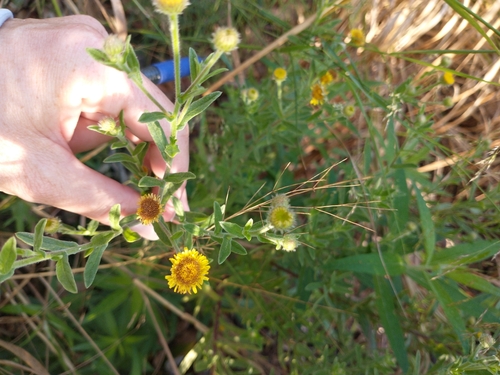
iNaturalist· cc-by-nc
(c) Антон Гладилин, some rights reserved (CC BY-NC), uploaded by Антон Гладилин
Summary
Source: WikipediaAdenocaulon himalaicum is a species of perennial flowering plant in the family Asteraceae. It is native to China, Japan, India, Korea, and Nepal, and is an invasive species in Russia. It grows in shady places, often by the side of the road.
Description
A herb. It keeps growing from year to year. It grows 30-100 cm tall. The lower leaves have long stalks. The upper leaves do not have a stalk. The leaves are 7-13 cm long by 11-22 cm wide. The leaves are rounded or kidney shaped and can be wavy or with teeth near the edge. The flower heads are daisy like and are white.
Edible Uses
The young leaves are eaten with oil and salt and used in salads.
Traditional Uses
The young leaves are eaten with oil and salt. They are used in salads.
This uses section is brief — help expand it
Medicinal Uses
The leaves are used as a paste in medicine in Nepal.
Distribution
It is a temperate plant. It grows in Nepal between 2000-4000 m altitude in moist, shady places. In Sichuan and Yunnan.
Where It Grows
Asia, Bhutan, China, Himalayas, India, Japan, Korea, Nepal, Russia, Tibet,
Cultivation
Plants are grown from seed.
Notes
It is used as a paste in medicine in Nepal.
Synonyms
Also Known As
Bu lu wu hu, Myeolgachi
References (5)
- Ann. Mag. Nat. Hist. ser. 3, 7:394. 1861 (Adenocaulon bicolor)
- Kim, H. & Song, M., 2013, Ethnobotanical analysis for traditional knowledge of wild edible plants in North Jeolla Province (Korea). Genetic. Resour. Crop Evol. (2013) 60:1571-1585
- Luo, B., et al, 2019, Wild edible plants collected by Hani from terraced rice paddy agroecosystem in Honghe Prefecture, Yunnan, China. Journal of Ethnobiology and Ethnomedicine 15:56
- Manandhar, N.P., 2002, Plants and People of Nepal. Timber Press. Portland, Oregon. p 72
- READ