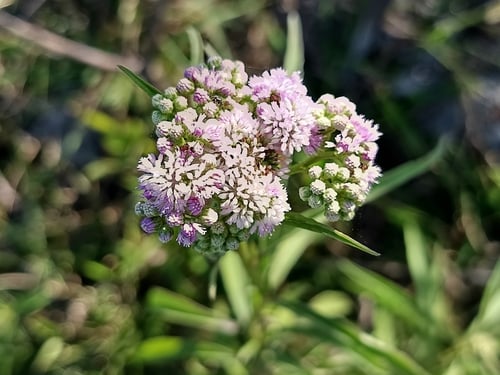
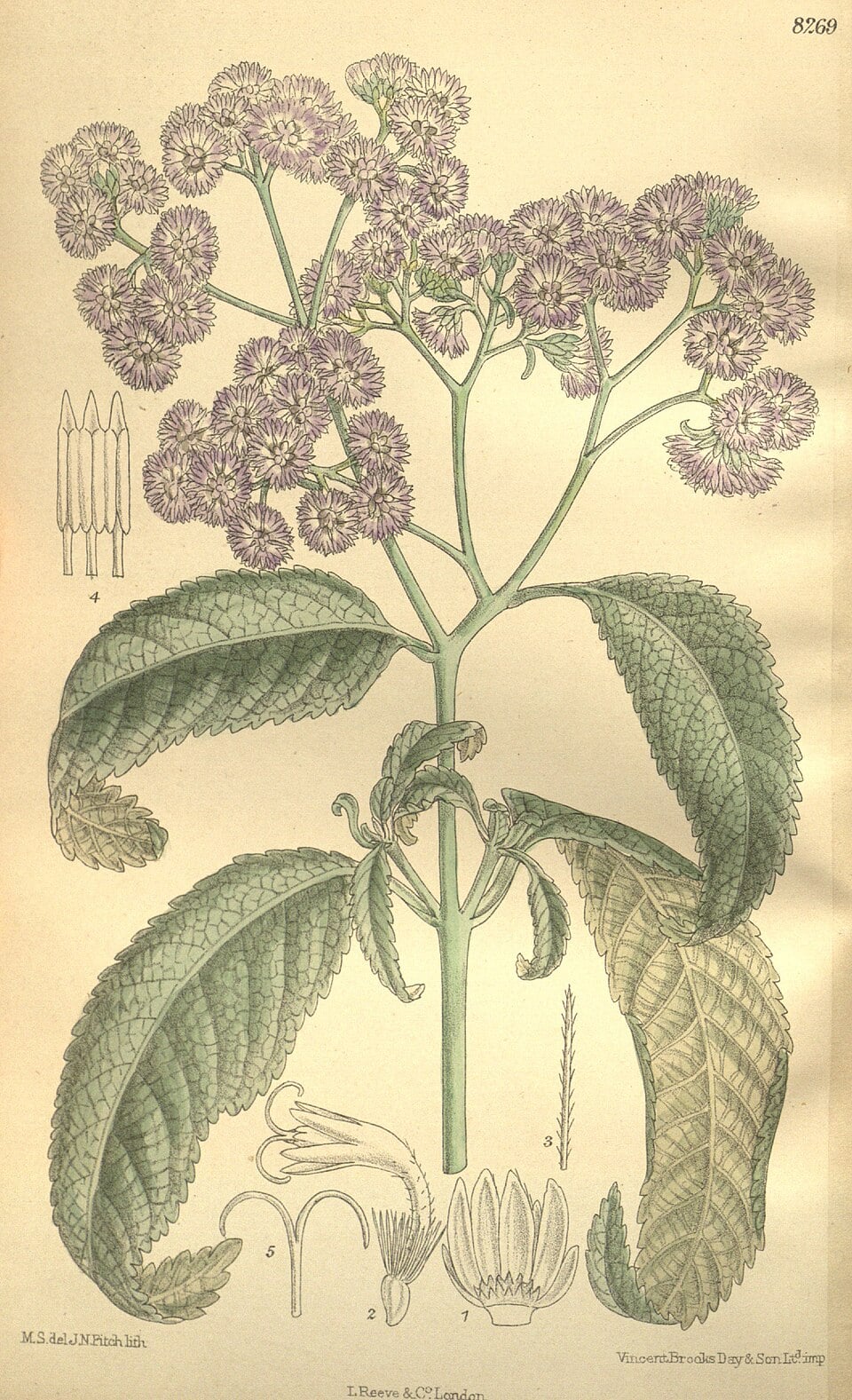
Porophyllum gracile
Benth.
Pleasing poreleaf, Slender poreleaf
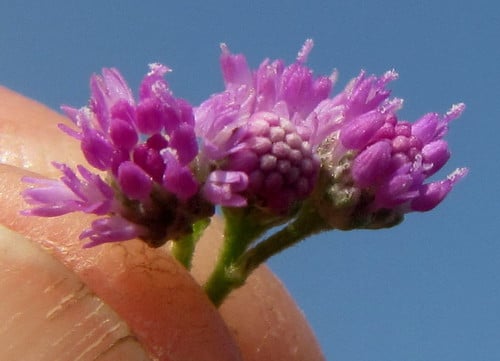
iNaturalist· cc-by-nc
(c) Jim Andre, some rights reserved (CC BY-NC), uploaded by Jim Andre
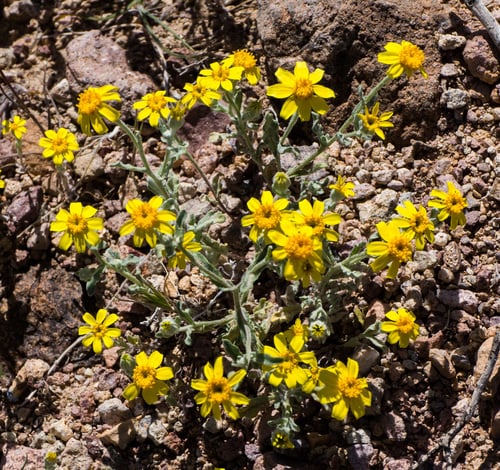
iNaturalist· cc-by-nc-nd
(c) Keir Morse, some rights reserved (CC BY-NC-ND), uploaded by Keir Morse
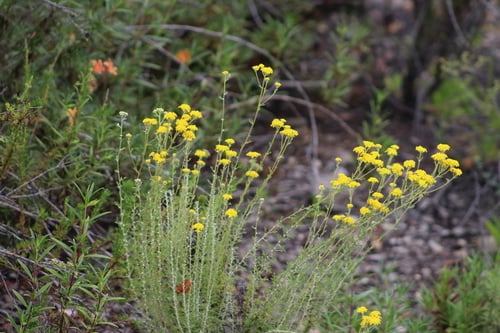
iNaturalist· cc-by-nc
(c) Christian Schwarz, some rights reserved (CC BY-NC), uploaded by Christian Schwarz
Summary
Source: WikipediaPorophyllum gracile is a species of flowering plant in the family Asteraceae known by the common names odora and slender poreleaf. It is native to northern Mexico and the southwestern United States from California to Texas, where it can be found in rocky and sandy desert scrub habitat. This species grows into a small, short lived perennial shrub with branching slender stems measuring up to about 70 centimeters in maximum length. The stems are hairless and waxy in texture. The sparse waxy leaves are linear in shape and 1 to 5 centimeters in length. The herbage is glandular and aromatic with a strong scent. Glands located in cavities in the leaves, stems and phyllaries produce several volatile chemicals that act in synergy to repel insect predators. The inflorescence produces narrow flower heads which may be nearly 3 centimeters long when in bloom. The flower head is enclosed in five waxy, gland-studded phyllaries. It bears 20 to 30 flowers, which are disc florets. Each flower is white or purplish and has a long, curling style protruding from it. The fruit is a cylindrical achene topped with a pappus of bristles, the whole unit measuring over one centimeter long. These plants have many branches with numerous thin, wiry, upright stems.
Description
A small shrub. It grows 20-70 cm tall. The leaves are narrow and 2-5 cm long by 1-5 mm wide.
This description is brief — help expand it
Edible Uses
The leaves are edible fresh or cooked and, despite their unusual flavour, contribute a distinctive aromatic note to dishes. The taste is difficult to characterise — common descriptors include pungent, skunk-like, pineapple-like, marigold-like, musty, fruity, fishy, and malodorous, though none fully captures the complexity. The flavour mirrors the aroma but is somewhat milder and is free of harsh bitterness, making the leaves usable in soups or salads. When boiled, the leaves yield a deep red-orange-brown dye and become soft; by contrast, the flower heads (specifically the phyllaries and developing pappi) and older stems remain tough. Harvesting is somewhat tedious but possible year-round, with new growth most abundant in spring. Leaves may drop during drought but typically regrow after rainfall.
Medicinal Uses
A decoction of the root — and occasionally the stems and leaves — is used to regulate delayed menstruation. The plant is used in the treatment of intestinal disorders. A decoction of the pounded plant is taken internally to relieve the aches of rheumatic joints and other pains, and applied externally as a liniment and wash on sores. Leaves, stems, or roots are generally heated in water to make a strong tea for both internal and external use.
Distribution
It is a subtropical plant.
Where It Grows
Mexico, North America, USA,
Cultivation
Porophyllum gracile is one of the most variable species of the genus. It occupies the widest range of ecological habitats for a member of the section Hunteria and probably for the genus. In addition, it occurs in not only the driest areas (rainfall of less than 130mm a year) but also the coldest areas occupied by a species of Porophyllum. Grows best in a sunny position in a well-drained soil. The aromatic oils, which are contained largely in the pores or glands that are especially plentiful on the leaves, produce a strong odour when the foliage is bruised, broken, or heated. Cures, real or fancied, that are attributed to various species of Porophyllum are probably largely due to either the soothing properties of the oils or the imagination by the patient that anything that is so odoriferous must be beneficial. Deerweed is well adapted to arid and semi-arid climates across its native southwestern U.S. range. Based on its ecological preferences, it aligns with USDA Hardiness Zones 7–10, where mild winters and hot summers are the norm. It is a native species and is not considered invasive; it coexists well within its natural habitat without aggressive spreading behavior.
Propagation
Propagated by seed.
Other Uses
None known Special Uses
Synonyms
Also Known As
Hierbo de venado
References (2)
- Pio-Leon, J. F., et al, 2017, Prioritizing Wild Edible Plants of potential new crops based on Deciduous Forest traditional knowledge by a Rancher community. Botanical Sciences 95(1): 47-59
- World Checklist of Useful Plant Species 2020. Royal Botanic Gardens, Kew