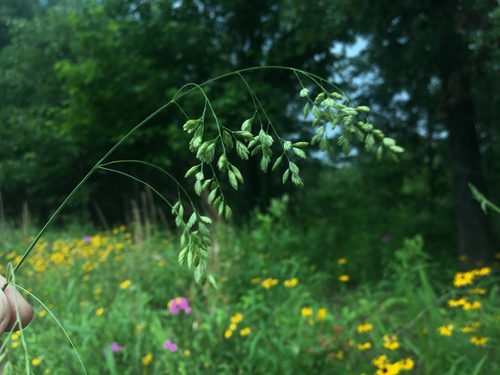
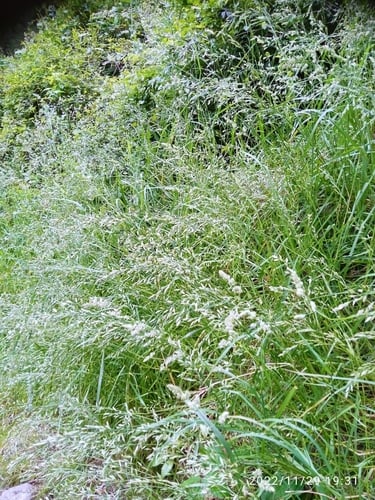
Cenchrus americanus
(L.) Morrone
Pearl millet, Yellow bristle grass
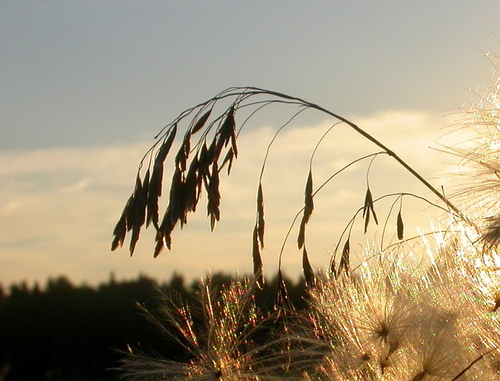
iNaturalist· cc0
no rights reserved, uploaded by 葉子
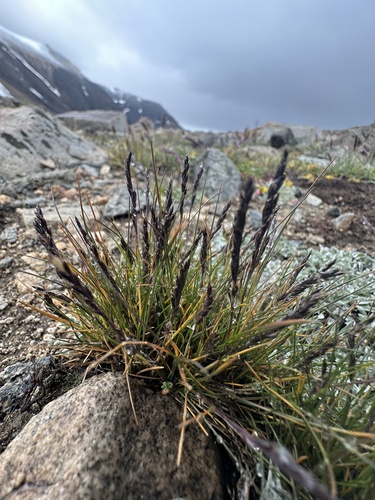
iNaturalist· cc-by-nc
(c) Светлана Шавыкина, some rights reserved (CC BY-NC)
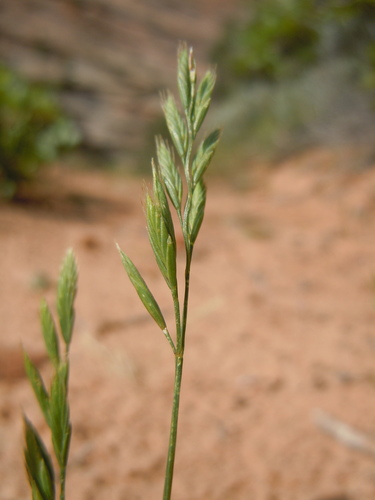
iNaturalist· cc-by-nc
(c) Светлана Шавыкина, some rights reserved (CC BY-NC)
Description
A subtropical grass in the Poaceae family (also known by the synonym Pennisetum glaucum) commonly called pearl millet or yellow bristle grass.
This description is brief — help expand it
Edible Uses
Seed - raw or cooked. It can be used like rice in sweet or savoury dishes, or can be ground into a powder and used as a flour for making breads such as chapatti, porridge etc. The grain is often fermented to make various foods. The seed can also be popped in the same manner as popcorn. The sweet tasting grains are eaten raw by children. Very nutritious, it contains about 70% carbohydrate and 10% protein. The immature flowering stems are roasted and eaten like sweetcorn.
Medicinal Uses
The plant is appetiser and tonic. It is useful in the treatment of heart diseases. The fruits have been rubbed on open facial pimples in order to get rid of them. The grain has been applied to treat chest disorders, leprosy, blennorrhoea and poisonings, and the ground grain as an anthelmintic for children. A root decoction is drunk to treat jaundice. The vapour of inflorescence extracts is inhaled for respiratory diseases in children.
Distribution
It is a subtropical plant.
Where It Grows
Africa, Brazil, Colombia, East Africa, Kenya, South America*,
Cultivation
A plant of the tropics and subtropics, succeeding from semi-arid to moist areas, it can be grown at elevations from sea level to 1,800 metres. It grows best in areas where the mean annual temperature ranges between 25 - 35°c, but can tolerate 12 - 40°c. It prefers a mean annual rainfall in the range 400 - 900mm, but tolerates 200 - 1,700mm. Requires a light well-drained soil in a sunny position. Tolerant of various soil conditions, especially of light and acid soils. Its large and dense root system allows it to succeed in dry infertile soils. Once established, the crop is fairly tolerant of salinity. This species is the most drought-resistant of all cereal crops. Prefers a pH in the range 5 - 6.5, tolerating 4.5 - 8.3. The early maturing forms require a growing period of 60 - 95 days to ripen the seed, medium duration types need about 80 days, whilst long duration types need 100 - 120 days or longer. Pearl millet is harvested by hand, either by picking the panicles or by harvesting whole plants. In cultivars where tillers ripen unevenly, several pickings are required. Cultivars with long panicles are favoured for ease of harvest, bundling and transport. In Africa, the expected yields of grain are 0.25 - 1.0 tonne per hectare, though normally the optimum yields are from 3 - 5 tonnes and experimental yields of up to 8 tonnes have been reported. When seedlings are established with fresh water and fertilizer applied, multiple irrigations with seawater can give yields of 1 - 1.6 tonnes of grain. There are often not many seeds on the inflorescence.
Propagation
Seed - sow in situ. The optimum temperature for germination is 33 - 35°c; no germination occurs below 12°c. If dry and protected from insects, seed can be stored adequately at room temperature for several years.
Other Uses
The straw is used for thatching, fencing and fuel. Split stems are used for basketry. A dye for leather and wood is obtained from red- and purple-flowered types. Pearl millet is often intercropped with one to several crops, including cowpea, sorghum and groundnut. Following the discovery that pearl millet can suppress root-lesion nematodes (Pratylenchus penetrans) it is increasingly being used as an alternative to soil fumigation in tobacco and potato cropping in Canada.
Notes
The name is ambiguous.
Synonyms
References (3)
- Kew, Plants of the World on Line
- Mutie, F. M., et al, 2023, Important Medicinal and Food Taxa (Orders and Families) in Kenya, Based on Three Quantitative Approaches. Plants 2023, 12, 1145
- World Checklist of Useful Plant Species 2020. Royal Botanic Gardens, Kew