Crinum flaccidum
Herbert
Sandover lily, Darling Lily, Macquarie Crinum, Murray lily
iNaturalist· cc-by
(c) Kym Nicolson, some rights reserved (CC BY), uploaded by Kym Nicolson
iNaturalist· cc-by-nc
(c) leithallb, some rights reserved (CC BY-NC), uploaded by leithallb
iNaturalist· cc-by
(c) Nina Kerr, some rights reserved (CC BY), uploaded by Nina Kerr
Summary
Source: WikipediaCrinum flaccidum, known variously as the Darling lily, Murray lily or Macquarie lily, is a species of flowering plant in the family Amaryllidaceae. It is native to inland Australia. The Darling river people — the Paakantyi — called this plant paalampaltharu.
Description
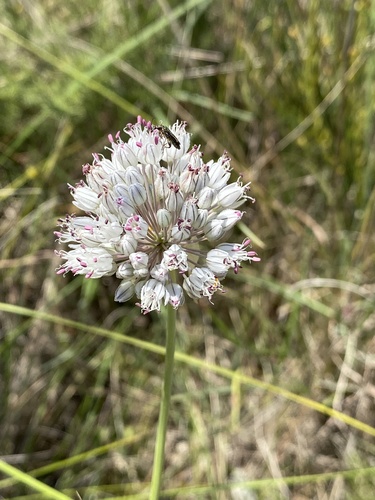
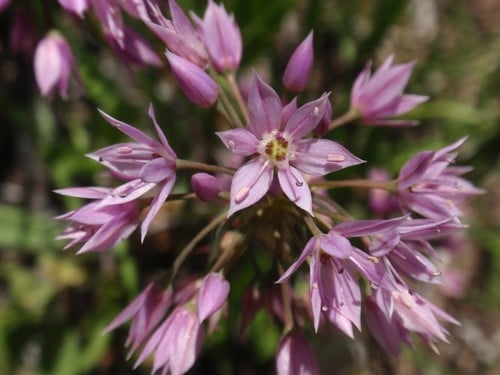
A lily. It grows 0.3-1 m high. The onion like bulb can be 0.5 m under the ground. It has limp, leathery leaves. The leaves taper to a point. The edges of the leaves are slightly rough. The flowers are white or pink. The flowers are produced in umbrella like heads. There are 6-14 flowers on a flattened stalk 30-70 cm long. The anthers in the flower are purple and strongly curved. The fruit is a capsule which is green and round. It is 1-3 cm across.
Edible Uses
The root is eaten cooked. It is rich in starch and serves as a source of arrowroot.
Traditional Uses
It is reportedly eaten in some parts of Australia. It is used as a source of arrowroot. CAUTION: In some places this bulb is bitter and considered poisonous.
Medicinal Uses
None known
Known Hazards
C. flaccidum is often mistaken for "true lilies" (Liliaceae family) due to similar basal leaf conformation. However, C. flaccidum does not belong to the Liliaceae family and therefore does not share the toxicities of this family. C. flaccidum is reported to be toxic to humans, though the evidence is inconsistent. The responsible toxin is unknown yet it is suspected to be isoquinoline phenanthridine alkaloids. The risk of danger is considered to be low however vomiting can occur when camping among a large number of flowering plants.
Distribution
It grows naturally in inland areas of eastern Australia. It will not tolerate bad drainage. It can grow in arid places. Coffs Harbour Botanical gardens.
Where It Grows
Australia*,
Cultivation
Requires a rich well-drained soil in a sheltered sunny position. Plants are not very frost hardy and are unlikely to succeed outside the mildest areas of the country. Only plant out good sized bulbs and do so at the end of May, planting them quite deeply in the soil. The bulbs are sensitive to transplanting and may take several years to establish. After this, they will usually reproduce rapidly from offsets to produce the overcrowded conditions that stimulate them to flower freely. They will require winter protection even in the mildest areas of the country, a good mulch of dry bracken might be sufficient. Members of this genus are rarely if ever troubled by browsing deer or rabbits. It is possible that other members of this genus will also provide edible bulbs.
Propagation
Sow seed as soon as it is ripe, placing 2–3 seeds in individual pots in a greenhouse without covering them. Stored seed can be sown in April or May in a warm greenhouse. Thin to one plant per pot if desired and give occasional liquid feeds to prevent nutritional deficiencies. Grow on in the greenhouse for at least the first two years before planting out in spring. Offsets can be divided in April/May or in September; divisions made in spring can go directly into permanent positions, while September divisions should be potted and overwintered in the greenhouse.
Other Uses
None known
Notes
There are over 100 Crinum species.
Also Known As
Dhaygalbaarrayn, Inland crinum
References (15)
- Bodkin, F., 1991, Encyclopedia Botanica. Cornstalk publishing, p 298
- Cribb, A.B. & J.W., 1976, Wild Food in Australia, Fontana. p 148
- Cronin, L., 1989, The Concise Australian Flora. Reed. p 35
- Elliot, W.R., & Jones, D.L., 1984, Encyclopedia of Australian Plants suitable for cultivation. Vol 3. Lothian. p 110
- Hibbert, M., 2002, The Aussie Plant Finder 2002, Florilegium. p 76
Show all 15 references Hide references
- Latz, P.K., 1996, Bushfires and Bushtucker: Aboriginal plant use in Central Australia. IAD Press Alice Springs p 152
- Lavelle, M., 2008, Wild Flowers of Australia and Oceania. Southwater. p 110
- Lazarides, M. & Hince, B., 1993, Handbook of Economic Plants of Australia, CSIRO. p 68
- Lim, T. K., 2015, Edible Medicinal and Non Medicinal Plants. Volume 9, Modified Stems, Roots, Bulbs. Springer p 28
- McKerney, M. & White, H., 2011, Bush Tucker, Boomerangs & Bandages. Border River-Gwyder Catchment Management Authority p 171
- Morley, B. & Everard, B., 1970, Wild Flowers of the World. Ebury press. Plate 143
- Paczkowska, G. & Chapman, A.R., 2000, The Western Australian Flora. A Descriptive Catalogue. Western Australian Herbarium. p 30
- Plants for a Future database, The Field, Penpol, Lostwithiel, Cornwall, PL22 0NG, UK. http://www.scs.leeds.ac.uk/pfaf/
- RIRDC, 2010, New Root Vegetables fo the Native Food Industry, Australian Government RIRDC Publication 9/161
- Townsend, K., 1994, Across the Top. Gardening with Australian Plants in the tropics. Society for Growing Australian Plants, Townsville Branch Inc. p 141