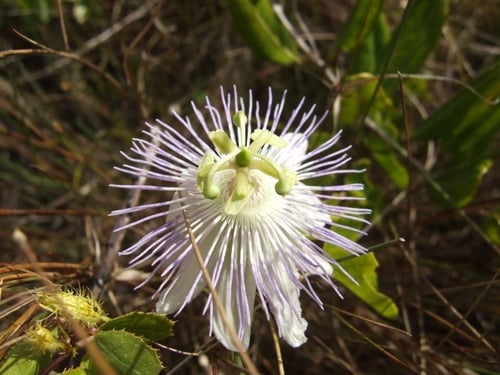
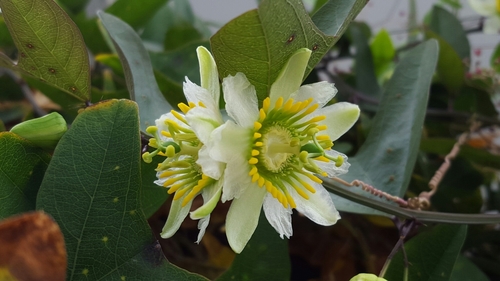
Adenia cissampeloides
(Planch. ex Benth.) Harms
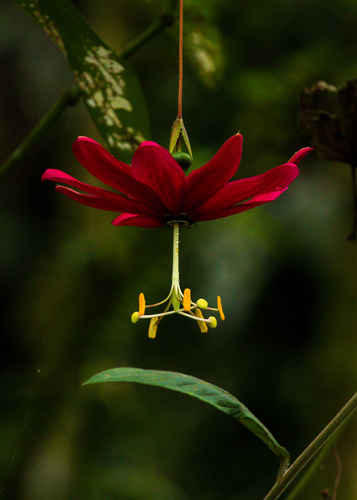
iNaturalist· cc-by-nc-sa
(c) Marco Schmidt, some rights reserved (CC BY-NC-SA), uploaded by Marco Schmidt
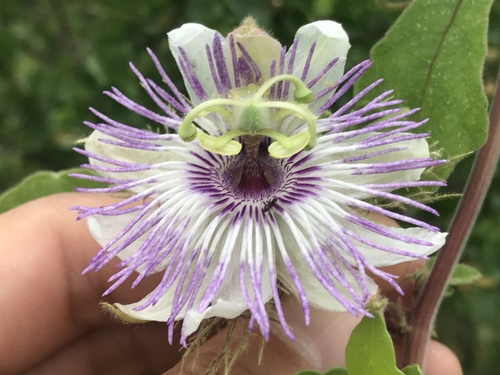
iNaturalist· cc-by-nc-sa
(c) Marco Schmidt, some rights reserved (CC BY-NC-SA), uploaded by Marco Schmidt
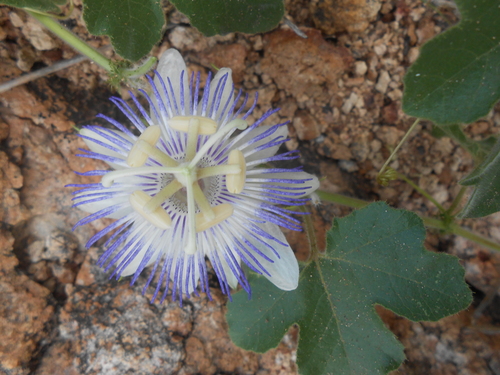
iNaturalist· cc-by-nc-sa
(c) Marco Schmidt, some rights reserved (CC BY-NC-SA), uploaded by Marco Schmidt
Summary
Source: WikipediaAdenia cissampeloides is a species of flowering plant in the passionflower family, Passifloraceae. It is native to tropical Africa.
Description
A succulent plant with a swollen base. It is partly woody and a climber. It can be 25 m high.
This description is brief — help expand it
Edible Uses
It has several different human uses from medicine to consumption. Along with several other plants, it is used in Ghana in traditional medicines as a treatment for malaria. The leaves can be cooked and eaten as a vegetable.
Traditional Uses
CAUTION: Most Adenia are poisonous. The leaves are cooked and eaten as a side dish. They are often cooked with potash.
This uses section is brief — help expand it
Medicinal Uses
The plant has many uses in traditional medicine throughout tropical Africa. All parts of the plant are utilized, being used especially in treating a range of gastro-intestinal complaints, various inflammatory ailments and for the relief of pain. Various investigations into the plant have been carried out. The stem, leaves, fruit and roots all contain the cyanogenic glycosides tetraphyllin B (barterin) and epitetraphyllin B (volkenin). The leaves also contain gummiferol, a cytotoxic polyacetylenic di-epoxide, which has shown in vitro anti-cancer activity. A diethyl-ether extract from the bark, formulated as an emulsifiable concentrate, is an effective anaesthetic for the African honeybee (Apis mellifera adansonii). Stem pulp showed a significant larvicidal effect on the beet armyworm Spodoptera exigua. Excessive use of the plant among the Zulu people in South Africa has been associated with liver complaints, and in-vivo tests have confirmed the presence of compounds causing liver damage. The plant is abortifacient, anodyne, antidote, antiinflammatory, diuretic, stomachic and vulnerary. The various plant parts (especially roots, leaves and stems) are all used, either singly or in combination. Their most frequent application is in the treatment of gastro-intestinal complaints, such as stomach ache, constipation, diarrhoea and dysentery. They are also commonly taken to treat various inflammatory ailments, commonly oedema and rheumatism; and for pain relief, particularly against headache and back pain. The plant is also used to treat a range of other complaints such as fevers and malaria; liver and gall bladder complaints; lung ailments such as bronchitis; cholera, intestinal worms, venereal diseases and sterility. An infusion of the root and leaves is drunk, and the powdered root and leaves eaten in porridge, to prevent a threatened abortion. An infusion of the leaf is used as a stimulant to treat depression and insanity. The roots are chewed to treat snakebites and are used as antidote for Acokanthera arrow poison. Applied externally, the pounded roots, and sometimes other plant parts, are widely used to dress wounds, sores and skin diseases. For leprosy, a decoction of the leaves is applied to the sores, and a root decoction is taken orally together with a vapour bath prepared from the leaves. The ashes of the bark or root are mixed with castor oil to treat scabies. A paste of the leaves is applied to broken bones and fractures. Root shavings are introduced into the vagina, or the uterus is rinsed with a root decoction, as an abortifacient. The leaves are rubbed on women’s breasts to stimulate milk flow.
Known Hazards
The crushed stems are thrown into water to act as a fish poison. The leaves, branches, bark, wood and roots may be used in fish or arrow poisons.
Distribution
It is a tropical plant. It grows from sea level to 1,600 m altitude. It grows in palm groves. It is recorded at 1,800 m above sea level in Nigeria.
Where It Grows
Africa, Burkina Faso, Cameroon, Central Africa, Congo, East Africa, Guinea, Guinée, Guinea-Bissau, Malawi, Nigeria, Sao Tome and Principe, Sierra Leone, Southern Africa, Tanzania, Uganda, West Africa, Zimbabwe,
Cultivation
The plant can flower and fruit all year round.
Propagation
Seed - Cuttings with 2 - 3 nodes.
Other Uses
The reddish sap is used as a facial cosmetic. The juice of the stems is used to give a smooth surface to mud floors. The stems are made into rope. Placing crushed twigs near the entrance of a bee hive pacifies the bees for a short time. The smoke of burning roots is also used to calm bees before harvesting the honey.
Notes
There are 95 Adenia species. They are common in the semiarid regions of Africa.
Synonyms
Also Known As
Chisokololonde, Chiswalaswala, Lapo, Malape, Pouloue
References (13)
- Billong Fils, P. E., et al, 2020, Ethnobotanical survey of wild edible plants used by Baka people in southeastern Cameroon. Journal or Ethnobiology and Ethnomedicine. 16:64 p 7
- Burkill, H. M., 1985, The useful plants of west tropical Africa, Vol. 4. Kew.
- Chapman, J. D. & Chapman, H. M., 2001, The Forest Flora of Taraba and Andamawa States, Nigeria. WWF & University of Canterbury. p 194
- East African Herbarium records, 1981,
- Flora of Tropical East Africa. Vol. 1 p 1.
Show all 13 references Hide references
- Fox, F. W. & Young, M. E. N., 1982, Food from the Veld. Delta Books. p 287
- Grubben, G. J. H. and Denton, O. A. (eds), 2004, Plant Resources of Tropical Africa 2. Vegetables. PROTA, Wageningen, Netherlands. p 559
- Kwapata, M. B. & Maliro, M. F., Indigenous vegetables in Malawi: Germplasm collecting and improvement of production practices. FAO
- Martin, F.W. & Ruberte, R.M., 1979, Edible Leaves of the Tropics. Antillian College Press, Mayaguez, Puerto Rico. p 211
- Okigbo, B.N., Vegetables in Tropical Africa, in Opena, R.T. & Kyomo, M.L., 1990, Vegetable Research and development in SADCC countries. Asian Vegetable Research and development Centre. Taiwan. p 44
- Peters, C. R., O'Brien, E. M., and Drummond, R.B., 1992, Edible Wild plants of Sub-saharan Africa. Kew. p 159
- Plowes, N. J. & Taylor, F. W., 1997, The Processing of Indigenous Fruits and other Wildfoods of Southern Africa. in Smartt, L. & Haq. (Eds) Domestication, Production and Utilization of New Crops. ICUC p 184
- World Checklist of Useful Plant Species 2020. Royal Botanic Gardens, Kew