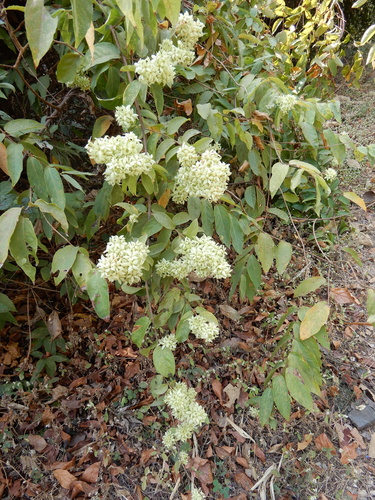
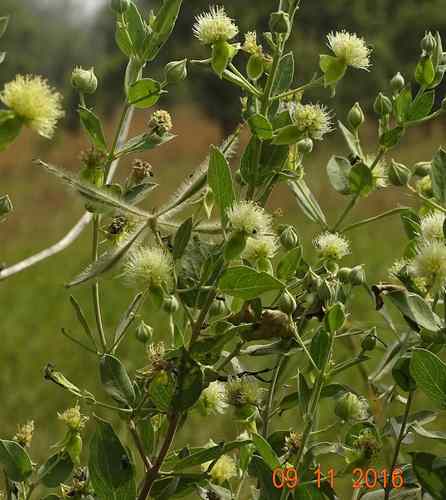
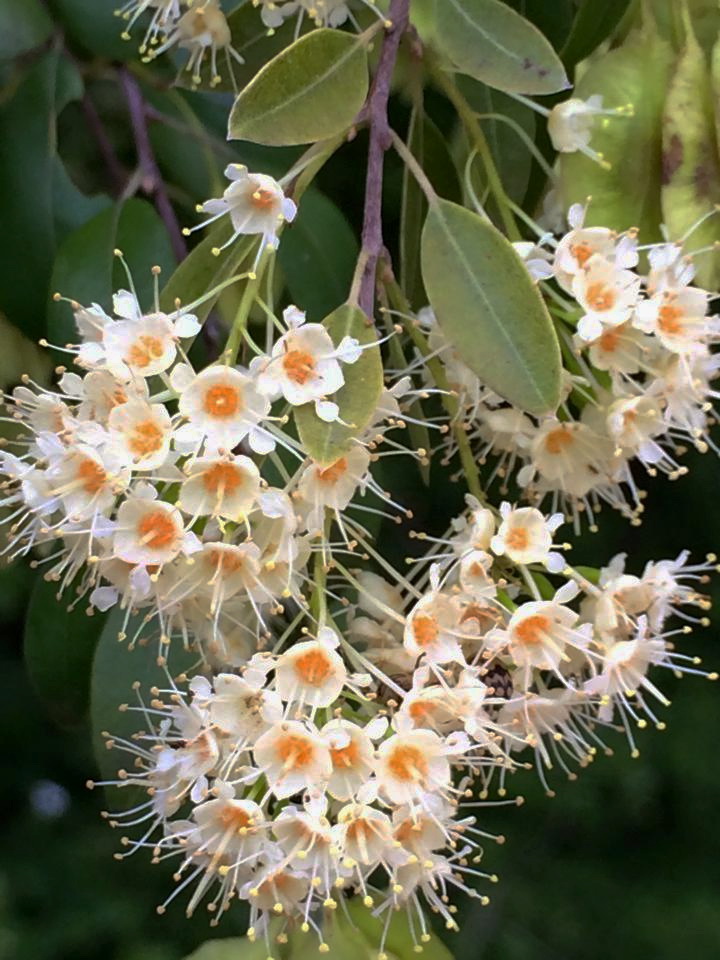
Terminalia myriocarpa
Van Heurck & Mull. Arg.
East Indian almond
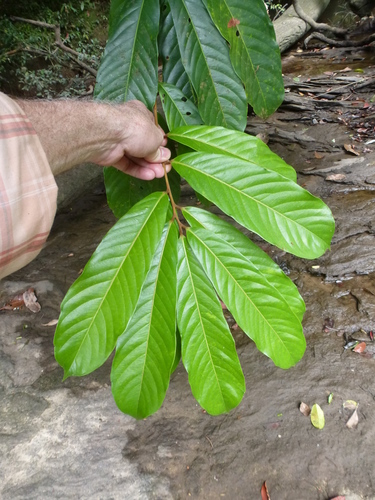
iNaturalist· cc-by-nc-sa
(c) Phuentsho, some rights reserved (CC BY-NC-SA), uploaded by Phuentsho
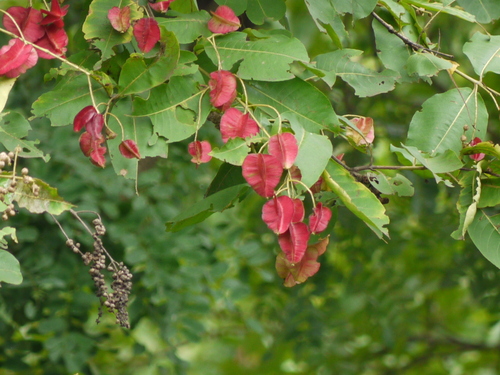
iNaturalist· cc-by
(c) Zac Peterson, some rights reserved (CC BY)
Summary
Source: WikipediaTerminalia myriocarpa, the East Indian almond, is a tree species in the genus Terminalia found in Southeast Asia.
Description
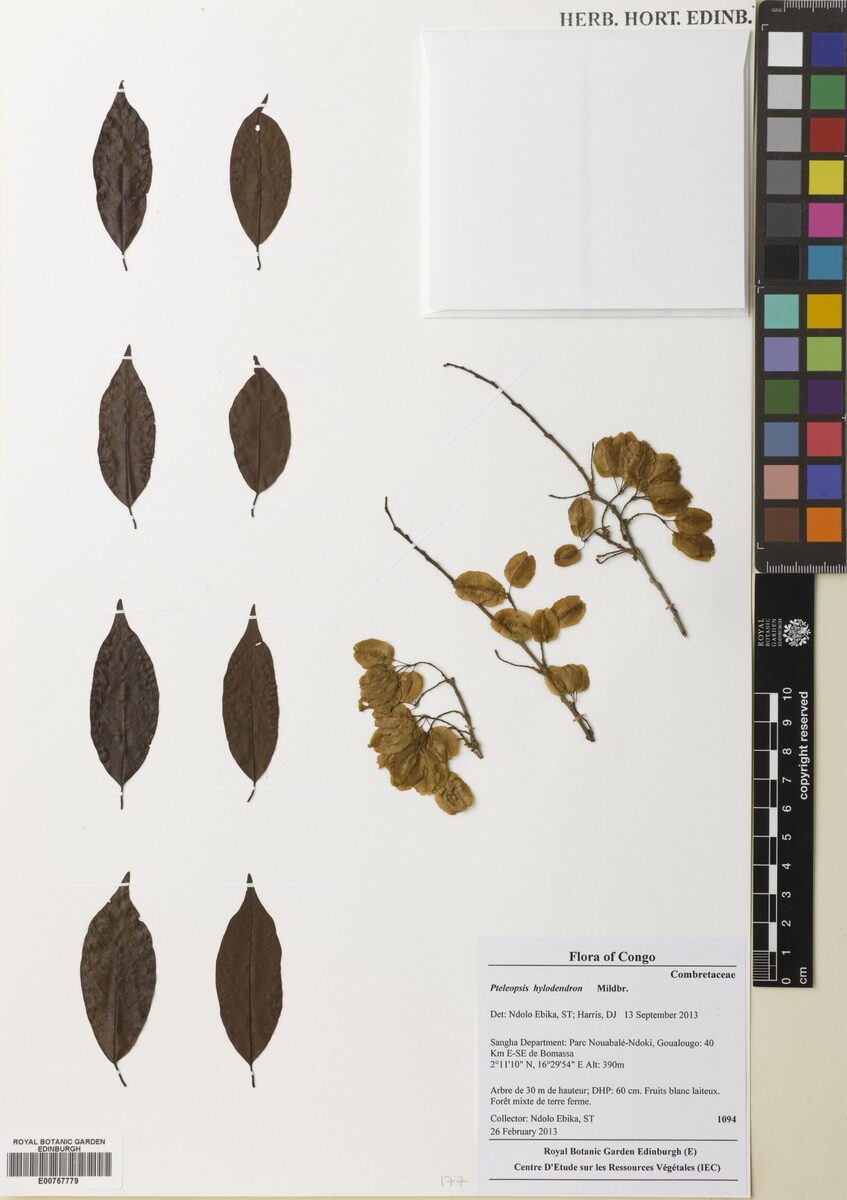
A tree. It grows 35 m tall. The trunk is 2.8 m across. It has large buttresses. The leaves are opposite and 10-25 cm long by 4-10 cm wide. The fruit has 2 wings. They are 0.3-0.6 cm long by 0.8-1.2 cm wide.
Edible Uses
The seeds are eaten.
Distribution
It is a subtropical plant.
Where It Grows
Asia, Bhutan, China, Himalayas, India, Sikkim, Tibet,
Cultivation
Found at elevations up to 1,700 metres in the Himalayas. It grows best in areas where the mean maximum and minimum annual temperatures are within the range 22 - 32°c, though it can tolerate 7 - 39°c. It prefers a mean annual rainfall in the range 3,000 - 4,000mm, though it can tolerate from 2,000 - 5,500mm. Requires a sunny position. Grows best in a well-drained, deep, fertile, loamy to clayey soil. Established plants are drought tolerant. Prefers a pH in the range 5 - 6, tolerating 4.5 - 7.
Other Uses
The heartwood is dark brown, beautifully mottled with dark streaks; the sapwood is light brown. The wood is straight-grained, moderately heavy, hard and durable, standing well outdoors even when not seasoned. It is easy to glue, nail and peel off. An excellent timber for many purposes, it is used for making cheap furniture, window frames, doors, railway carriages and generally for any work where accurate fitting is the main object. The wood makes an excellent charcoal.
Synonyms
Also Known As
Pani saj
References (2)
- Li, S., et al, 2020, Monpa, memory, and change: an ethnobotanical study of plant use in Mêdog County, South-east Tibet, China. Journal of Ethnobiology and Ethnomedicine. (2020) 16:5 p 16
- Sundriyal, M. & Sundriyal, R. C., 2004, Structure, Phenology, Fruit Yield, and Future Prospects of some Prominent Wild Edible Plant Species of the Sikkim Himalaya, India. Journal of Ethnobiology 24(1): 113-138