Crataegus pubescens
Steud.
Mexican hawthorn
iNaturalist· cc-by-nc
(c) Ana FLP, some rights reserved (CC BY-NC)
wikimedia· cc-by-sa
Wikimedia Commons - Daniel Manrique ([email protected])
wikimedia· cc-by-sa
Wikimedia Commons - Krzysztof Ziarnek, Kenraiz
Summary
Source: WikipediaA medium-growing deciduous tree reaching 10 m, hardy to UK zone 7. Hermaphrodite flowers pollinated by midges. Suitable for light sandy, medium loamy, and heavy clay soils with mildly acid to mildly alkaline pH. Grows in semi-shade or full sun, prefers moist or wet soil but tolerates drought. Resists strong winds and atmospheric pollution, though not maritime exposure.
Description
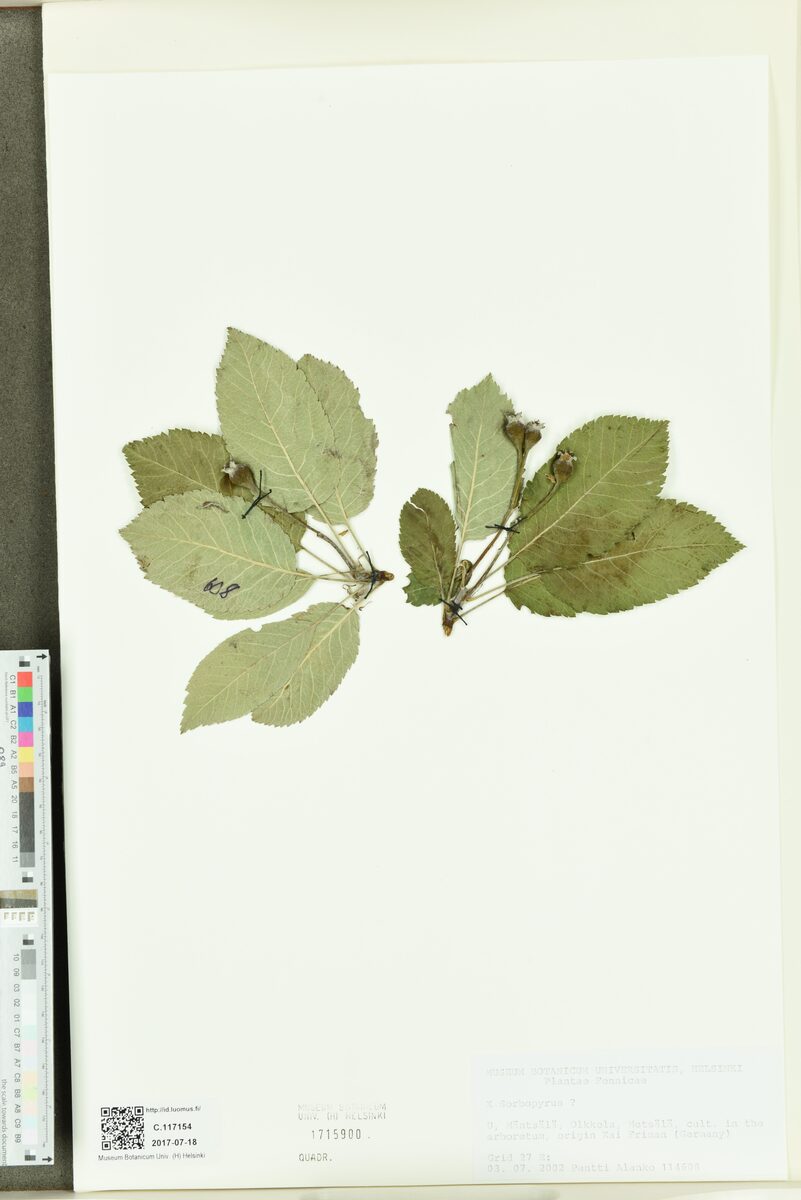
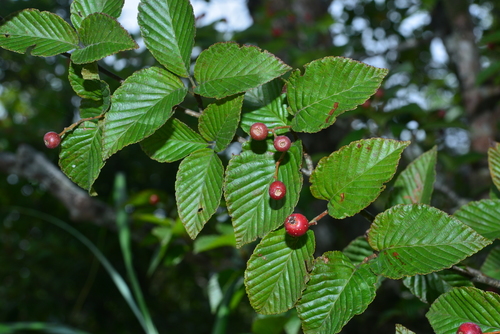
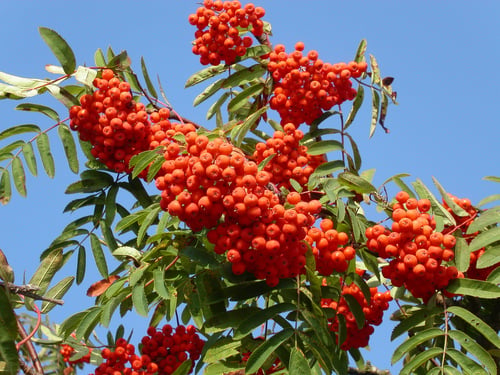
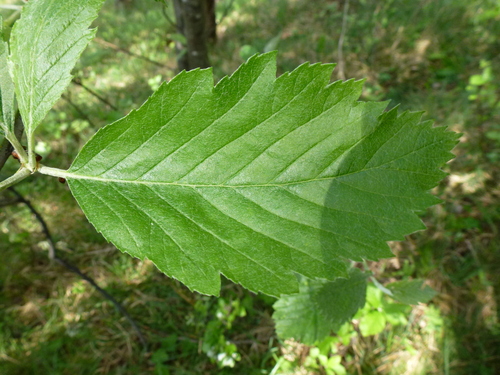
A deciduous or semi-evergreen tree. It may or may not have thorns. It grows 6 m high and spreads 3 m wide. The leaves are up to 8 cm long. They are dark green but downy underneath. They turn orange to red in autumn. The flowers are white. The fruit are round or pear shaped. They are yellow-orange.
Edible Uses
The fruit can be eaten raw or cooked and has a mealy texture. It is commonly used in preserves. For stewing, the fruits are first boiled with wood ashes to remove the skin, then boiled briefly in hot syrup with red colouring and hung on nails fixed into poles, much like candied apples. Up to five fairly large seeds sit in the centre, often fusing together so the fruit is eaten like a cherry with a single stone.
Traditional Uses
The fruit are used to make jelly, jams and preserves. For stewing they are boiled with wood-ashes to remove the skin then boiled in hot syrup.
This uses section is brief — help expand it
Medicinal Uses
Though no specific research has been conducted on this species, the fruits and flowers of hawthorns are widely recognised in herbal folk medicine as a heart tonic — a use supported by modern research. Both parts exert a hypotensive effect and act as a gentle, direct cardiac tonic, making them particularly useful for weak heart combined with high blood pressure. Prolonged use is required for the treatment to be effective. It is typically prepared as a tea or tincture.
Distribution
It is a warm temperate and subtropical plant. It can grow in the highlands in the tropics. It will grow in most soils. It needs an open sunny position. It is resistant to drought but damaged by frost. It suits hardiness zones 7-10. Kyneton Botanical Gardens.
Where It Grows
Africa, Australia, Central America, East Africa, Guatemala, Mexico*, North America, South Africa, Southern Africa, Zambia, Zimbabwe,
Cultivation
A very easily grown plant, it prefers a well-drained moisture retentive loamy soil but is not at all fussy. Once established, it succeeds in excessively moist soils and also tolerates drought. It grows well on a chalk soil and also in heavy clay soils. A position in full sun is best when plants are being grown for their fruit, they also succeed in semi-shade though fruit yields and quality will be lower in such a position. Most members of this genus succeed in exposed positions, they also tolerate atmospheric pollution. Hybridizes freely with other members of this genus. Seedling trees take from 5 - 8 years before they start bearing fruit, though grafted trees will often flower heavily in their third year. The flowers have a foetid smell somewhat like decaying fish. This attracts midges which are the main means of fertilization. When freshly open, the flowers have more pleasant scent with balsamic undertones. Seedlings should not be left in a seedbed for more than 2 years without being transplanted.
Propagation
Seed is best sown as soon as it is ripe in autumn in a cold frame. Some seed will germinate the following spring, though most will likely take a further year. Stored seed can be very slow and erratic; it should be warm stratified for 3 months at 15°c, then cold stratified for 3 months at 4°c, and may still take another 18 months to germinate. Scarifying before stratification may help, as may fermenting the seed in its own pulp for a few days. Alternatively, harvest seed green — once the embryo is fully developed but before the seedcoat hardens — and sow immediately in a cold frame for possible spring germination. For small quantities, pot seedlings individually as soon as they are large enough to handle and grow on for their first year before planting out in late spring. For larger quantities, sow directly in an outdoor seedbed with protection from mice and seed-eating animals, undercutting roots if plants will remain in the bed for more than two years.
Other Uses
The wood is heavy, hard, tough, and close-grained, making it well suited for tool handles, mallets, and other small wooden items. The plant is noted for its scent.
Other Information
The fruit are commonly used.
Notes
There are 200 or more Crataegus species.
Synonyms
Also Known As
Manzanilla, Manzanita, Teijocote Hawthorn, Tejecote
References (23)
- Arellanes, Y., et al, 2013, Influence of traditional markets on plant management in the Tehuacan Valley. Journal of Ethnobiology and Ethnomedicine 9:38
- Bodkin, F., 1991, Encyclopedia Botanica. Cornstalk publishing, p 296
- Caballero, J. N., & Mapes, C. S., 1985, Gathering and Subsistence Patterns among the P'urhepecha Indians of Mexico. J. Ethnol. 5(1): 31-47
- Etherington, K., & Imwold, D., (Eds), 2001, Botanica's Trees & Shrubs. The illustrated A-Z of over 8500 trees and shrubs. Random House, Australia. p 240
- Facciola, S., 1998, Cornucopia 2: a Source Book of Edible Plants. Kampong Publications, p 197
Show all 23 references Hide references
- FAO, 1993, Valor Nutritivo Y Usis en Alimantacion humana de Algunis Cultivos Autoctonos Subexplotados de Mesoamerica. FAO, Santiago, Chile. p 30
- Fowler, D. G., 2007, Zambian Plants: Their Vernacular Names and Uses. Kew. p 55
- Fox, F. W. & Young, M. E. N., 1982, Food from the Veld. Delta Books. p 155
- Glowinski, L., 1999, The Complete Book of Fruit Growing in Australia. Lothian. p 43, 44 (As Crataegus mexicana)
- Hedrick, U.P., 1919, (Ed.), Sturtevant's edible plants of the world. p 226
- Hermandez Bermejo, J.E., and Leon, J. (Eds.), 1994, Neglected Crops. 1492 from a different perspective. FAO Plant Production and Protection Series No 26. FAO, Rome. p17
- Hibbert, M., 2002, The Aussie Plant Finder 2002, Florilegium. p 75
- Hibbert, M., 2002, The Aussie Plant Finder 2002, Florilegium. p 75 (As Crataegus mexicana)
- Jardin, C., 1970, List of Foods Used In Africa, FAO Nutrition Information Document Series No 2.p 131
- John, L., & Stevenson, V., 1979, The Complete Book of Fruit. Angus & Robertson p 288 (As Crataegus mexicana)
- Lord, E.E., & Willis, J. H., 1999, Shrubs and Trees for Australian gardens. Lothian. p 52
- Marshall, E. and Newton, A. C., 2003, Non-Timber Forest Products in the Community of El Terrero, Sierra de Manantlan Biosphere Reserve, Mexico: Is Their Use Sustainable? Economic Botany 57(2):262-278
- Nomencl. bot. ed. 2, 1:433. 1840
- Plants for a Future database, The Field, Penpol, Lostwithiel, Cornwall, PL22 0NG, UK. http://www.scs.leeds.ac.uk/pfaf/ (As Crataegus mexicana)
- Popenoe,
- Reis, S. V. and Lipp, F. L., 1982, New Plant Sources for Drugs and Foods from the New York Botanical Garden herbarium. Harvard. p 98
- Ruiters-Welcome, A. K., 2019, Food plants of southern Africa. Ph.D. thesis. Univ. of Johannesburg p 94
- Welcome, A. K. & Van Wyk, B.-E., 2019, An inventory and analysis of the food plants of southern Africa. South African Journal of Botany 122 (2019) 136–179