Santalum obtusifolium
R. Br.
Sandalwood
iNaturalist· cc-by
(c) Max Campbell, some rights reserved (CC BY), uploaded by Max Campbell
iNaturalist· cc-by-nc
(c) quinkin, some rights reserved (CC BY-NC)
iNaturalist· cc-by-nc
(c) polyscias099, some rights reserved (CC BY-NC)
Summary
Source: WikipediaSantalum obtusifolium, known as the sandalwood or blunt sandalwood, is a shrub found in eastern Australia. Often seen around a metre tall, it may grow to 2.5 metres high. Seen in eucalyptus forests and woodlands, often by creeks and usually not far from the sea. It grows in moderate to high rainfall areas such as Royal and Lamington National Parks. Growing as far from the coast as Yarrowitch, Megalong Valley and Braidwood in New South Wales. Unlike other sandalwood species, little is known of its fruit, wood, or other uses. However, there are reports the fruit is edible. According to Butaud 2008, there is Ximenynic acid (71.5%) and Oleic acid (14.3%) in the fruit kernels. The specific epithet obtusifolium is from Latin, and it refers to the blunt leaves. This plant first appeared in the scientific literature in 1810, in the Prodromus Florae Novae Hollandiae, authored by the prolific Scottish botanist, Robert Brown.
Description
A shrub that grows attached to other plants. It is straggling and 1-2 m tall. The young stems are angular. The leaves are narrow to sword shaped and 2-6 cm long by 3-7 mm wide. They taper at both ends. The flowers are small and 4 mm long by 7 mm wide. The fruit are round and blue-black. They are 8-12 mm across. The fruit has a round scar on top. The flesh of the ripe fruit is dark red and juicy. There is one seed.
Edible Uses
The ripe fruit is eaten.
Traditional Uses
The ripe fruit is eaten.
This uses section is brief — help expand it
Distribution
It is a temperate to subtropical plant.
Where It Grows
Australia,
Synonyms
References (1)
- Caton, J.M. & Hardwick, R. J., 2016, Field Guide to Useful Native Plants from Temperate Australia. Harbour Publishing House. p 360
More from Santalaceae
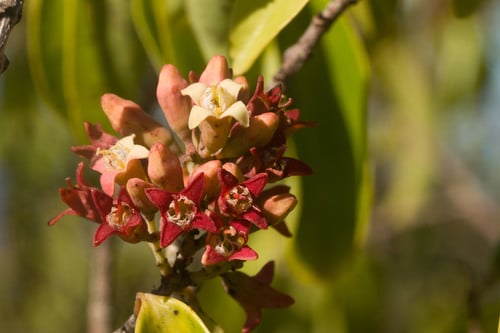
Santalum freycinetianum
Forest sandalwood, Freycinet sandalwood
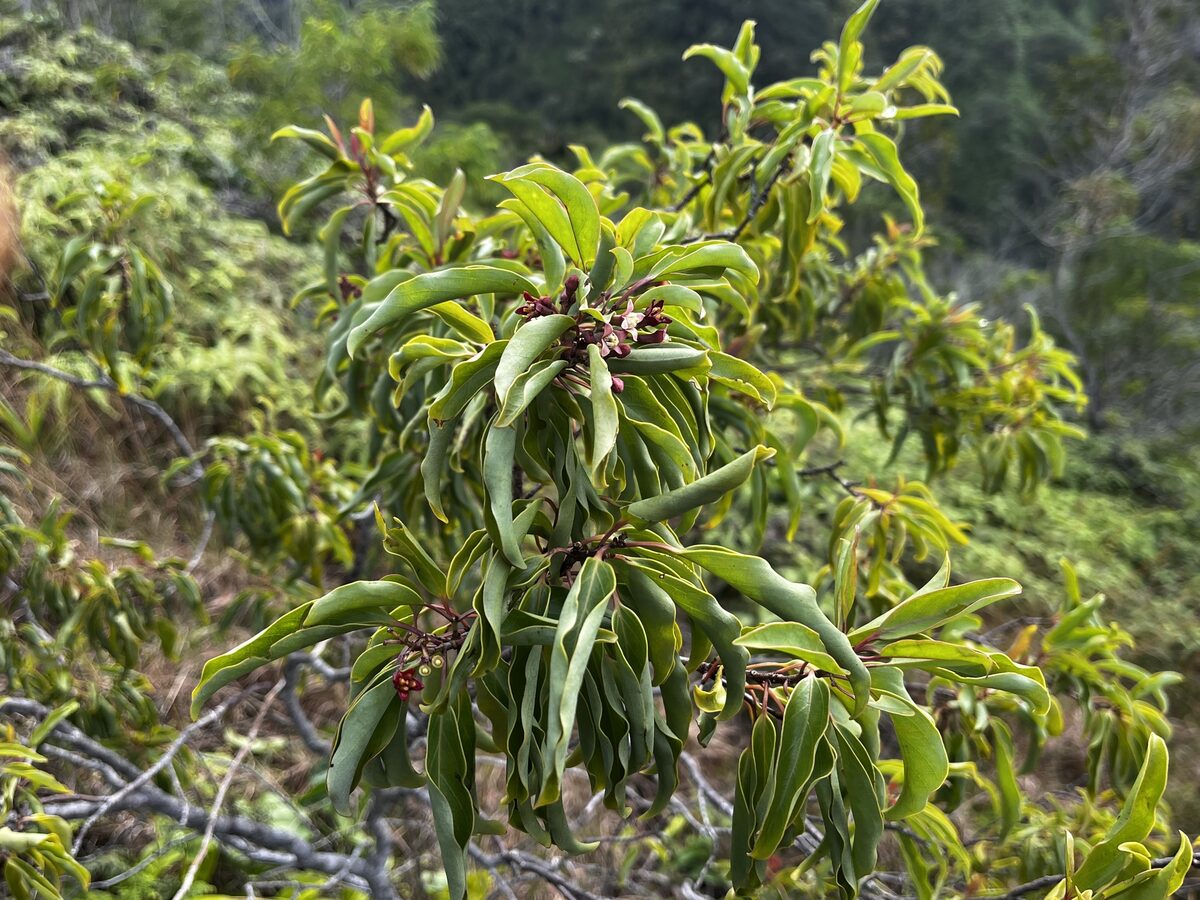
Santalum freycinetianum -
Lanai Sandalwood, Hawaiian Sandalwood
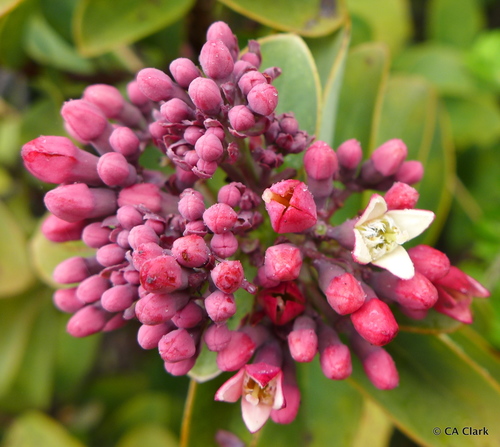
Santalum haleakalae
Haleakalae sandalwood
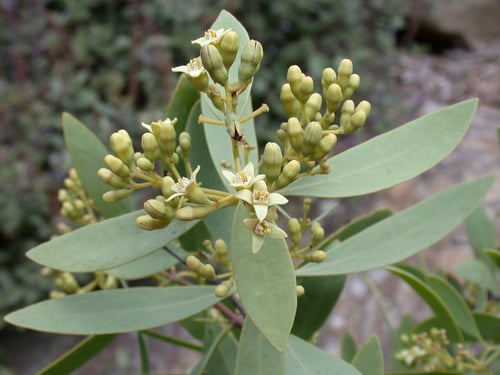
Santalum lanceolatum
Sandalwood, Northern sandalwood, Bush plum
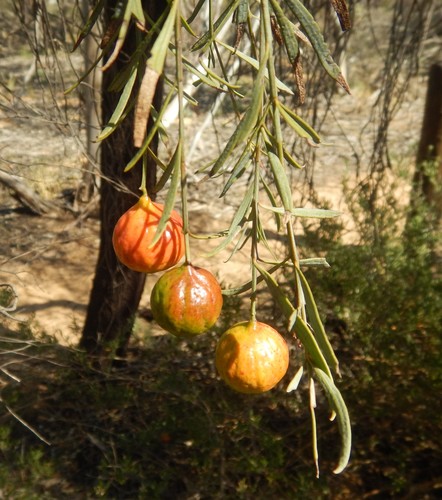
Santalum murrayanum
Bitter quandong, Ming
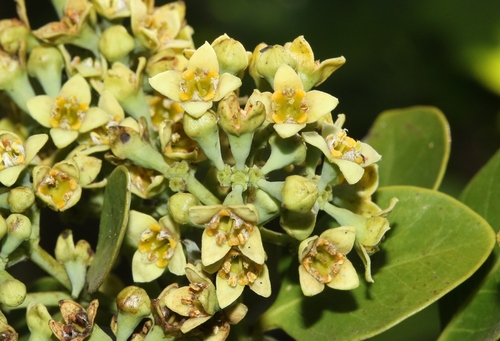
Santalum paniculatum
Mountain sandalwood,, 'Iliahi