Viscum articulatum
Burm. f.
Mistletoe
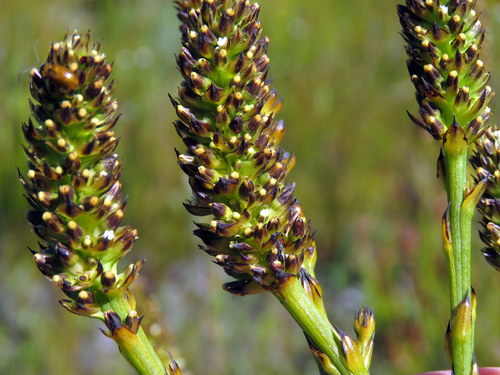
iNaturalist· cc-by
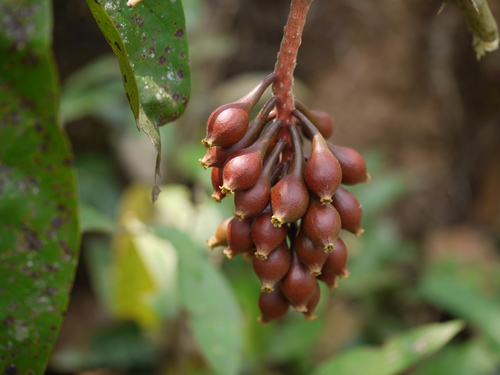
(c) Cheng-Tao Lin, some rights reserved (CC BY), uploaded by Cheng-Tao Lin
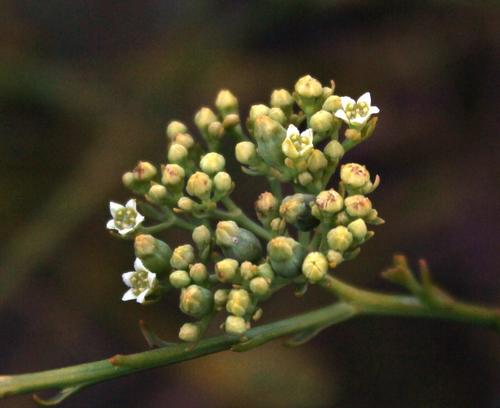
iNaturalist· cc-by
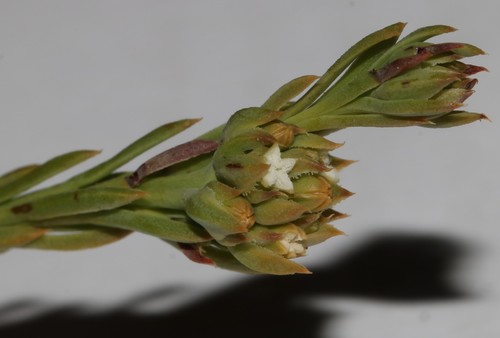
(c) Cheng-Tao Lin, some rights reserved (CC BY), uploaded by Cheng-Tao Lin
iNaturalist· cc-by-nc
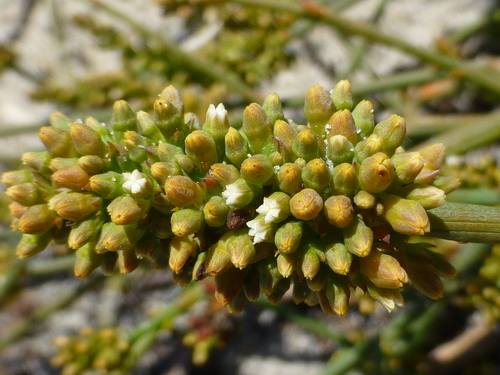
(c) allen83059, some rights reserved (CC BY-NC), uploaded by allen83059
Description
Shrubs which climb and feed on other plants. They are vines which hang down. The vines are square in cross section but become round with age. They have ridges along them. The leaves are reduced to small scales near the flowers. Several flowers develop one after another along the flowering shoots. The male and female flowers are separate but on the same plant. The male flowers are triangular shaped while the female flowers are more like cylinders. Male flowers are near the edge and female flowers at the centre. The fruit is a white or yellow berry which lets light through. The fruit are round, smooth and 3-4 mm across. The fruit is attached to a long sticky strand.
Edible Uses
The whole plant is roasted and eaten. Both fruit and leaves are consumed.
Traditional Uses
The whole plant is roasted and eaten.
This uses section is brief — help expand it
Distribution
They are tropical plants. They are spread naturally by special birds. They only grow on certain kinds of trees. (Loranthaceae and Buchanania obovata). In Sikkim it grows between 500-1,500 m above sea level. In Yunnan.
Where It Grows
Asia, Australia, Cambodia, China, Himalayas, Fiji, India, Indochina, Indonesia, Malaysia, Myanmar, Nepal, Northeastern India, Pacific, Papua New Guinea, PNG, SE Asia, Sikkim,
Cultivation
Plants are grown from seed. Normally these are dropped into trees by birds which eat the fruit.
Notes
It has also been put in the family Viscaceae.
Synonyms
Also Known As
Banda, Bandala, Budu, Gandhamadini, Harchur, Hurchu, Jivantika, Kabikabi, Kamarukha, Kamavriksha, Katkom janga, Kawarka, Lenpat, Mandada, Nilavalli, Pand, Paragaccha, Thition, Vadaka, Vando, Vandu, Xavtevqtevqlevq
References (15)
- Ambasta, S.P. (Ed.), 2000, The Useful Plants of India. CSIR India. p 681
- Cherikoff V. & Isaacs, J., The Bush Food Handbook. How to gather, grow, process and cook Australian Wild Foods. Ti Tree Press, Australia p 197
- Flora of China @ efloras.org Volume 5
- Fl. indica 311. 1768
- Hani Medicine of Xishuangbanna, 1999, p 727
Show all 15 references Hide references
- Jackes, B.R., 2001, Plants of the Tropics. Rainforest to Heath. An Identification Guide. James Cook University. p 86
- Jadhav, R., et al, 2015, Forest Foods of Northern Western Ghats: Mode of Consumption, Nutrition and Availability. Asian Agri-History Vol. 19, No. 4: 293-317
- Kunwar, R. M., et al, Indigenous use of mistletoes in tropical and temperate region of Nepal. Banko Janakari, Vol. 15, No. 2.
- Low, T., 1991, Wild Food Plants of Australia. Australian Nature FieldGuide, Angus & Robertson. p 126 (Photo)
- Melzer, R., & Plumb, J., 2011, Plants of Capricornia. Belgamba, Rockhampton. p 60
- Morley, B.D., & Toelken, H.R., (Eds), 1983, Flowering Plants in Australia. Rigby. p 236
- Paczkowska, G . & Chapman, A.R., 2000, The Western Australian Flora. A Descriptive Calatogue. Western Australian Herbarium. p 568
- Sundriyal, M., et al, 1998, Wild edibles and other useful plants from the Sikkim Himalaya, India. Oecologia Montana 7:43-54
- Sundriyal, M., et al, 2004, Dietary Use of Wild Plant Resources in the Sikkim Himalaya, India. Economic Botany 58(4) pp 626-638
- Wheeler, J.R.(ed.), 1992, Flora of the Kimberley Region. CALM, Western Australian Herbarium, p 581 (Drawing)