Hakea salicifolia
(Vent.) B.L. Burtt
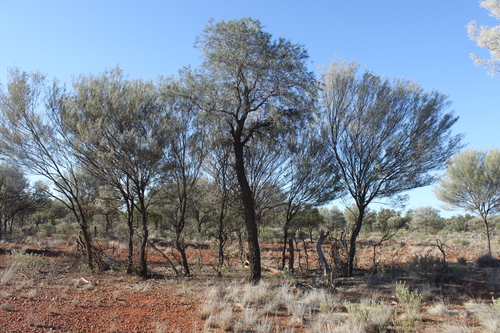
iNaturalist· cc-by-nc-nd
(c) James Gaither, some rights reserved (CC BY-NC-ND)
iNaturalist· cc-by-nc
(c) Phil Collier, some rights reserved (CC BY-NC)
iNaturalist· cc-by-nc
(c) Phil Collier, some rights reserved (CC BY-NC)
Summary
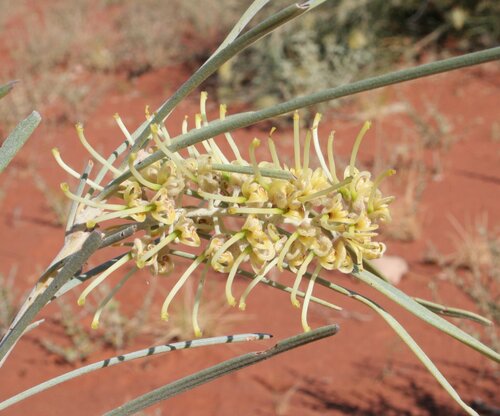
Source: WikipediaHakea salicifolia, commonly known as the willow-leaved hakea, is a species of flowering plant that is endemic to eastern Australia. It is an adaptable, fast growing small tree or shrub with attractive foliage and cream white flowers.
Description
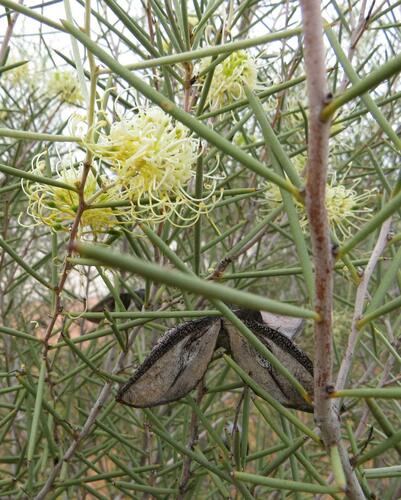
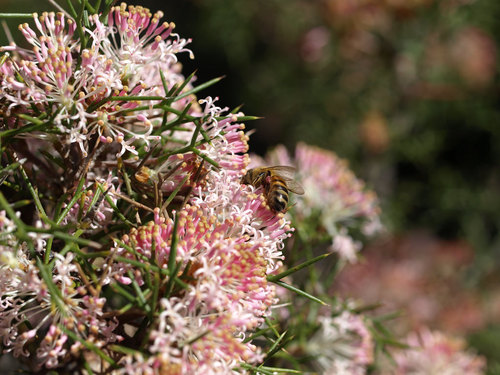
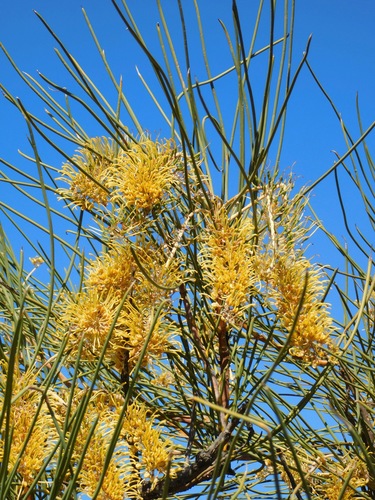
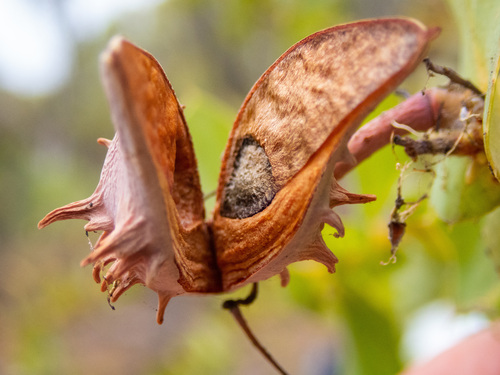
A shrub. It grows 2-5 m tall. The leaves are drooping. The leaves are 5-12 cm long by 8-18 mm wide. The flowers are white and in dense clusters. They are 11 mm long by 5 mm wide. The fruit is a hard woody follicle. It is 2-3 cm long by 1-2 cm wide. The fruit are silvery grey with a lumpy surface. There are 2 winged seeds.
Edible Uses
The flower nectar is edible, and the seeds are roasted and eaten.
Traditional Uses
The flower nectar is edible. The seeds are roasted and eaten.
This uses section is brief — help expand it
Distribution
It is a temperate plant. Arboretum Tasmania.
Where It Grows
Africa, Australia*, East Africa, Portugal, Spain, Tanzania, Tasmania,
Other Information
It is cultivated.
Synonyms
References (2)
- Caton, J.M. & Hardwick, R. J., 2016, Field Guide to Useful Native Plants from Temperate Australia. Harbour Publishing House. p 258
- Zeven, A. C. & de West, J. M. J., 1982, Dictionary of cultivated plants and their regions of diversity. Wageningen. p 66