Crataegus phaenopyrum
(L. f.) Medikus
Washington hawthorn
iNaturalist· cc0
no rights reserved, uploaded by Adam Kranz
iNaturalist· cc0
no rights reserved, uploaded by Adam Kranz
iNaturalist· cc-by
(c) Michael J. Papay, some rights reserved (CC BY), uploaded by Michael J. Papay
Summary
Source: WikipediaCrataegus phaenopyrum is a species of hawthorn commonly known as Washington hawthorn or Washington thorn. It is widely grown as an ornamental plant, and can reach 10 m (about 32 feet) in height. The small red berry-like fruit grow closely together in large clusters and are food for squirrels and birds. They have a mild flavor and can be eaten raw or cooked. As with other species of hawthorn, the wood is hard and can be used to make tools. The fruit is edible and can be made into jelly or crushed to make tea. The species is native to the mid-eastern United States.
Description
A deciduous tree. It grows 6-12 m tall. It is very thorny. The thorns are long and sharp. The crown is round and it is densely branched. The bark is red-brown to grey-brown and thin and scaly. The leaves are broadly oval and 3-8 cm long and have 3-5 sharply toothed lobes. They are glossy green. The flowers are white. They have a scent. They occur in clusters. The fruit are small and shiny. They are orange-red berries. They are 4-6 mm across.
Edible Uses
The fruit can be eaten raw or cooked, though the flesh is dry. The fruits are very small — around 5mm in diameter — and often persist on the tree throughout winter. Up to five fairly large seeds occupy the centre, frequently sticking together so that the fruit is eaten much like a cherry with a single stone.
Medicinal Uses
Though no specific research has been conducted on this species, the fruits and flowers of hawthorns are widely recognised in herbal folk medicine as a heart tonic — a use supported by modern research. Both parts exert a hypotensive effect and act as a gentle, direct cardiac tonic, making them particularly useful for weak heart combined with high blood pressure. Prolonged use is required for the treatment to be effective. It is typically prepared as a tea or tincture.
Distribution
It is native to S.E. United States. Temperate. It will grow in most soils. It needs an open sunny position. It is resistant to frost and drought. It suits hardiness zones 5-10. Arboretum Tasmania.
Propagation
Seed is best sown as soon as it is ripe in autumn in a cold frame. Some seed will germinate the following spring, though most will likely take a further year. Stored seed can be very slow and erratic; it should be warm stratified for 3 months at 15°c, then cold stratified for 3 months at 4°c, and may still take another 18 months to germinate. Scarifying before stratification may help, as may fermenting the seed in its own pulp for a few days. Alternatively, harvest seed green — once the embryo is fully developed but before the seedcoat hardens — and sow immediately in a cold frame for possible spring germination. For small quantities, pot seedlings individually as soon as they are large enough to handle and grow on for their first year before planting out in late spring. For larger quantities, sow directly in an outdoor seedbed with protection from mice and seed-eating animals, undercutting roots if plants will remain in the bed for more than two years.
Other Uses
The wood is heavy, hard, tough, and close-grained, making it well suited for tool handles, mallets, and other small wooden items. The plant is suitable for training as an espalier and is noted for its scent.
Synonyms
References (14)
- Bodkin, F., 1991, Encyclopedia Botanica. Cornstalk publishing, p 296
- Coombes, A.J., 2000, Trees. Dorling Kindersley Handbooks. p 243
- Cundall, P., (ed.), 2004, Gardening Australia: flora: the gardener's bible. ABC Books. p 433
- Elias, T.S. & Dykeman P.A., 1990, Edible Wild Plants. A North American Field guide. Sterling, New York p 237
- Esperanca, M. J., 1988. Surviving in the wild. A glance at the wild plants and their uses. Vol. 2. p 302
Show all 14 references Hide references
- Etherington, K., & Imwold, D., (Eds), 2001, Botanica's Trees & Shrubs. The illustrated A-Z of over 8500 trees and shrubs. Random House, Australia. p 240
- Farrar, J.L., 1995, Trees of the Northern United States and Canada. Iowa State University press/Ames p 393
- Gesch. Bot. 84. 1793
- Hibbert, M., 2002, The Aussie Plant Finder 2002, Florilegium. p 75
- Little, E.L., 1980, National Audubon Society Field Guide to North American Trees. Alfred A. Knopf. p 479
- Lord, E.E., & Willis, J.H., 1999, Shrubs and Trees for Australian gardens. Lothian. p 52
- Plants for a Future database, The Field, Penpol, Lostwithiel, Cornwall, PL22 0NG, UK. http://www.scs.leeds.ac.uk/pfaf/
- Ryan, S., 2008, Dicksonia. Rare Plants Manual. Hyland House. p 20
- Young, J., (Ed.), 2001, Botanica's Pocket Trees and Shrubs. Random House. p 292
More from Rosaceae
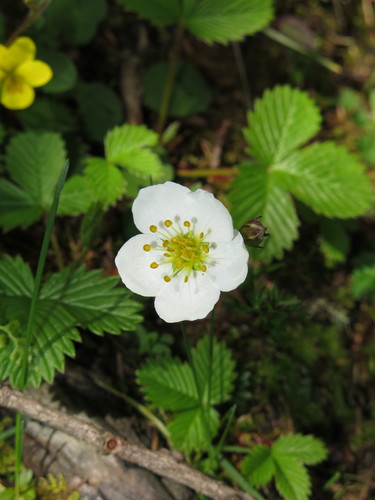
Fragaria orientalis
Oriental strawberry
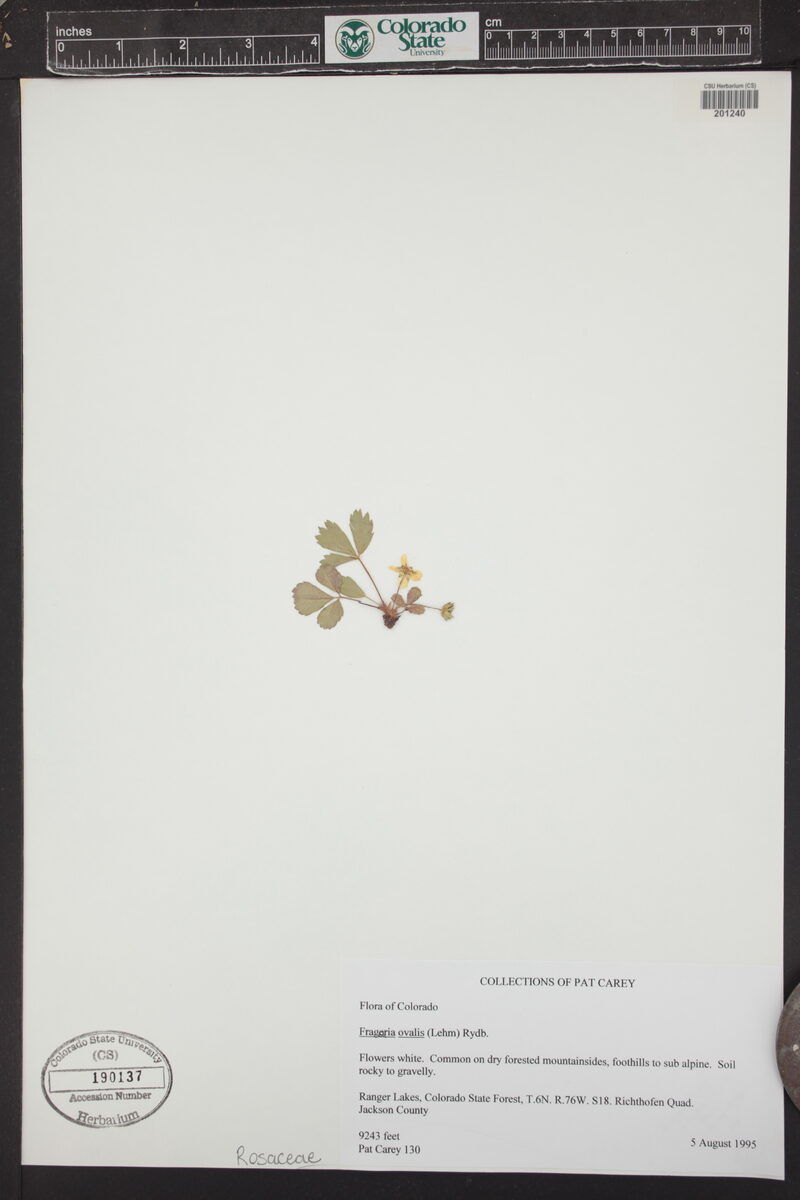
Fragaria ovalis - (Lehm.)Rydb.
Rocky Mountain Strawberry
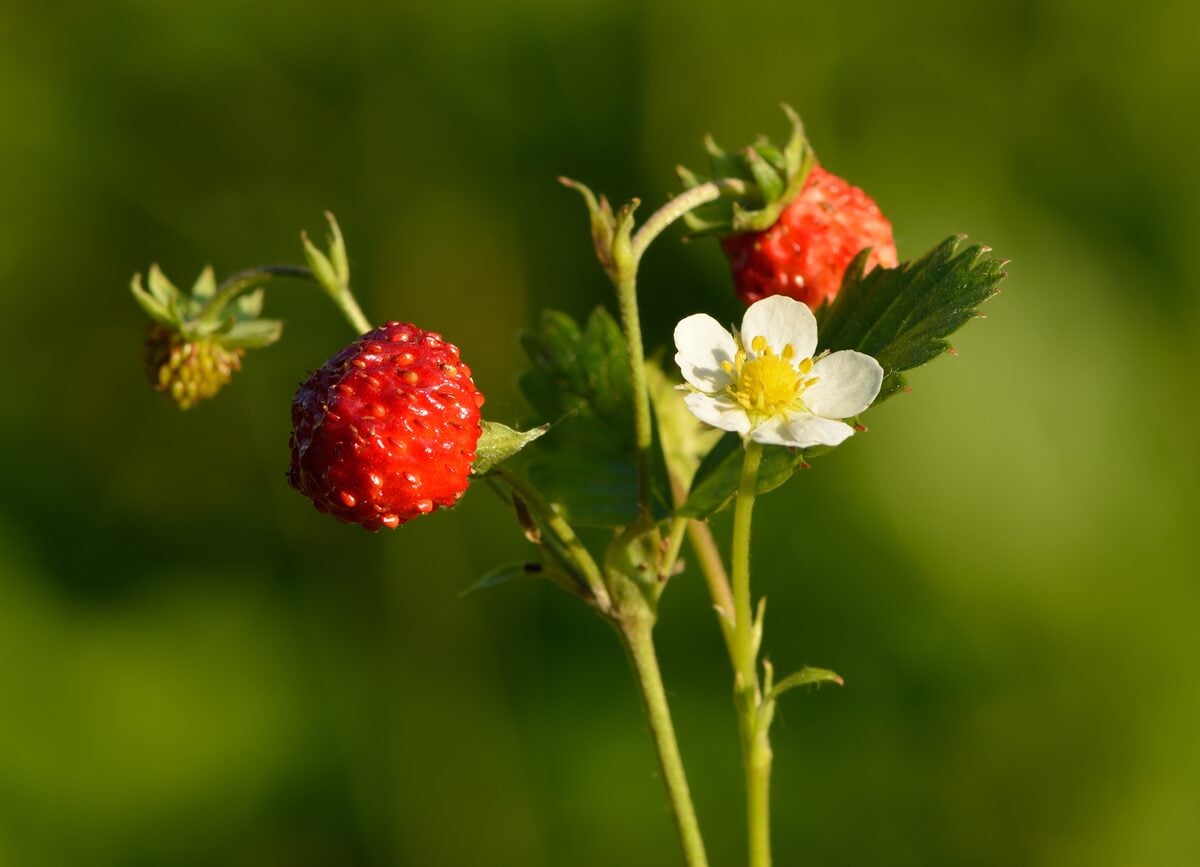
Fragaria vesca
Alpine strawberry, Woodland strawberry
Fragaria vesca 'Semperflorens'
Alpine Strawberry
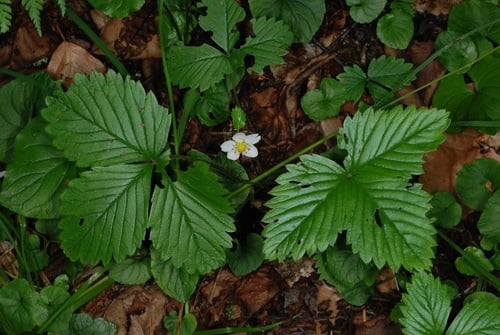
Fragaria vesca subsp. americana
Woodland strawberry
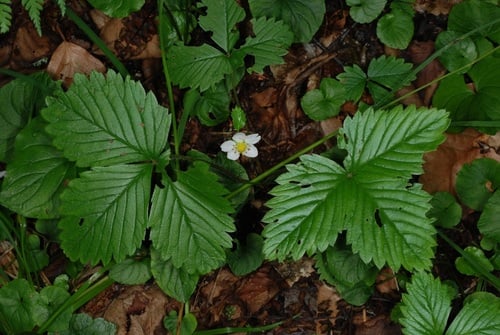
Fragaria vesca subsp. bracteata
Woodland strawberry, Pacific Strawberry