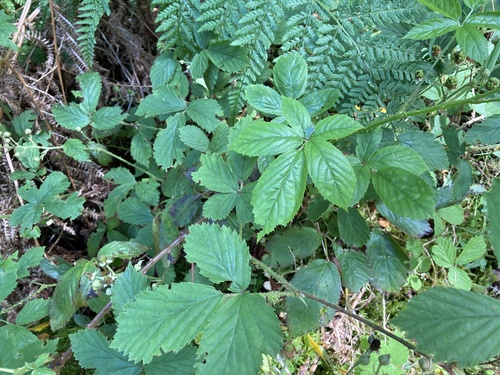
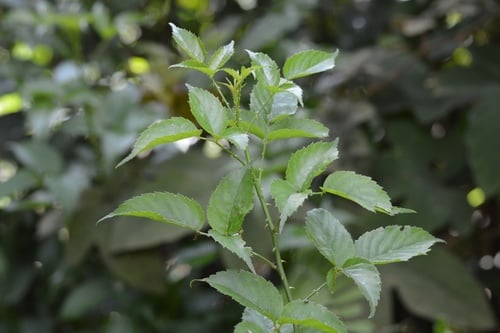
Prunus turneriana
(F. M. Bail.) Kalkman
Almond bark
iNaturalist· cc-by-nc
(c) Russell Cumming, some rights reserved (CC BY-NC)
Wikipedia· cc-by-sa
Wikimedia Commons - Prunus_turneriana_ALA3.jpg
Summary
Source: WikipediaPrunus turneriana is a species of plant in the rose, apple and peach family Rosaceae, native to New Guinea and Australia. Its common names include almondbark, wild almond, and joonda. The name almondbark refers to the almond-like odour emitted when the bark is cut. A late successional rainforest tree, it reaches 30 m (98 ft). The fruit is eaten by cassowaries (Casuarius casuarius), fruit pigeons (Ptilinopus spp.), Herbert River ringtail possums (Pseudochirulus herbertensis) and musky rat-kangaroos (Hypsiprymnodon moschatus).
Description
A tree. It grows 30 m tall. Male and female flowers are on separate plants. The leaves are simple and 7-20 cm long by 3-12 cm wide. There are rusty hairs underneath. The flowers are in the axils of the leaves or along them stems. The flowers are about 1 cm across and have 4-6 petals. They are of various colours. The fruit is fleshy and red to black. It is 2-4 cm long by 2-4 cm wide. There is one brown seed.
Edible Uses
The seeds are eaten.
Traditional Uses
Caution: The fruit may contain cyanide. This is bitter.
This uses section is brief — help expand it
Known Hazards
This species should be treated with caution as it is frequently recorded as having an almond odour in various parts. The odour is caused by the presence of the toxin hydrogen cyanide. The fruits should not be eaten. The plant (especially the seed and young shoots) contains cyanogenic glycosides, especially amygdalin and prunasin. When injested, these compounds break down in the digestive tract to release cyanide. Used in small quantities in both traditional and conventional medicine, this exceedingly poisonous compound has been shown to stimulate respiration, improve digestion, and promote a sense of well-being. It is also claimed by some to be of benefit in the treatment of cancer - though this claim has been largely refuted. In larger concentrations, however, cyanide can cause gasping, weakness, excitement, pupil dilation, spasms, convulsions, coma and respiratory failure leading to death. The fruits and flowers of most members of this genus generally have low or very low concentrations of this toxin, though the seeds and young shoots can contain much higher levels. The levels of toxin can be detected by the level of bitterness:- for example sweet tasting almond seeds are a major food crop and are often eaten in quantity, whilst bitter tasting almond seeds are used as a flavouring (in marzipan for example) but are not usually eaten on their own. In general, it can be considered safe to eat any fruit or seed from species in this genus that either have a sweet flavour or are slightly bitter. Great caution should be taken, however, if the flavour is moderately to very bitter.
Distribution
It is a tropical plant. It occurs in the wet tropics in northern Australia. It grows from sea level to 1,200 m above sea level. Seedlings need good light conditions.
Where It Grows
Australia*, Malesia, Papua New Guinea, PNG,
Propagation
Seed - requires 2 - 3 months cold stratification and is best sown in a cold frame as soon as it is ripe. Sow stored seed in a nursery seedbed as early in the year as possible. Protect the seed from mice etc. The seed can be rather slow, sometimes taking 18 months to germinate. Prick out the seedlings into individual pots when they are large enough to handle. Grow them on until large enough to plant out Cuttings of half-ripe wood with a heel in a frame. Softwood cuttings from strongly growing plants in a frame. Layering
Other Uses
A useful general purpose timber.
Production
It grows quickly.
Synonyms
Also Known As
Joonda
References (2)
- Hill, R. and Baird, A., 2003, Kuku-Yalanji Rainforest Aboriginal People and Carbohydrate Resource Management in the Wet Tropics of Queensland, Australia. Human Ecology, Vol. 31, No. 1. pp 27-52
- World Checklist of Useful Plant Species 2020. Royal Botanic Gardens, Kew