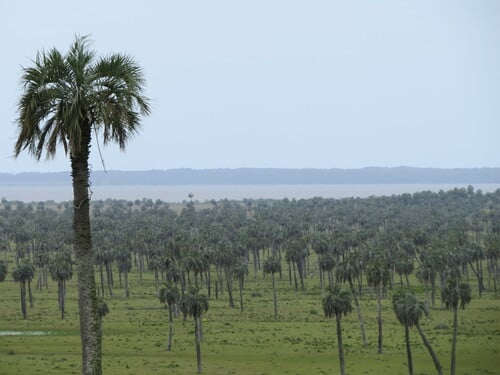
Hydriastele costata
F. M. Bailey
Cape York palm
iNaturalist· cc-by-nc
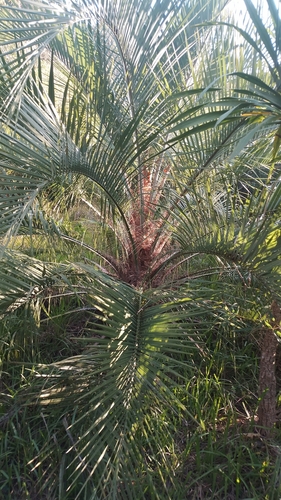
(c) Gary Rethus, some rights reserved (CC BY-NC), uploaded by Gary Rethus
iNaturalist· cc-by-nc
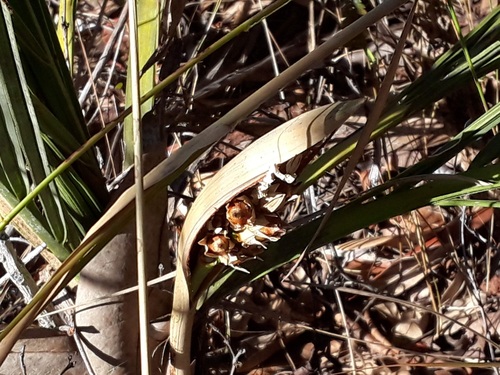
(c) sworboys, some rights reserved (CC BY-NC)
iNaturalist· cc-by-nc
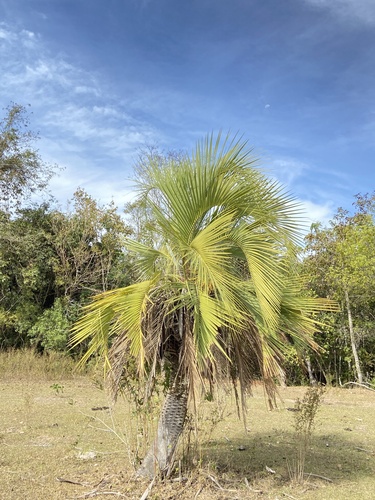
(c) sworboys, some rights reserved (CC BY-NC)
Description
A slender palm. It grows 35 m tall. The stem is 15-35 cm across. The crown has 12-35 leaves. The crown of leaves forms a circle. The leaves are 2.4-5.5 m long with a sheath 50-180 cm long. The leaves have 58-75 leaflets on each side. The flowering shoot is 58-100 cm long and it is branched 2 or 3 times. The fruit are 8-10 mm long by 6 mm wide. They ripen to red and then dark purple and blackish. The seed is about 5.5 mm long by 4.5 mm wide.
Edible Uses
The palm heart is consumed. The palm heart (the inner core and growing bud of the plant) is harvested. It provides a crispy food, rich in nutrients, that can be eaten raw or cooked. Harvesting the heart will lead to the death of the plant since it is unable to produce new shoots.
Medicinal Uses
The crushed stem is taken orally as a remdy for shortness of breath.
Distribution
It is a tropical plant. It grows in sago swamps. It grows from sea level to 700 m above sea level.
Where It Grows
Australia, Indonesia, Papua New Guinea, PNG, SE Asia,
Other Uses
The leaf sheaths are used as basins for water buckets, carrying baskets, sago containers and plates. The indumentum is used as a firelighter. Old inflorescences are used as brushes. The stems and leaves of this species are used for flooring and house construction..
Other Information
In Papua New Guinea it is very common and also planted near villages.
Synonyms
Also Known As
Avos, Kaparo, Korr, Mabla, Oratare, Poi, Tab, Tabavo, Tabuh, Yawa, Yuhar
References (2)
- Leach, G. J., 1988, Bush Food Plants of the Blackwater and Karawari Rivers Area, East Sepik Province, Papua New Guinea. Science in New Guinea 14(2). p 102 (As Gulubia costata)
- World Checklist of Useful Plant Species 2020. Royal Botanic Gardens, Kew