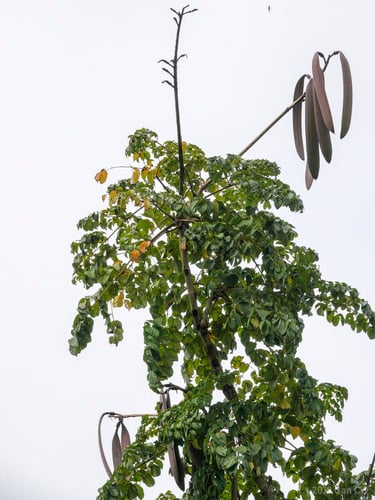
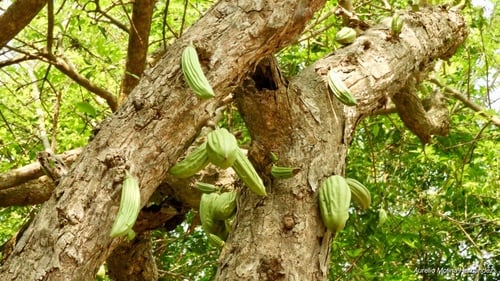
Stereospermum chelonoides
(L.f.) DC.
Yellow snake tree
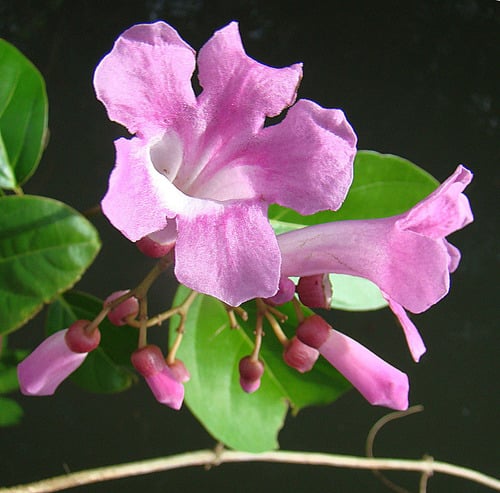
iNaturalist· cc-by-nc
(c) MSH Sourav, some rights reserved (CC BY-NC), uploaded by MSH Sourav
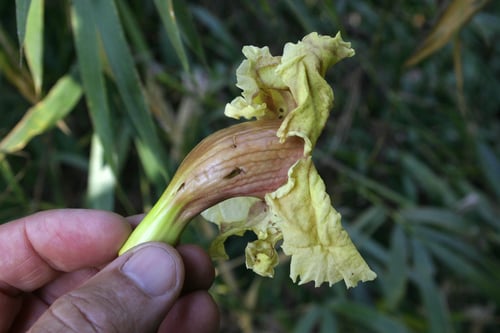
iNaturalist· cc-by-nc-sa
(c) Aniruddha Singhamahapatra, some rights reserved (CC BY-NC-SA)
Summary
Source: WikipediaStereospermum chelonoides (Parul in Bengal region) is a deciduous tree native to South and Southeast Asia. In Theravada Buddhism, this plant is said to have used as the tree for achieved enlightenment, or Bodhi by third Buddha called "Saranankara - සරණංකර", and twenty second Buddha "Vipassi - විපස්සි".
Description
A large tree. It grows 15-30 m tall. The lowest branches can be 15 m up the trunk. The trunk is 80 cm across. It loses its leaves during the year.
Edible Uses
The following reports on edibility are more likely to correctly refer to Stereospermum tetragonum rather than this species, though could equally apply to both species. See notes above on taxonomy. Tender young fruit - cooked and eaten as a vegetable. Flowers - cooked and used as a vegetable.
Traditional Uses
The young fruit are cooked as a vegetable. The flowers are cooked and eaten as a vegetable.
This uses section is brief — help expand it
Medicinal Uses
The juice of the bark is used to treat indigestion. The bark is one of the ingredients of 'Dasamula' (‘ten barks’), a polyherbal medication commonly used in Ayurveda The root and bark are used as a favourite tonic native medicine. A decoction of the roots is used in the treatment of intermittent and puerperal fevers, inflammatory affections of the chest. The flowers are taken in the form of a confection as an aphrodisiac. The flowers pounded with honey are said to stop troublesome hiccough. Extracts of the plant contain lapachol. Lapachol has exhibited cytotoxic activity. The leaves contain the flavone 'stereolensin'.
Distribution
It is a subtropical and tropical plant. In Nepal it grows up to 700 m above sea level.
Where It Grows
Asia, Bangladesh, Cambodia, India, Laos, Malaysia, Myanmar, Nepal, Northeastern India, SE Asia, Sikkim, Sri Lanka,
Cultivation
It grows easily from seed.
Propagation
Seed - Usually germinates quite quickly, though only a small percentage of the seeds are viable. Seeds generally retain viability for less than 12 months. Cuttings Air layering Suckers
Other Uses
The ashes of the bark are used in preparing an alkaline ley and caustic pastes. The grey wood is hard, elastic, moderately durable, easy to work, takes a good polish, and finishes to a smooth surface. It is not attacked by insects but has low resistance to the weather. Usually there is no heartwood, though sometimes a small amount is formed that is yellowish brown and handsomely mottled. The wood is moderately valuable, and can be used for making furniture, construction, tea boxes, canoes etc. An excellent fuel, the wood also makes a good charcoal. Bees are strongly attracted to the fragrant flowers. A useful tree for reclothing bare hill-sides, as may be seen in the Siwalik hills, and for restocking grassy blanks subject to frost. The winged seeds usually hang on the tree until just before the rainy season, then falling and able to travel some distance in the breeze before and germinating with the first rains. The seedlings usually compete well if growing in grassy areas.
Synonyms
References (2)
- Sundriyal, M. & Sundriyal, R. C., 2004, Structure, Phenology, Fruit Yield, and Future Prospects of some Prominent Wild Edible Plant Species of the Sikkim Himalaya, India. Journal of Ethnobiology 24(1): 113-138 (As Stereospermum suaveolens)
- Tropical Plants Database, Ken Fern. tropical.theferns.info.