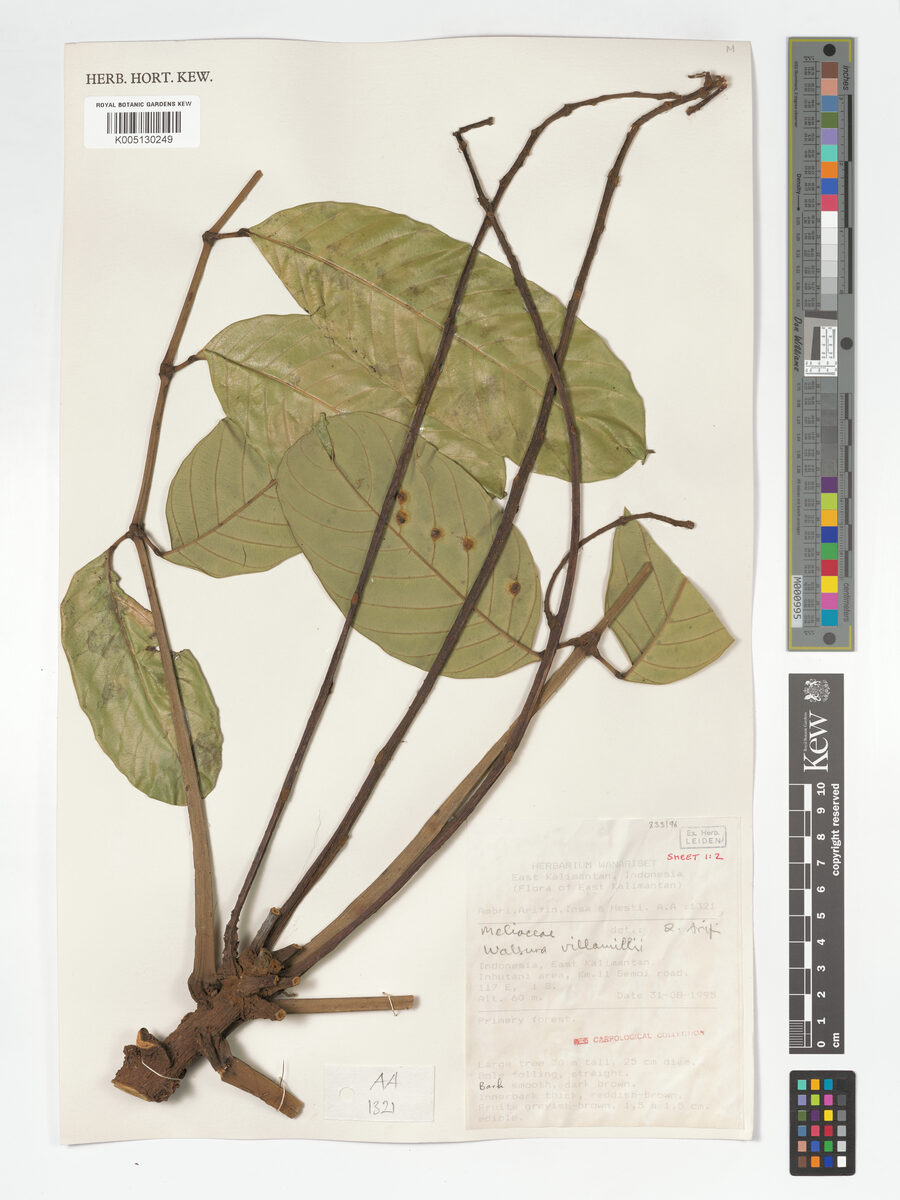
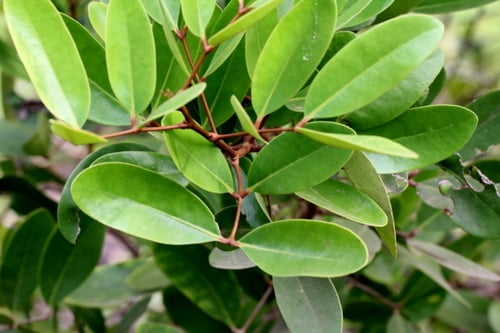
Xylocarpus moluccensis
(Lam.) M. Roem.
Puzzle tree
iNaturalist· cc-by-sa
(c) Steve Fitzgerald, some rights reserved (CC BY-SA), uploaded by Steve Fitzgerald
iNaturalist· cc-by-nc
(c) Colour Blind Flora Enthusiast, some rights reserved (CC BY-NC)
iNaturalist· cc-by-nc
(c) Colour Blind Flora Enthusiast, some rights reserved (CC BY-NC)
Summary
Source: WikipediaXylocarpus moluccensis is a tree in the family Meliaceae. The name derives from the Moluccas archipelago (now the Maluku Islands).
Description
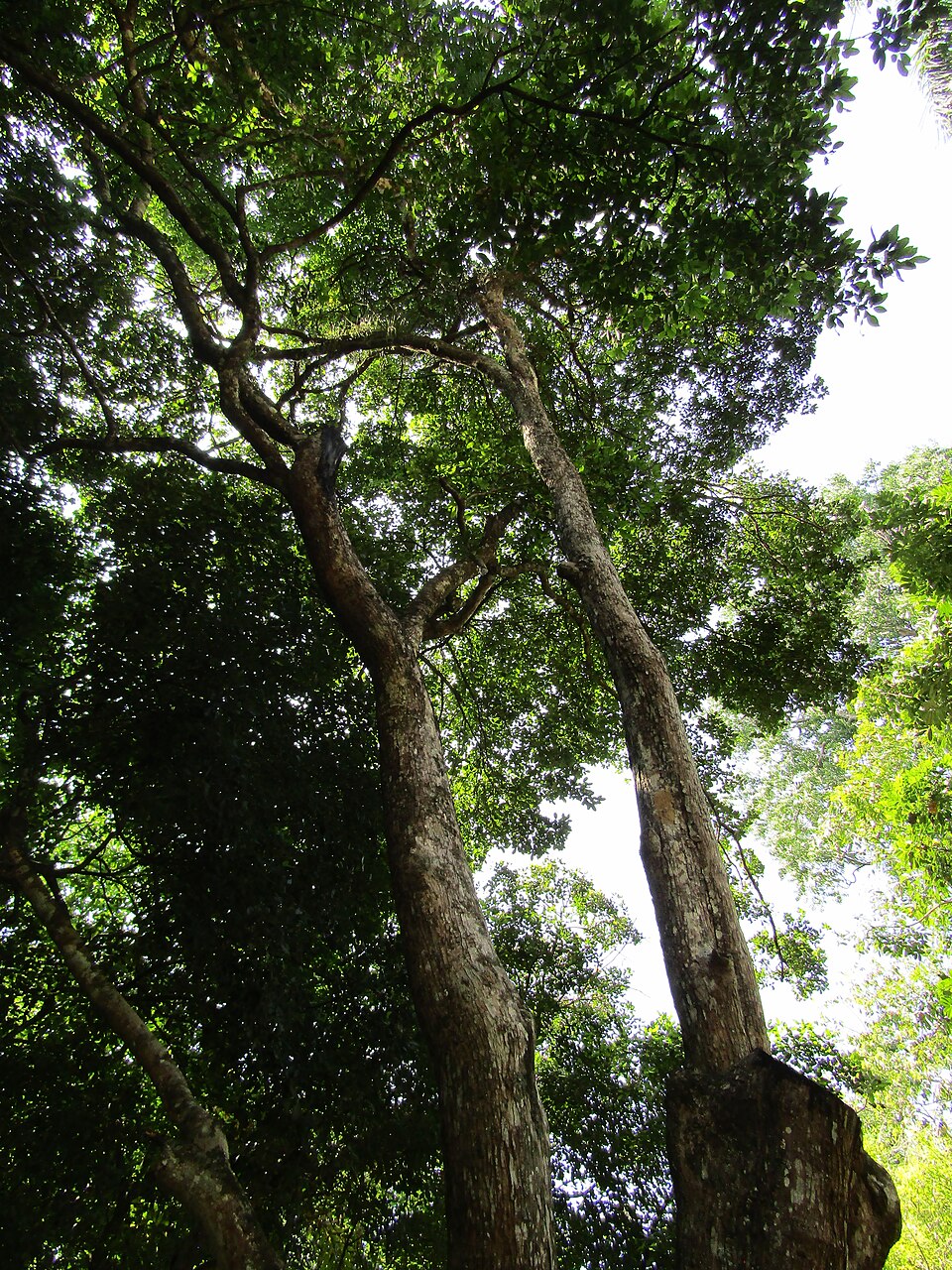
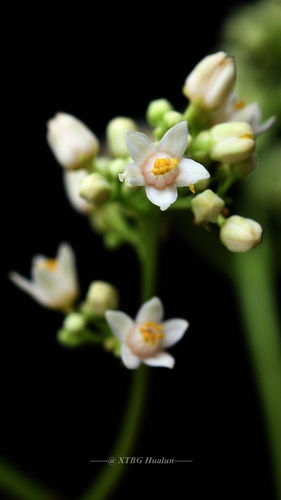
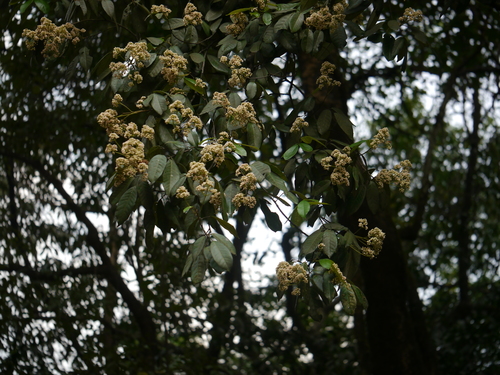
A small tree. It grows 5-18 m tall. It can be 30 m tall and have a trunk 70 cm across. It has aerial roots. The leaves have 1-7 leaflets. The flowers are creamy-white. The fruit are round and 11 cm across.
Edible Uses
The fruit peel is eaten in soups.
Traditional Uses
The peel of the fruit is eaten in soups.
This uses section is brief — help expand it
Medicinal Uses
The fruit is used as a treatment for swellings of the breast and for elephantiasis. The dried fruit peel is used as an appetizer. The astringent bark has some medicinal uses. It is reported to cure dysentery, diarrhoea and other abdominal troubles, and is also used as a febrifuge. The seed kernels are used as a bitter tonic. The seed ash, mixed with sulphur and coconut oil, is used as an ointment to treat itch.
Distribution
It is a tropical plant. It grows on sandy and rocky beaches and in mangroves.
Where It Grows
Andamans, Asia, Australia, Bangladesh, India, Indonesia, Pacific, Philippines, Samoa, SE Asia,
Cultivation
A plant of the wet, lowland tropics. It grows best in areas where annual daytime temperatures are within the range 20 - 35°c, but can tolerate 7 - 40°c. It prefers a mean annual rainfall in the range 2,500 - 5,000mm, but tolerates 1,600 - 6,000mm. Grows best in a sunny position. Succeeds in a fertile soil that can range from sandy to clayey. Tolerates high levels of salt in the soil. Prefers a pH in the range 6.5 - 7, tolerating 5.5 - 7.5.Tolerant of salt-laden winds. The trees often produce basal suckers when they are damaged, and plants can sometimes develop several trunks. Flowers are functionally unisexual, male flowers having a non-functional, rather slender ovary, female flowers having non-functional stamens either never dehiscent or with sterile pollen. It has been observed that certain individuals, although flowering profusely, never produce fruit; this suggests that dioecism sometimes occurs. The corky testa of the seed represents an adaption to dispersal by water, and seeds may start to germinate while still floating.
Other Uses
The bark is a fairly rich source of tannins. It is used for strengthening rope that needs to be used in the water. The bark is sometimes used to dye cloth brown. An oil obtained from the seed is used as an illuminant. The brown wood is very hard, strong and durable. A good mahogany-like timber, but as the trunk is usually crooked and hollow, long straight pieces often cannot be cut. It is used for making small objects such as pins, tool handles etc, and house posts. When large enough pieces are available they are used for boat-building and construction as well as for good quality furniture. The wood is also used for firewood.
Nutrition
| Part | Moisture | kJ | kcal | Protein | Vit A | Vit C | Iron | Zinc |
|---|---|---|---|---|---|---|---|---|
| 66.3 | — | — | 7.3 | — | 70.2 | — | 10.8 | — |
Synonyms
References (6)
- Ecocrop
- Hosen, M. Z., et al, 2020, Comparison or Physicochemical and Antioxidant Properties of Edible Fruits in the Sundarbans' Mangrove Forest, Bangladesh. Bangladesh J. Bot. 49 (3): 671-678 (As Xylocarpus mekongensis)
- Jackes, B. R., 2010, Plants of Magnetic Island. 3rd Edition. James Cook University, Australia. p 24
- Parham, B. E. V., 1972, Plants of Samoa. New Zealand Department of Scientific and Industrial Research. Information Series. No. 85 p 65
- Tropical Plants Database, Ken Fern. tropical.theferns.info
Show all 6 references Hide references
- World Checklist of Useful Plant Species 2020. Royal Botanic Gardens, Kew