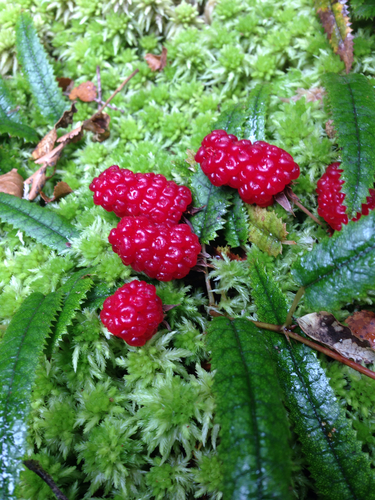
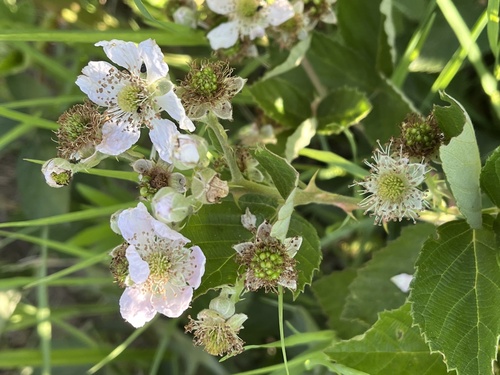
Crataegus laevigata
(Poir.) DC.
Midland hawthorn, English hawthorn
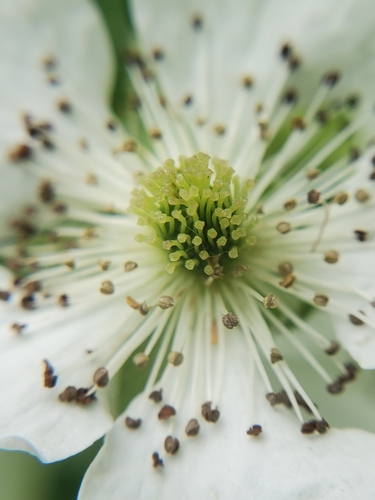
iNaturalist· cc-by-nc
(c) wolff christiane, some rights reserved (CC BY-NC), uploaded by wolff christiane
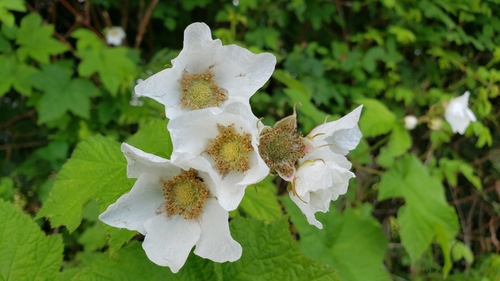
iNaturalist· cc-by-nc
(c) arthur13610, some rights reserved (CC BY-NC)
iNaturalist· cc-by-nc
(c) arthur13610, some rights reserved (CC BY-NC)
Summary
Source: WikipediaCrataegus laevigata, known as the Midland hawthorn, English hawthorn, woodland hawthorn, or mayflower, is a species of hawthorn native to western and central Europe, from Great Britain (where it is typically found in ancient woodland and old hedgerows) and Spain, east to Romania and Ukraine. The species name is sometimes spelt C. levigata, but the original orthography is C. lævigata.
Description
A deciduous tree. It grows 7.5-10 m tall. The trees are rounded and thorny. There are few thorns. The bark is grey and smooth. It cracks with age. The leaves are 5 cm long and across. They are oval. The leaves are glossy and mid green. They have shallow rounded lobes. The flowers are white or pink and occur in clusters. The fruit are round or oval and red. They are 2 cm long. Each fruit has 2 stones. The fruit are edible.
Edible Uses
The fruit, about 1cm in diameter, can be eaten raw or cooked, though the texture is dry and mealy and not particularly appealing on its own. It is better used in jams and preserves, or the pulp can be dried, ground into a meal, and mixed with flour for bread and similar preparations. Up to five fairly large seeds sit in the centre of each fruit and often stick together, giving the impression of a cherry-like fruit with a single stone. Young leaves and young shoots can be eaten raw and make a tasty nibble or a pleasant addition to salads. Young leaves also serve as a tea substitute, and the roasted seeds can be used as a coffee substitute.
Traditional Uses
The fruit are eaten fresh and also used for jams.
This uses section is brief — help expand it
Medicinal Uses
Hawthorn is an extremely valuable medicinal herb, used mainly for disorders of the heart and circulatory system, especially angina. Western herbalists regard it as a food for the heart — it increases blood flow to the heart muscles and helps restore normal heart rhythm. This action is attributed to bioflavonoids in the fruit, which are also strongly antioxidant and help prevent or reduce degeneration of the blood vessels. The fruit is antispasmodic, cardiac, diuretic, sedative, tonic, and vasodilator. The fruits and flowers have a well-established hypotensive effect and act as a direct, mild heart tonic, especially indicated for weak heart combined with high blood pressure. They are also used for a heart muscle weakened by age, inflammation of the heart muscle, arteriosclerosis, and nervous heart problems. Prolonged use is necessary for efficacy; it is normally taken as a tea or tincture. Hawthorn is combined with ginkgo (Ginkgo biloba) to help improve poor memory by increasing blood supply to the brain. The bark is astringent and has been used to treat malaria and other fevers. The roots are said to stimulate the arteries of the heart.
Distribution
It is native to Europe. It grows in woods and hedgerows. It can grow in a range of soil types and pH values. It can tolerate wet soils as well as drought. Temperate. It suits hardiness zones 5-9.
Where It Grows
Africa, Asia, Australia, Balkans, Bosnia, Britain*, Europe, India, Italy, Lithuania, Luxembourg, Mediterranean, North Africa, Russia, San Marino, Slovakia, Slovenia, Sweden, Switzerland, Turkey, Türkiye,
Cultivation
Plants can be grown from seed. The seed need cold treatment. Plants can also be grafted. Semi-ripe cuttings can be dipped in rooting hormone and planted.
Propagation
Seed is best sown as soon as it is ripe in autumn in a cold frame; some will germinate the following spring, though most will likely take another year. Stored seed can be very slow and erratic — warm stratify for 3 months at 15°c, then cold stratify for 3 months at 4°c, and it may still take a further 18 months to germinate. Scarifying before stratification may reduce this time, and fermenting the seed for a few days in its own pulp may also speed germination. Alternatively, harvest seed green — as soon as the embryo is fully developed but before the seedcoat hardens — and sow immediately in a cold frame for possible spring germination. For small quantities, pot seedlings as soon as they are large enough to handle, grow on individually for their first year, then plant out in late spring into nursery beds or final positions. For larger quantities, sow directly into an outdoor seedbed with protection from mice and other seed-eaters, and undercut the roots if plants are to remain in the seedbed for more than two years.
Other Uses
Hawthorn makes an excellent hedge or windbreak. It is very tolerant of neglect, can regenerate when cut back severely, forms a thorny stock-proof barrier, withstands strong winds, and can be used in layered hedges. The plant is commonly used as a rootstock for several garden fruit species, including medlar (Mespilus germanica) and pear (Pyrus communis sativa). The wood is very hard and tough, with a fine grain that takes a beautiful polish, though individual pieces are seldom large enough to be of great value. It is used for tool handles and small turned wooden articles. The wood is an excellent fuel, producing more heat than even oak; charcoal made from it is said to be capable of melting pig iron without a blast. Hawthorn flowers are rich in nectar and pollen, making them highly attractive to bees, flies, and butterflies. The fruit and seeds provide food for birds and small mammals, and the dense thorny branches offer shelter, nesting, and roosting sites for birds. The bark and canopy also provide overwintering sites for invertebrates, with fallen leaf litter creating habitat for soil organisms and beneficial insects.
Production
Seedling trees take 5-8 years to start fruiting. A tree can yield 30-60 kg of fruit.
Notes
There are 200 or more Crataegus species.
Synonyms
Also Known As
Crveni glog, England Hawthorn, May, Navadni glog, Quickset, White thorn, Wuick set thorn
References (16)
- Bodkin, F., 1991, Encyclopedia Botanica. Cornstalk publishing, p 295
- Bremness, L., 1994, Herbs. Collins Eyewitness Handbooks. Harper Collins. p 100
- Brown, D., 2002, The Royal Horticultural Society encyclopedia of Herbs and their uses. DK Books. p 182
- Coombes, A.J., 2000, Trees. Dorling Kindersley Handbooks. p 241
- Cundall, P., (ed.), 2004, Gardening Australia: flora: the gardener's bible. ABC Books. p 432
Show all 16 references Hide references
- Etherington, K., & Imwold, D., (Eds), 2001, Botanica's Trees & Shrubs. The illustrated A-Z of over 8500 trees and shrubs. Random House, Australia. p 239
- Hibbert, M., 2002, The Aussie Plant Finder 2002, Florilegium. p 75
- http://en.hortipedia.com
- Joyce, D., 1998, The Garden Plant Selector. Ryland, Peters and Small. p 109
- Luczaj, L., 2012, Ethnobotanical review of wild edible plants of Slovakia. Acta Societatis Botanicorum Poloniae 81(4):245-255
- Lyle, S., 2006, Discovering fruit and nuts. Land Links. p 159
- Plants for a Future database, The Field, Penpol, Lostwithiel, Cornwall, PL22 0NG, UK. http://www.scs.leeds.ac.uk/pfaf/
- Prodr. 2:630. 1825
- Redzic, S. J., 2006, Wild Edible Plants and their Traditional Use in the Human Nutrition in Bosnia-Herzegovina. Ecology of Food and Nutrition, 45:189-232
- Shikov, A. N. et al, 2017, Traditional and Current Food Use of Wild Plants Listed in the Russian Pharmacopoeia. Frontiers in Pharmacology. Vol. 8 Article 841
- Young, J., (Ed.), 2001, Botanica's Pocket Trees and Shrubs. Random House. p 291