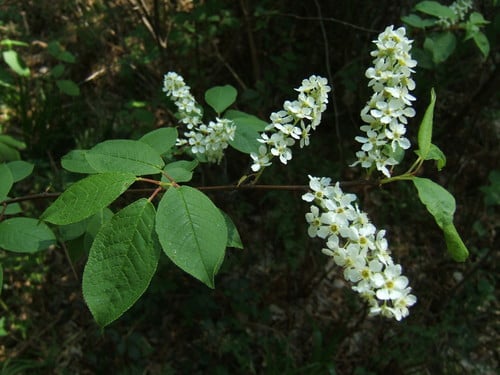
Prunus kurdica
Fenzl ex Fritsch
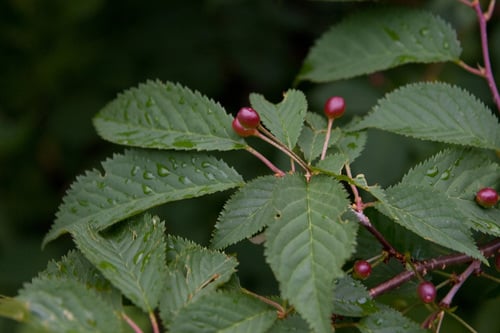
wikimedia· cc-by-sa
Wikimedia Commons - Charles J. Sharp
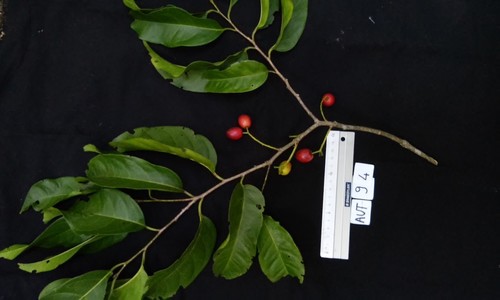
wikimedia· cc-by-sa
Wikimedia Commons - H. Zell
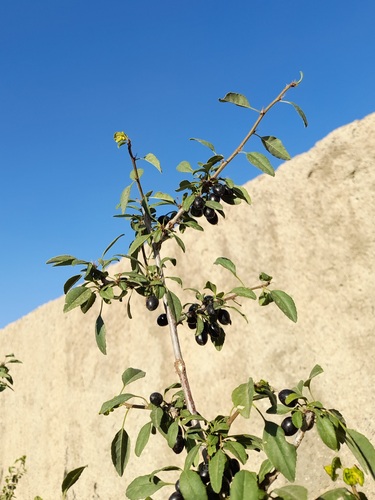
wikimedia· cc-by-sa
Wikimedia Commons - Dmitry Makeev
Description
A tree in the Rosaceae family found in temperate regions.
This description is brief — help expand it
Edible Uses
The shrub, with its long, sharp thorns, is traditionally used in Britain and other parts of northern Europe to make a cattle-proof hedge. The fruit is similar to a small damson or plum, suitable for preserves, but rather tart and astringent for eating fresh unless it is picked after the first few days of autumn frost. This effect can be reproduced by freezing harvested sloes. Since the plant is hardy, and grows in a wide range of conditions, it is used as a rootstock for many other species of plum, as well as some other fruit species. Sloes can also be made into jam, chutney, and used in fruit pies. Sloes preserved in vinegar are similar in taste to Japanese umeboshi. The juice of the fruits dyes linen a reddish colour that washes out to a durable pale blue. The leaves resemble tea leaves, and were used as an adulterant of tea. The fruit stones have been found in Swiss lake dwellings. Early human use of sloes as food is evidenced in the case of a 5,300-year-old human mummy (nicknamed Ötzi), discovered in the Ötztal Alps along the Austrian-Italian border in 1991: a sloe was found near the remains, indicating that Ötzi intended to eat it before he died.
Traditional Uses
The fruit are eaten fresh.
This uses section is brief — help expand it
Distribution
It is a temperate plant.
Where It Grows
Turkey*,
Also Known As
Lektir, Mamix, Momix
References (1)
- Polat, R., et al, 2017, Survey of wild food plants for human consumption in Bingol, (Turkey). Indian Journal of Traditional Knowledge. Vol. 16(3) July 2017, pp. 378-384