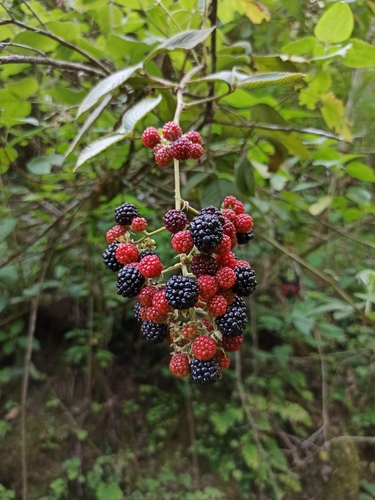
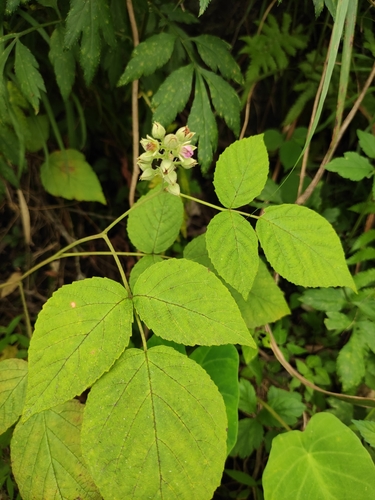
Crataegus gemmosa
Sarg.
Fleshy Hawthorn
gbif· cc0
President and Fellows of Harvard College
gbif· cc0
President and Fellows of Harvard College
Description
A shrub or small tree of the Rosaceae family with edible fruit, found in temperate regions.
This description is brief — help expand it
Edible Uses
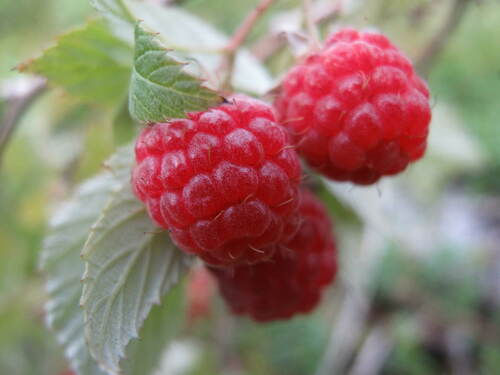
The fruit, borne in fairly large clusters and about 12mm in diameter, can be eaten raw or cooked. When fully ripe it develops a thick, sweet, succulent flesh. It works well in pies and preserves and can also be dried for later use. Up to five fairly large seeds occupy the centre of each fruit; these often stick together, giving the experience of eating a cherry-like fruit with a single stone.
Medicinal Uses
Although no specific mention has been found for this species, the fruits and flowers of many hawthorns are well established in herbal folk medicine as a heart tonic, a use supported by modern research. Both parts have a hypotensive effect and act as a direct, mild cardiotonic. They are especially indicated for weak heart combined with high blood pressure. Prolonged use is necessary for the treatment to be effective, and it is normally taken as a tea or tincture.
Distribution
Temperate.
Where It Grows
North America, USA,
Cultivation
Plants can be grown from seed. The seed need cold treatment. Plants can also be grafted.
Propagation
Seed is best sown as soon as it is ripe in autumn in a cold frame; some will germinate the following spring, though most will likely take another year. Stored seed can be very slow and erratic — warm stratify for 3 months at 15°c, then cold stratify for 3 months at 4°c, and it may still take a further 18 months to germinate. Scarifying before stratification may reduce this time, and fermenting the seed for a few days in its own pulp may also speed germination. Alternatively, harvest seed green — as soon as the embryo is fully developed but before the seedcoat hardens — and sow immediately in a cold frame for possible spring germination. For small quantities, pot seedlings as soon as they are large enough to handle, grow on individually for their first year, then plant out in late spring into nursery beds or final positions. For larger quantities, sow directly into an outdoor seedbed with protection from mice and other seed-eaters, and undercut the roots if plants are to remain in the seedbed for more than two years.
Other Uses
The wood is heavy, hard, tough, and close-grained, making it useful for tool handles, mallets, and other small items.
Notes
There are 200 or more Crataegus species.