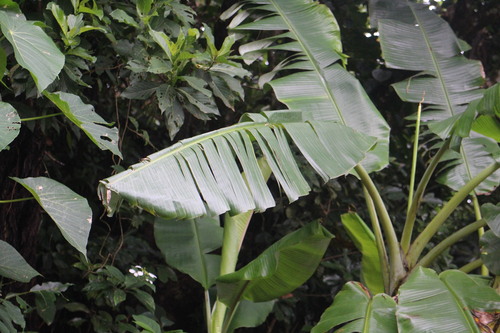
Musa sanguinea
Hook.f.
iNaturalist· cc-by-nc
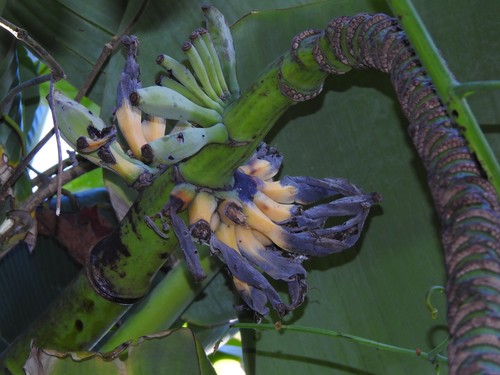
(c) Gabe Sachter-Smith, some rights reserved (CC BY-NC), uploaded by Gabe Sachter-Smith
iNaturalist· cc-by-nc
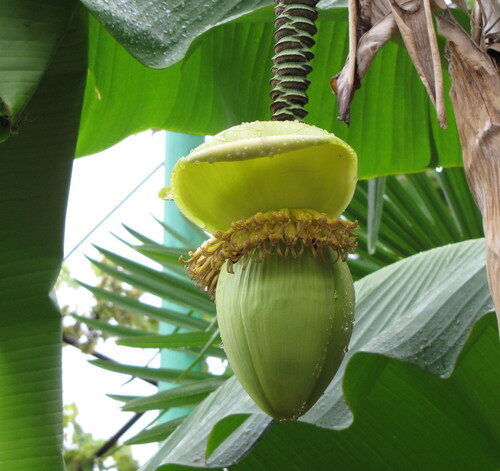
(c) Aniruddha Singhamahapatra, some rights reserved (CC BY-NC)
iNaturalist· cc-by-nc
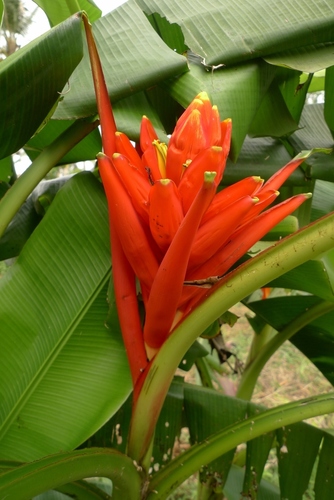
(c) Aniruddha Singhamahapatra, some rights reserved (CC BY-NC)
Summary
Source: WikipediaMusa sanguinea is a species of wild banana (genus Musa). It is native to Tibet, Arunachal Pradesh and Assam.
Description
A banana plant. It has a clump of stems. They are 1.5-2 m tall. The leaf stalks are 30 cm long. The edges are narrow and open. The leaves are deep green and oval and 1 m long. The flower bracts are reddish and narrowly oval and 8-14 cm long. There are 3 flowers in 1 row. The fruit are greyish yellow-green with red blotches. They are 3 sided. They are 5-8 cm long. There are several black seeds. They are 5 mm across and an irregular lumpy shape.
Edible Uses
The flowers and fruit are edible; the flowering shoot is traditionally cooked and eaten.
Traditional Uses
The flowering shoot is cooked and eaten.
This uses section is brief — help expand it
Distribution
It is a subtropical plant.
Where It Grows
Asia, China, India, Northeastern India, Tibet,
Synonyms
Also Known As
A-nyi-lae-sih, Kamchi
References (2)
- Li, S., et al, 2020, Monpa, memory, and change: an ethnobotanical study of plant use in Mêdog County, South-east Tibet, China. Journal of Ethnobiology and Ethnomedicine. (2020) 16:5 p 20
- Lungphi, P., Wangpan, T. & Tangjang, S., 2018, Wild edible plants and their additional uses by the Tangsa community living in the Changlang district of Arunachal Pradesh, India. Pleione 12(2): 151 - 164. 2018.