Iris unguicularis
Poir.
iNaturalist· cc-by-nc
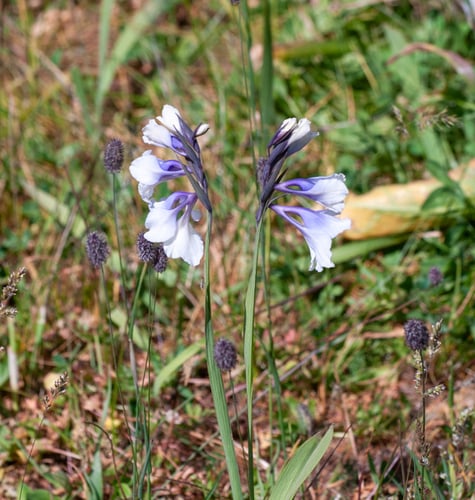
(c) identigy, some rights reserved (CC BY-NC), uploaded by identigy
iNaturalist· cc-by-nc
(c) emmarusso2003, some rights reserved (CC BY-NC), uploaded by emmarusso2003
iNaturalist· cc-by-nc
(c) Jean Dyer, some rights reserved (CC BY-NC), uploaded by Jean Dyer
Summary
Source: WikipediaIris unguicularis (syn. Iris stylosa), the Algerian iris, is a rhizomatous flowering plant in the genus Iris, native to Algeria, Greece, Turkey, Western Syria, and Tunisia. It grows to 30 centimetres (12 in), with grassy evergreen leaves, producing pale lilac or purple flowers with a central band of yellow on the falls. The flowers appear in winter and early spring. They are fragrant, with pronounced perianth tubes up to 20 cm (7.9 in) long. This plant is widely cultivated in temperate regions, and numerous cultivars have been selected for garden use, including a slightly more tender white form 'Alba', and a dwarf variety I. unguicularis subsp. cretensis. The cultivar 'Mary Barnard' has gained the Royal Horticultural Society's Award of Garden Merit.
Description
A corm or bulb plant.
This description is brief — help expand it
Distribution
It is a temperate plant.
Where It Grows
Europe, Turkey, Türkiye,
Synonyms
Also Known As
Cali novruzu
References (1)
- Ertug, F, Yenen Bitkiler. Resimli Türkiye Florası -I- Flora of Turkey - Ethnobotany supplement