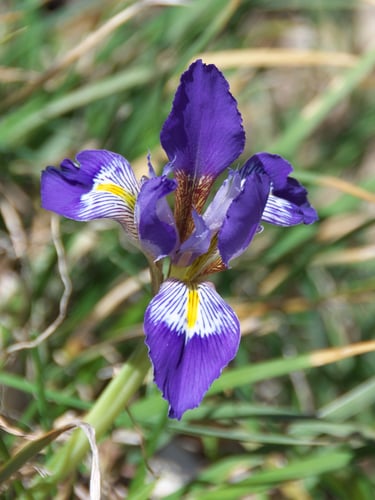
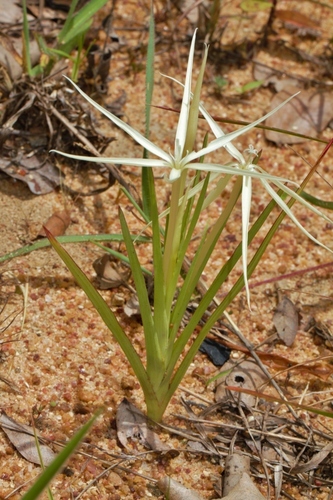
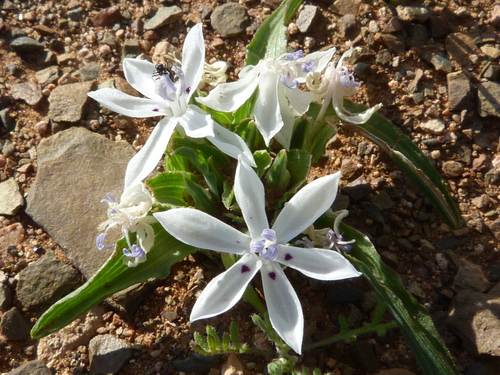
Crocus cancellatus subsp. damascenus
(Herb.) B. Mathew
iNaturalist· cc-by
(c) Kostas Zontanos, some rights reserved (CC BY), uploaded by Kostas Zontanos
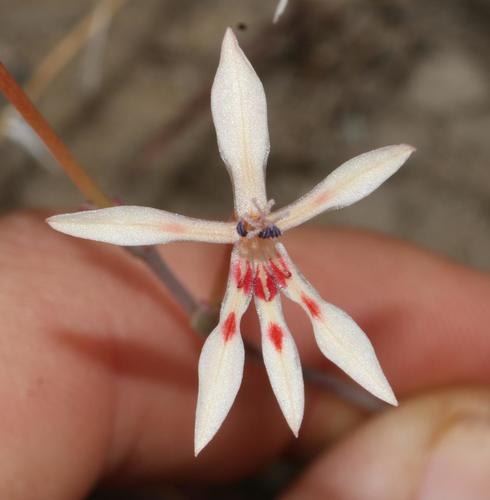
iNaturalist· cc-by-nc
(c) arkim, some rights reserved (CC BY-NC)
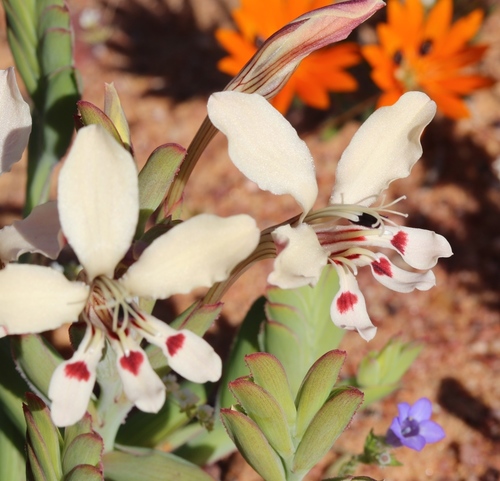
iNaturalist· cc-by-nc
(c) arkim, some rights reserved (CC BY-NC)
Summary
Source: WikipediaCrocus cancellatus is a species of flowering plant in the family (biology Iridaceae. It is found from the Balkan Peninsula to Iran. Crocus cancellatus is a corm growing to 0.1 by 0.1 m (3.9 in by 3.9 in). It is hardy to zone (UK) 5 and is not frost tender. It is in flower from September to November, and the seeds ripen from March to May.
Description
A temperate plant in the iris family (Iridaceae) that grows from a corm. It produces bulbs that can be eaten fresh after peeling.
This description is brief — help expand it
Edible Uses
The corms and bulbs are eaten fresh after being peeled.
Traditional Uses
The bulbs are eaten fresh. They are peeled.
This uses section is brief — help expand it
Distribution
It is a temperate plant.
Where It Grows
Europe, Turkey, Türkiye,
Synonyms
Also Known As
Hilileye, Kirkas, Pivok, Pivonk, Sinerok
References (5)
- Demir, I. & Ayaz, N., 2022, Wild edible plants contributing to the traditional foods of Mardin (Turkey) Province. Indian Journal of Traditional Knowledge Vol 21(3), July 2022, pp 569-582
- Ertug, F, Yenen Bitkiler. Resimli Türkiye Florası -I- Flora of Turkey - Ethnobotany supplement
- Kaya, O. M., et al, 2020, An ethnobotanical research in Sanhurfa central district and attached Villages (Turkey). Indian Journal of Traditional Knowledge. Vol. 19(1) pp 7-23
- Yesil, Y., et al, 2019, Wild edible plants in Yeşilli (Mardin-Turkey), a multicultural area. Journal of Ethnobiology and Ethnomedicine (2019) 15:52
- Yesil, Y., et al, 2019, Traditional knowledge of wild edible plants in Hasankeyf (Batman Province, Turkey). Acta Societatis Botanicorum Poloniae. 88(3):3633