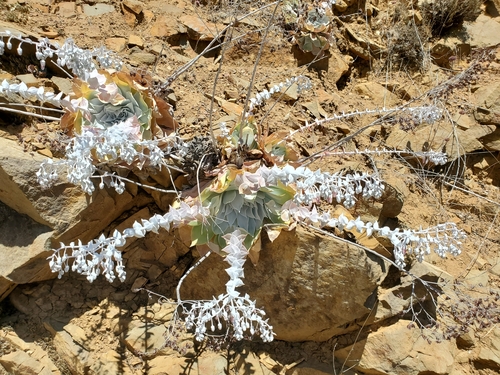
Crassula arborescens
(Mill.) Willd.
Round-leaved crassula
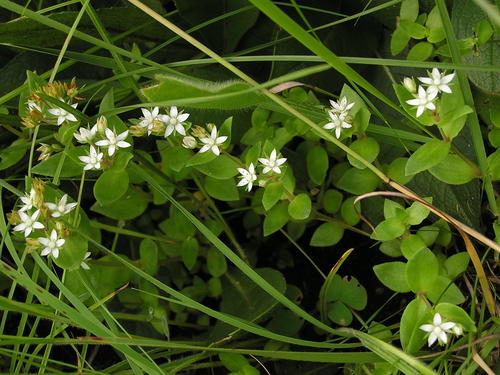
iNaturalist· cc-by-nc
(c) Steven Molteno, some rights reserved (CC BY-NC), uploaded by Steven Molteno
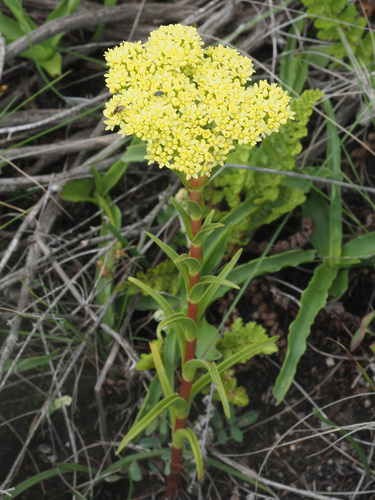
iNaturalist· cc-by-nc
(c) stephen hardcastle, some rights reserved (CC BY-NC), uploaded by stephen hardcastle
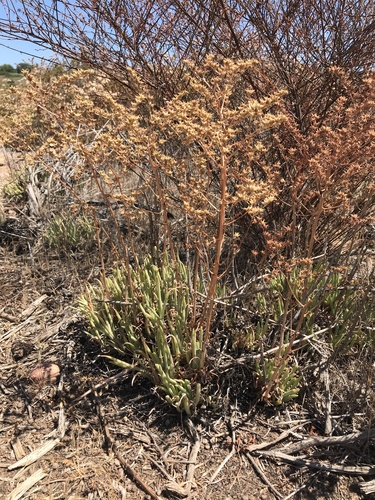
iNaturalist· cc-by
(c) Ian Webb, some rights reserved (CC BY), uploaded by Ian Webb
Summary
Source: WikipediaCrassula arborescens—the silver jade plant, silver dollar (jade) plant, beestebul, Chinese jade, cookie plant, money plant, or money tree, that is endemic to Western Cape, South Africa, is a species of succulent plant in the family Crassulaceae.
Description
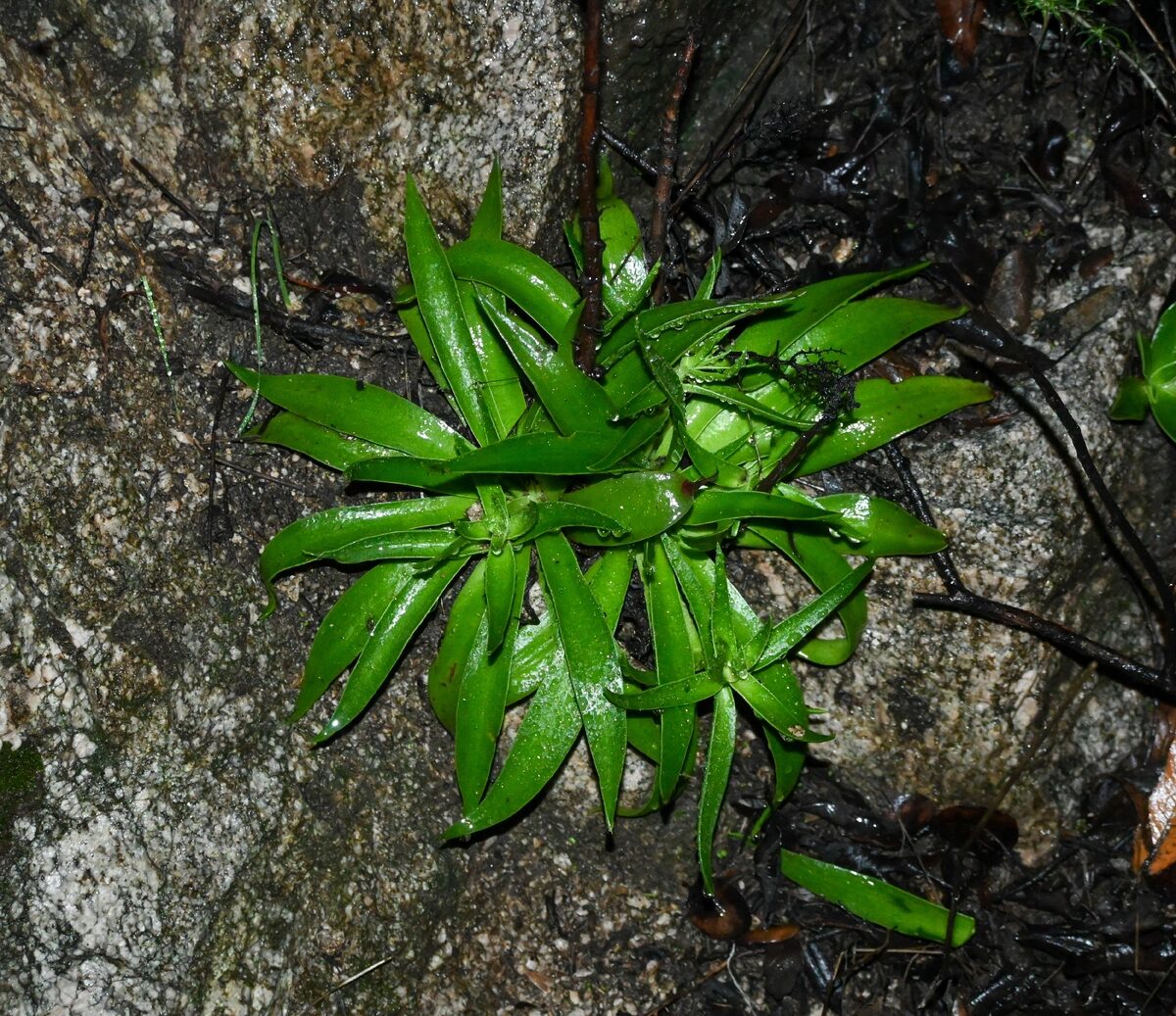
A succulent tree. It grows to about 3 m tall. he bark is green-grey, succulent and smooth. The leaves are fleshy and bluish-grey. They are oval and tapering towards the base. They have a waxy bloom. They are 3 cm long by 3 cm wide. The flowers are pink and in clusters at the ends of branches. The fruit are small and 6 mm long. They have 3-5 separate oval follicles. The roots are edible.
Edible Uses
The roots are eaten.
Traditional Uses
The roots are eaten.
This uses section is brief — help expand it
Distribution
It is a warm temperate to subtropical climate plant. It grows on rocky hillsides. It can grow on fairly poor, well-drained soils. It is salt tolerant. It is best in a partly shaded position. It is resistant to frost and drought. Hobart Botanical Gardens. It suits hardiness zones 9-11.
Where It Grows
Africa, Australia, Eswatini, Hawaii, Pacific, Slovenia, South Africa*, Southern Africa, Swaziland, Tasmania, USA,
Cultivation
Plants can be grown from seeds. They can also be grown by stem or leaf cuttings.
Notes
There are 216 succulent Crassula species. There are also other Crassula species. There are 300 total.
Synonyms
Also Known As
Bull tacky, Drevesasta tolstica, Karka, Kerky, Silver jade
References (13)
- Bodkin, F., 1991, Encyclopedia Botanica. Cornstalk publishing, p 293
- Fox, F. W. & Young, M. E. N., 1982, Food from the Veld. Delta Books. p 163
- Hibbert, M., 2002, The Aussie Plant Finder 2002, Florilegium. p 75
- Llamas, K.A., 2003, Tropical Flowering Plants. Timber Press. p 180
- Long, C., 2005, Swaziland's Flora - siSwati names and Uses http://www.sntc.org.sz/flora/
Show all 13 references Hide references
- Palgrave, K.C., 1996, Trees of Southern Africa. Struik Publishers. p 201
- Palmer, E and Pitman, N., 1972, Trees of Southern Africa. Vol. 1. A.A. Balkema, Cape Town p 655
- Peters, C. R., O'Brien, E. M., and Drummond, R.B., 1992, Edible Wild plants of Sub-saharan Africa. Kew. p 97
- Ruiters-Welcome, A. K., 2019, Food plants of southern Africa. Ph.D. thesis. Univ. of Johannesburg p 47
- Sp. pl. 1(2):1554. 1798
- Staples, G.W. and Herbst, D.R., 2005, A tropical Garden Flora. Bishop Museum Press, Honolulu, Hawaii. p 255 (Drawing)
- Swaziland's Flora Database http://www.sntc.org.sz/flora
- Welcome, A. K. & Van Wyk, B.-E., 2019, An inventory and analysis of the food plants of southern Africa. South African Journal of Botany 122 (2019) 136–179