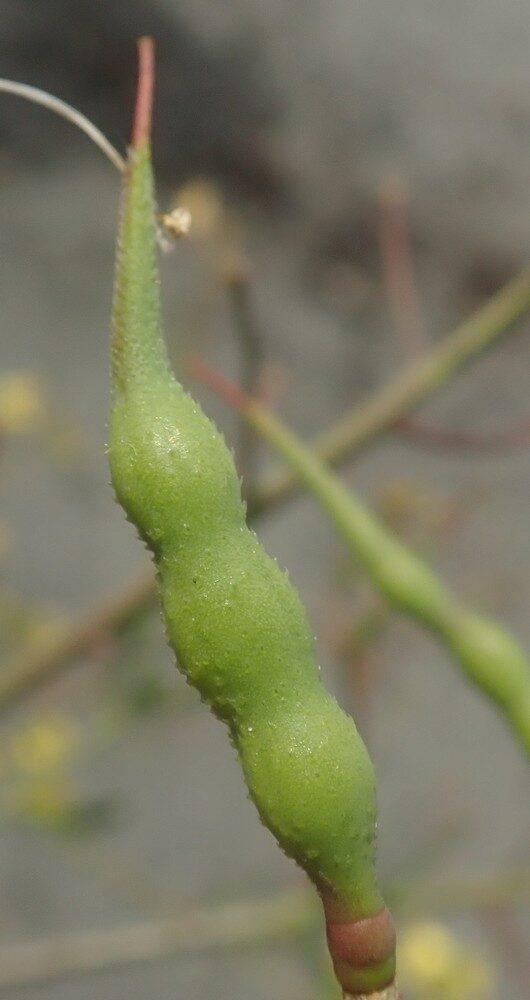
Crambe kotschyana
Boiss.
iNaturalist· cc-by-nc
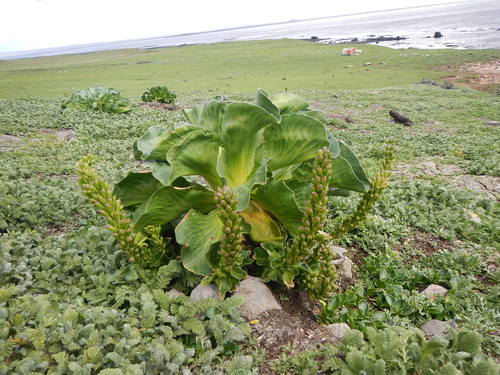
(c) Pavel Gorbunov, some rights reserved (CC BY-NC)
iNaturalist· cc-by-nc
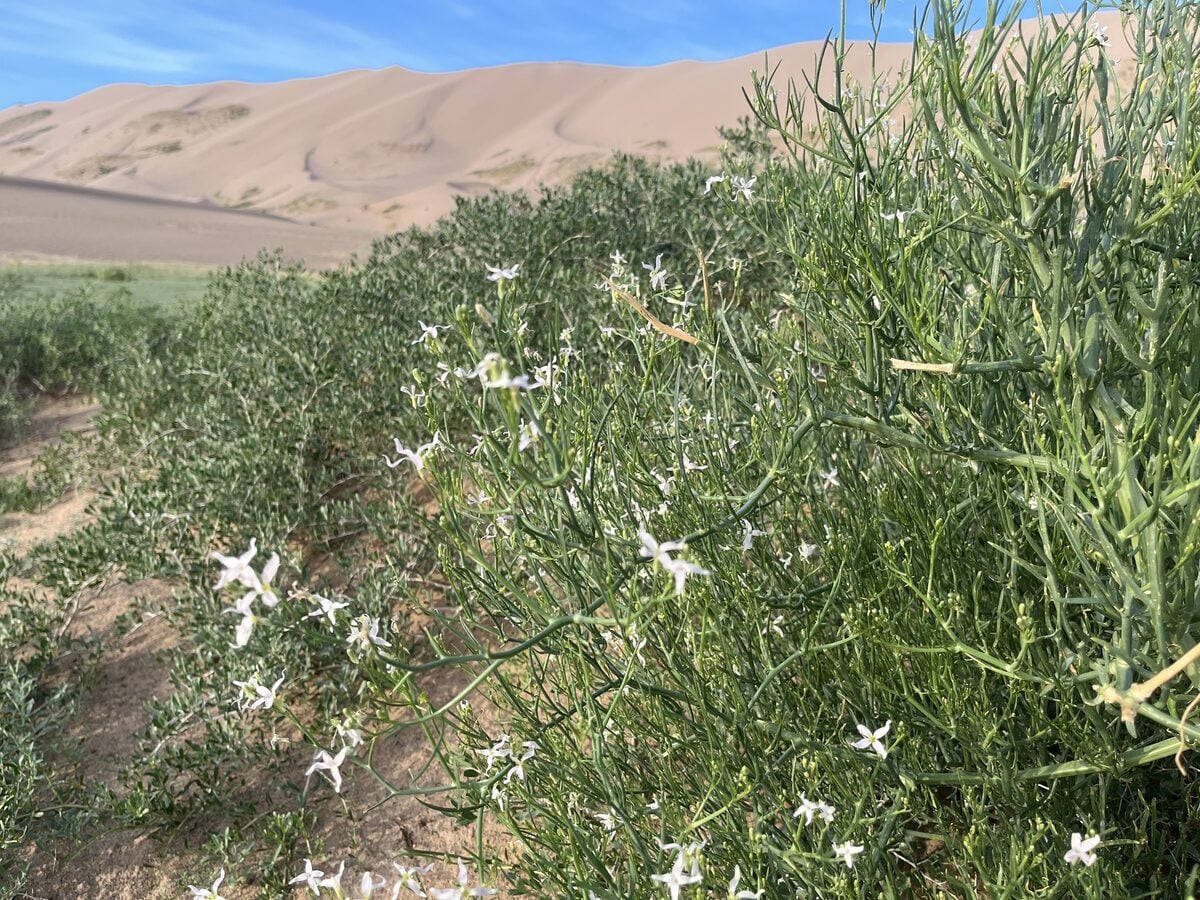
(c) orzimatturginov, some rights reserved (CC BY-NC)
iNaturalist· cc-by-nc
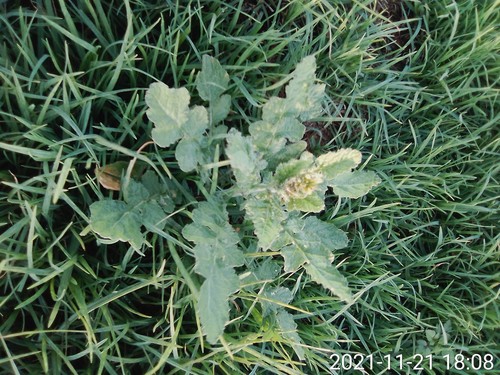
(c) orzimatturginov, some rights reserved (CC BY-NC)
Summary
Perennial growing 2.5 m tall and wide, hardy to UK zone 7 and frost-tolerant. Flowers in June and attracts wildlife, particularly bees. Hermaphroditic. Adapts to light sandy, medium loamy, and heavy clay soils including nutrient-poor soil. Tolerates neutral to mildly alkaline pH, semi-shade or full light, and both dry and moist soil.
Description
A cabbage family herb. It is a stout erect plant. It keeps growing from year to year. It is 60-180 cm high. The leaves are large and heart shaped or kidney shaped. The leaves near the base are 20-40 cm wide. They are wavy along the edge and have teeth. They have long stalks. The upper leaves are fewer and smaller. The flowers are white and in loose clusters. The flowers are 7-10 mm across. The petals have a wedge shaped base. The fruit has a stalk like base. It is round and one seeded.
Edible Uses
Both the leaves and root are edible cooked and used as vegetables. They are considered nutritious.
Traditional Uses
The leaves and roots are eaten as a vegetable.
This uses section is brief — help expand it
Medicinal Uses
The plant is used as an antipruritic.
Distribution
It is a temperate plant. In the Himalayas it grows between 2,100-4,300 m altitude. It grows on rocky slopes.
Where It Grows
Asia, Afghanistan, Central Asia, China, Himalayas, India, Iran, Kazakhstan, Kyrgyzstan, Middle East, Pakistan, Tajikistan, Tibet, Turkmenistan, Uzbekistan, SW Asia,
Cultivation
An easily grown plant, succeeding in a good loam and an open sunny position. Prefers a slightly alkaline soil in a position sheltered from strong winds. Tolerates poor soil and some shade. Dislikes acid soils. Prefers a rather dry soil. Plants are hardy to about -20°c. A deep-rooted plant, it dislikes root disturbance. Plants can be grown in the summer meadow if the grass is not cut too low (since this would damage the growing point). A good bee plant. Very closely related to C. cordifolia and considered by some botanists to be no more than a variety of that species, differing mainly in its larger flowers.
Propagation
Seed — sow in March/April in a seedbed outdoors and either thin or transplant to permanent positions when plants are about 10cm tall. Young plants are very attractive to slugs and will often need protection. As germination can be slow, sowing in pots in a cold frame is preferable; germination usually occurs in 3–26 weeks at 15°c. Prick seedlings into individual pots as soon as they are large enough to handle, and plant out when at least 10cm tall. Divide in spring or autumn by digging up the root clump and cutting off sections, each with at least one growing point; larger divisions can go straight into permanent positions while smaller ones are best potted and grown on in a cold frame until established. Root cuttings 3–10cm long taken in spring can be planted directly in the ground or potted in a greenhouse and planted out once growing strongly.
Other Uses
None known.
Notes
There are about 20 Crambe species.
Synonyms
Also Known As
Liang jie qi
References (7)
- Diagn. pl. orient. ser. 1, 6:19. 1846 ("1845")
- Flora of China. www.eFloras.org
- Flora of Pakistan. www.eFloras.org
- GRIN (As Crambe cordifolia subsp. kotschyana)
- Plants for a Future database, The Field, Penpol, Lostwithiel, Cornwall, PL22 0NG, UK. http://www.scs.leeds.ac.uk/pfaf/
Show all 7 references Hide references
- Polunin, O., & Stainton, A., 2006, Flowers of the Himalaya, Oxford India Paperbacks. p 34
- Zhou Taiyan, Lu Lianli, Yang Guang; Ihsan A. Al-Shehbaz, BRASSICACEAE (CRUCIFERAE), Flora of China.