Corynocarpus cribbianus
(F. M. Bail.) L. Smith
Mundroi
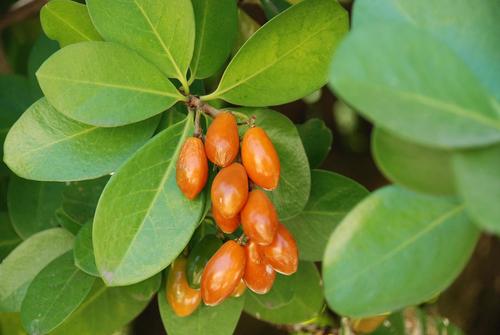
iNaturalist· cc-by-nc
(c) Rene, some rights reserved (CC BY-NC)
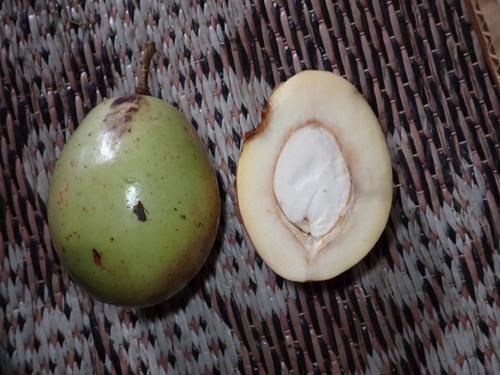
iNaturalist· cc-by-nc
(c) Rene, some rights reserved (CC BY-NC)
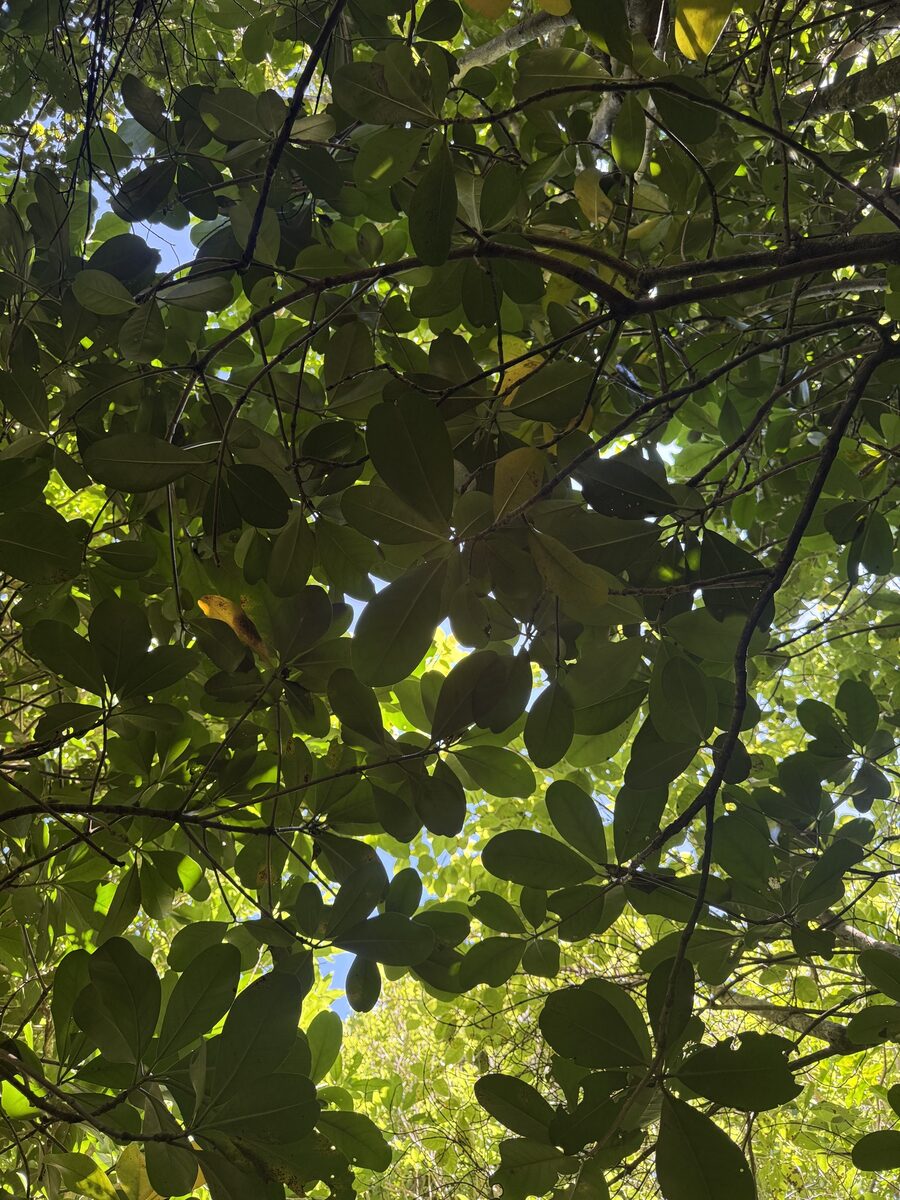
wikimedia· cc-by
Wikimedia Commons - Unknown authorUnknown author
Summary
Source: WikipediaCorynocarpus cribbianus, commonly known as cribwood, is a species of tree in the family Corynocarpaceae. It is endemic to New Guinea and north-eastern Queensland in Australia. It reaches a height of up to 25 metres (80 feet). Its flowers are whitish in colour, the tips of the petals are slightly rose in colour; after flowering, the flowers turn into a distinct rose colour. Its panicles (branched flower clusters) are somewhat pyramidal in character. It occurs from near sea level to 1,800 m (6,000 ft) above sea level at maximum elevation. It is found in various rainforest types, including lowland and montane forests. The specific epithet, cribbianus, is named in honour of J. G. Cribb, an Australian pomologist. Corynocarpus cribbianus was first described by the Australian botanist Frederick Manson Bailey in 1897 and placed by him in the Cyanocarpus genus. In 1933, the species was placed in the Corynocarpus genus. C. cribbianus is most closely related to C. rupestris. Several animals and various bird species have been reported to consume the fruits of C. cribbianus. The larvae of Allora major are known to feed on the tree, and the females lay eggs on it.
Description
A medium sized tree, up to 20 m high. The trunk can be straight or crooked. The bark is grey, with many long cracks along it. The twigs vary between angular and round, in cross section. The leaf stalk is 1-5 cm long and with a groove along it. The leaf is 9-26 cm long by 3-13 cm wide. (Leaves tend to be larger in the Solomon Islands than in Papua New Guinea or Australia.) The leaf is pointed at the tip, and rounded near the base. The 8-11 pairs of veins curve, and join near the leaf edge. The veins have a dent inwards on the top of the leaf surface, and are raised, underneath the leaf. The leaf is thin textured but firm. The flower cluster is branched and about 20 cm long. The individual flower stalks are about 2-4 mm long. The flowers have a scent, and are whitish or occasionally slightly pink or greenish. It produces clusters of fruit on the ends of the branches. The fruit are 10 -12 cm x 8-10 cm, and have one large seed inside. The fruit is green when young, and pink or cream when ripe. The fruit is shaped like a mango. This is an attractive tree, especially when fruiting. It is a good shade tree.
Edible Uses
The fruit is eaten raw or cooked when fully ripe and sweet but not juicy. It is an important fruit in Papua New Guinea, particularly on Manus Island and near Madang.
Traditional Uses
The fruit are edible. They are sweet but not juicy. Fruit can be eaten raw or cooked.
This uses section is brief — help expand it
Distribution
A tropical plant. Trees occur in well drained rainforest, up to 1800 m altitude, in the tropics near the equator. They have been recorded up to 2750 m above sea level. They occur naturally in Australia, Papua New Guinea, and the Solomon Islands. In the Solomon Islands trees have been recorded up to 600 m above sea level.
Where It Grows
Asia, Australia*, Indonesia, Pacific, Papua New Guinea*, PNG, SE Asia, Solomon Islands,
Cultivation
Trees are grown from seed.
Production
The tree flowers and fruits throughout the year. The fruit fall when ripe, and are then collected from the ground. (It is important to only use fruit which fall naturally)
Other Information
This is a quite important fruit in Papua New Guinea on Manus and on islands near Madang.
Notes
There are 4-6 Corynocarpus species. Mundroi Corynocarpus cribbianus What is Mundroi ? Mundroi is the name used on Manus Island for the fruit of a tree that scientists call Corynocarpus cribbianus. The first botanist to describe the tree was F.M.Bailey in Queensland in 1897, but the name was changed a couple of times until in 1956 Corynocarpus cribbianus was decided as the correct scientific name. There are only 4 species of trees in this group of plants called Corynocarpus. And the group is not closely similar to other plants so scientists are still trying to work out how it is related to other groups of plants. One of the other species, Corynocarpus laevigata, is called karaka in New Zealand, and the flesh of the fruit is eaten raw, and the kernel is soaked and steamed to remove poison, then eaten, by Maori people. The group of plants called Corynocarpus only occur in an area between New Zealand and New Guinea, including a little bit of Queensland in Northern Australia. What is a Mundroi like? The mundroi tree is quite a large tree up to 20 metres high. The fruit are produced in clusters at the ends of the branches and are shaped something like a mango. The fruit are smooth on the outside and green when ripe. There are two different kinds of fruit which vary on the colour of the ripe fruit. One kind turns a reddish pink when ripe while the other kind turns a creamy white. This second kind has the larger fruit. The fruit grows up to 10 or 12 cm long and 6-8 cm across. Inside there is one large seed, and the flesh around the seed is eaten. The fruit is only eaten when fully ripe and it is harvested after it has fallen from the tree. The fruit is eaten either raw or cooked. The flesh of the fruit is sweet but not juicy. The mundroi tree has leaves which are dark green on top and pale green underneath. They have veins which join in loops. The veins are raised on the underneath side of the leaf. Mundroi trees are normally planted. They are grown from seed. The similar karaka tree in New Zealand will grow from cuttings, so it would be worth trying this with mundroi. The botanist Van Steenis in his article on this family of plants shows a picture of a flowering plant like this. The flowers have a sweet smell and the petals are white with slightly red tips.
Synonyms
Also Known As
Ibo, Ibo kwao, Ibo bala, Moso, Nodombu, Nyia nwadabu, Pohon kayu pondok, Putsakuleo, Tebu, Tembu
References (28)
- Mundroi references Corynocarpus cribbianus
- Bailey, F.M., 1897, Cyanocarpus cribbiana in Queensland Agr, J. 1:370
- Bailey,F.M., 1901, Helicia cribbiana In Queens Fl 4:1327
- Balgooy, M.M.J. van, 1966, Corynocarpus in Blumea Supplement V p110-111.
- Blench, R., 2004, Fruits and Arboriculture in the Indo-Pacific Region. Indo-Pacific Prehistory Association Bulletin 24. (Taipei Papers Volume 2) p 37
Show all 28 references Hide references
- Cooper, W. and Cooper, W., 2004, Fruits of the Australian Tropical Rainforest. Nokomis Editions, Victoria, Australia. p 139
- Elliot, W.R., & Jones, D.L., 1984, Encyclopedia of Australian Plants suitable for cultivation. Vol 3. Lothian. p 102
- Flora Malesiana Vol 13 p 263
- Foreman, D.B., in Womersley, J.S.,(ed), 1978, Handbooks of the Flora of Papua New Guinea. MUP,Victoria. Vol 1, p 111.
- French, B.R., 1986, Food Plants of Papua New Guinea, A Compendium. Asia Pacific Science Foundation p 234
- French, B.R., 2010, Food Plants of Solomon Islands. A Compendium. Food Plants International Inc. p 232
- Hartley, et al, 1973, Lloydia 36(3), p 267
- Henderson, C.P. and I.R.Hancock, 1988, A Guide to the Useful Plants of the Solomon Islands. Res. Dept. Min of Ag. & Lands. Honiara, Solomon Islands. p 142 (As Corynocarpus cribbeanus)
- Heywood, V.H., Brummitt, R.K., Culham, A., and Seberg, O. 2007, Flowering Plant Families of the World. Royal Botanical Gardens, Kew. p 113
- Kunkel, Corynocarpaceae, the karaka family. p 282
- Lepofsky, D., 1992, Arboriculture in the Mussau Islands, Bismarck Archipelago. Economic Botany, Vol 46, No. 2, pp. 192-211
- Merrill and Perry, 1941, J.Arn. Arb. 22:541.
- Morley, B.D., & Toelken, H.R., (Eds), 1983, Flowering Plants in Australia. Rigby. p 225
- Sleumer, 1955, Blumea 8:15
- Smith,L.S., 1956, Proc.R.Soc Queensl. 67:31
- Steenis, van C.G.G.J., 1933, Bull, J.B.B. 3, 13:101
- Steenis, van C.G.G.J., 1947, J.Arn Arb. 28:421
- Steenis, van C.G.G.J.,1951, Fl.Mal. 1, 4:263
- Sukarya, D. G., (Ed.) 2013, 3,500 Plant Species of the Botanic Gardens of Indonesia. LIPI p 211
- Townsend, K., 1994, Across the Top. Gardening with Australian Plants in the tropics. Society for Growing Australian Plants, Townsville Branch Inc. p 140
- Walter, A. & Sam C., 2002, Fruits of Oceania. ACIAR Monograph No. 85. Canberra. p 279
- White, .., 1933, Corynocarpus australasica Contr. Arn Arb. 4,57,t 5
- Yen,D.E., 1974, Arboriculture in the Subsistence of Santa Cruz, Solomon Islands. Econ.Bot. 28:247-281