Rhodiola integrifolia
Raf.
Western roseroot
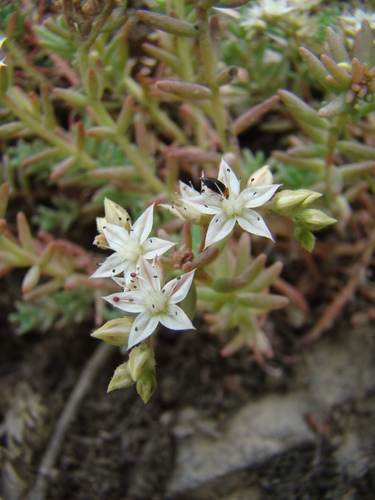
wikimedia· cc-by-sa
The original uploader was Nup at English Wikipedia. (via Wikimedia Commons)
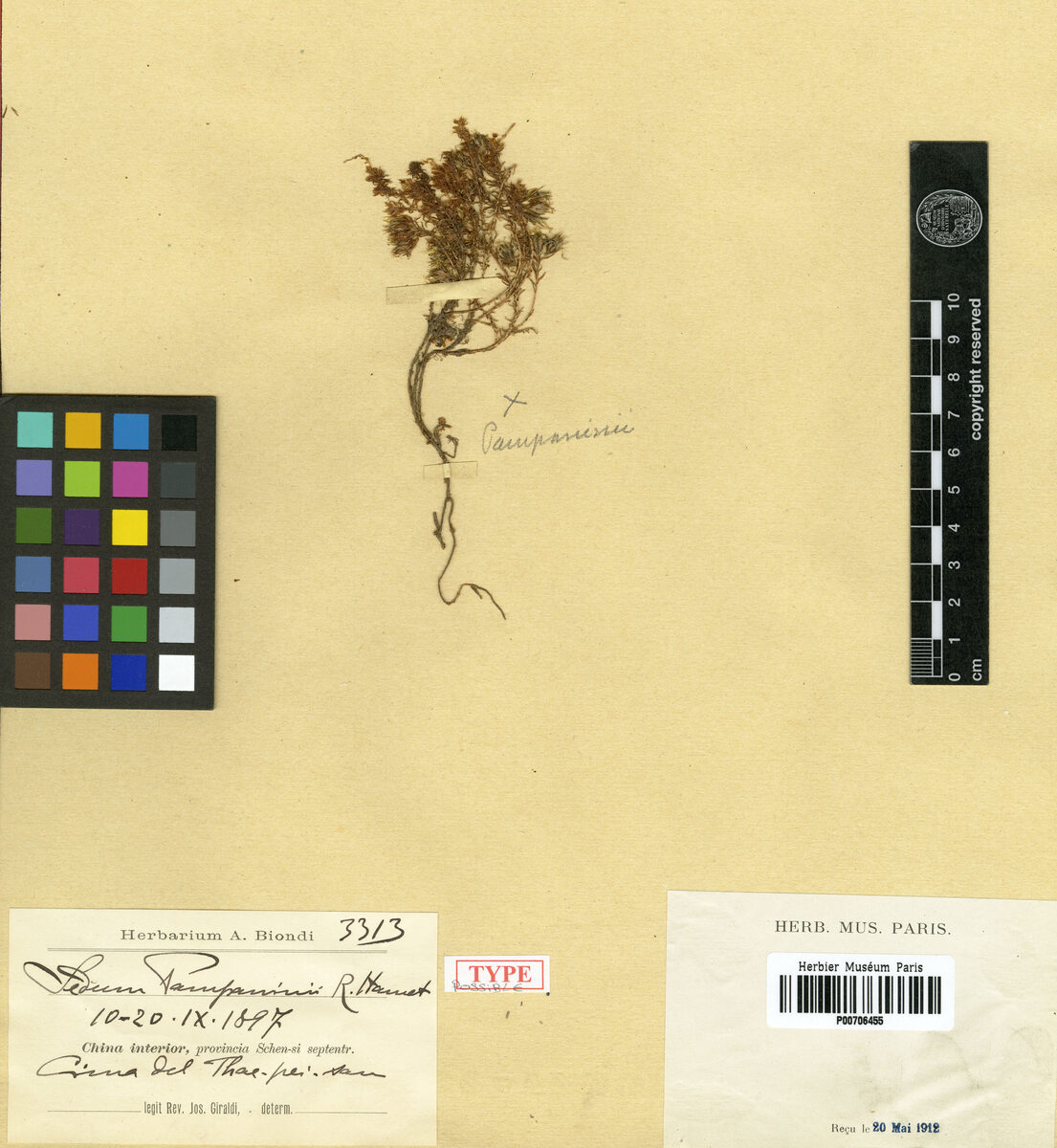
wikimedia· cc-by-sa
JerryFriedman (via Wikimedia Commons)
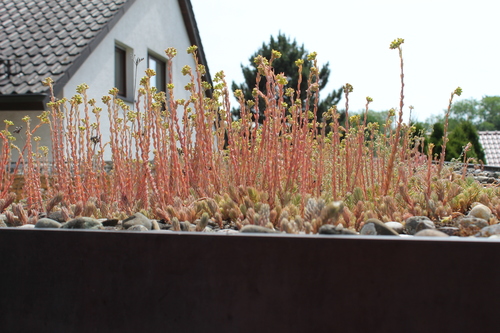
wikimedia· cc-by
Dcrjsr (via Wikimedia Commons)
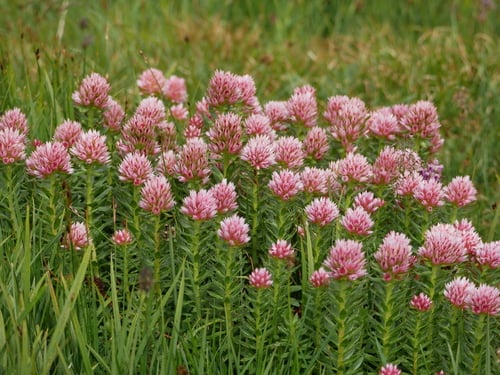
iNaturalist· cc-by-nc
(c) Boris Bolshakov, some rights reserved (CC BY-NC)
iNaturalist· cc-by-nc
(c) Boris Bolshakov, some rights reserved (CC BY-NC)
iNaturalist· cc-by-nc
(c) Jess Beauchemin, some rights reserved (CC BY-NC)
Summary
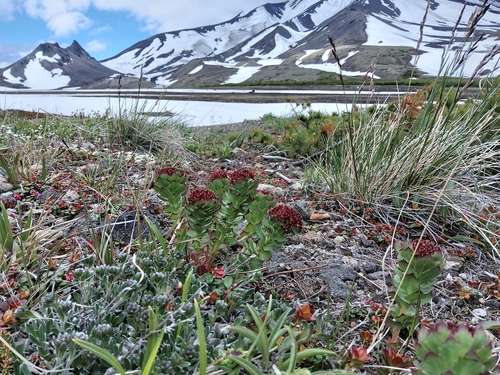
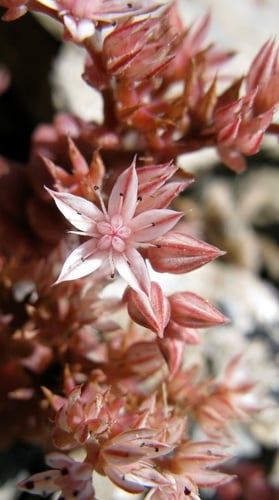
Source: WikipediaRhodiola integrifolia is a species of flowering plant in the stonecrop family known by the common names ledge stonecrop, western roseroot, and king's crown. It is native to north-easternmost Russia, including Kamchatka, and western North America, where it grows in mountainous habitat in subalpine and alpine climates, including meadows, cliffs, and talus. It is a perennial herb producing a stout stem from a fleshy, branching caudex, reaching a maximum height near 30 centimeters. The fleshy leaves are alternately arranged on the stem, widely lance-shaped to oval and pointed, flat but upcurved toward the tip, reaching 2.5 centimeters long. They are green when new and age to orange, rose, or red. The inflorescence is a dense cyme of up to 50 flowers with fleshy petals in shades of bright red to deep purple. The fruits are red, rounded ovals with pointed tips. There are several subspecies of this plant, with one, ssp. leedyi, very rare and limited to a few populations in Minnesota and upstate New York. This subspecies is considered a relict from times when its range was covered in glaciers; it survives on barren cliffs which are kept cold by air blowing through cracks from caves. It is treated as a federally listed threatened species in the United States. In 2024, a team at Cornell University successfully established a population of the plants in a nearby canyon, helping to prevent the plant from becoming extinct.
Description
A succulent herb. It forms tufts and keeps growing from year to year. The roots are thick and fleshy. The stems are 15-30 cm tall. The leaves are oblong and have teeth along the edge.
Edible Uses
The roots, shoots, leaves, and flowers are all edible, either fresh or cooked. The leaves are fleshy, crisp, and slightly bitter but overall very palatable — suitable for adding raw to salads or eating in moderation. Cooking softens the bitterness while preserving their moist texture. Leaves are best used young, and can be chopped finely for salads or prepared as a potherb. The roots can be dug at any time of year and boiled or roasted for food. Flowers and shoots are harvested in summer through early autumn, during the plant's blooming period of June to September.
Traditional Uses
The young leaves and stems and eaten raw in salads or cooked as a potherb. They are also fermented and stored. The rhizome can be cooked by boiling and eaten.
Medicinal Uses
None known
Distribution
It is a cold temperate plant. It grows in rocky areas in alpine regions.
Where It Grows
Alaska, Arctic, Canada, North America, Russia,
Cultivation
Prefers fertile, well-drained soil in a sunny position. Established plants are drought-tolerant. A good plant for the flower border. This species has pink to white flowers. All members of this genus are said to have edible leaves, though those species that have yellow flowers can cause stomach upsets if they are eaten in quantity. While king’s crown has been historically valued as a food plant, it is uncommon in many areas today and best left to regenerate naturally. Harvesting should be avoided except in true survival situations, especially since some subspecies are rare and at risk.
Propagation
Surface sow seed in spring in well-drained soil in a sunny position in a greenhouse, keeping the soil consistently moist. Prick out seedlings into individual pots when large enough to handle and grow them on in the greenhouse through their first winter. Plant out in early summer of the following year. Division in spring or early summer is very straightforward. Larger divisions can go directly into their permanent positions; smaller ones are better potted up and grown on in light shade in a cold frame until well established before planting out in late spring or early summer.
Other Uses
None known Special Uses
Synonyms
Also Known As
Saqlak
References (2)
- Jernigan, K. A., et al, 2017, Naukan ethnobotany in post-Soviet times: lost edibles and new medicinals. Journal of Ethnobiology and Ethnomedicine (2017) 13:61
- Porsild, A.E., 1953, Edible Plants of the Arctic, Arctic 6:15-34, page 28