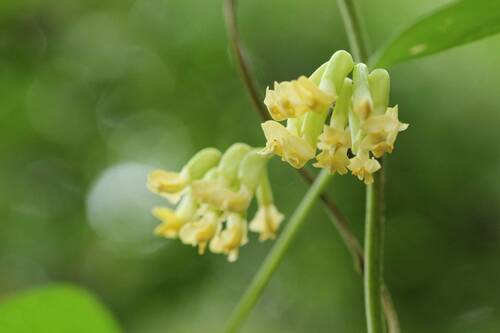
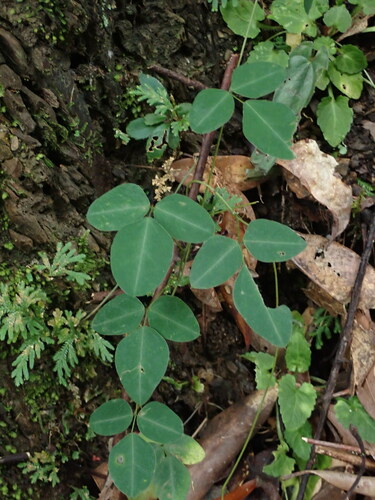
Lonchocarpus punctatus
Kunth
Punctate lance pod
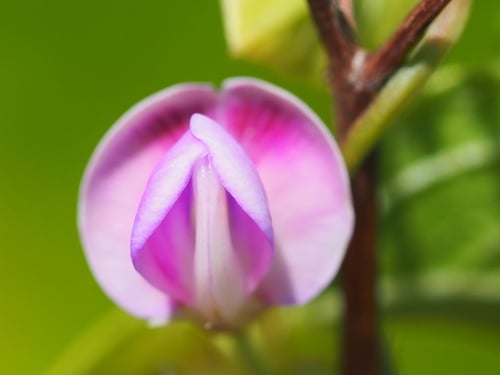
iNaturalist· cc-by-nc
(c) Christine Delbouis, some rights reserved (CC BY-NC)
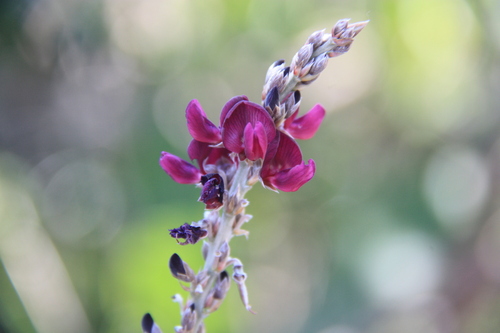
iNaturalist· cc-by-nc
(c) Christine Delbouis, some rights reserved (CC BY-NC)
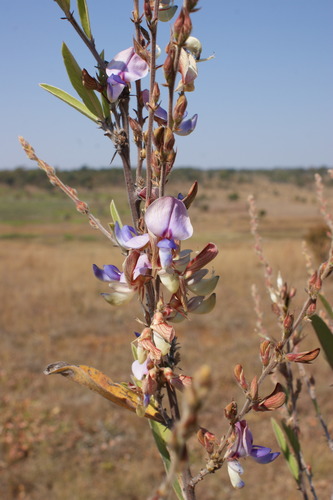
iNaturalist· cc-by-nc
(c) Christine Delbouis, some rights reserved (CC BY-NC)
Description
A tropical legume tree found in the Fabaceae family. Both the bark and fruit are edible uses.
This description is brief — help expand it
Edible Uses
The bark is soaked in water with honey and fermented to produce an intoxicating beverage called 'balché'. This drink was made by the ancient Mayans for use at religious and other celebrations. The drink is still made and used in the Maya region, but sugar syrup generally is employed in place of honey, and it is more commonly known by its Spanish name of 'pitarrilla'. Balché is still much used in the religious ceremonies of the Lacandon Indians of Pete'n. The prepared beverage is milky white, with a sour odour, and at first disagreeable to the taste. It contains only a small per cent of alcohol, but drunkenness is attained by drinking large quantities of it. The drink has psychotropic properties. The above report is for Lonchocarpus longistylus, though it is likely that more than one of the closely related Lonchocarpus species is utilized for preparing the beverage.
Traditional Uses
The bark is fermented to make a drink.
This uses section is brief — help expand it
Medicinal Uses
The tea obtained from the infusion of the leaves is used in traditional medicine to treat coughs and to clean infected wounds.
Known Hazards
The plant contains rotenone and has been used traditionally as a fish poison - the rotenone kills or stuns the fish making them easy to catch, but the fish remain perfectly edible for mammals. Rotenone is classified by the World Health Organization as moderately hazardous. It is mildly toxic to humans and other mammals, but extremely toxic to many insects (hence its use as an insecticide) and aquatic life, including fish. This higher toxicity in fish and insects is because the lipophilic rotenone is easily taken up through the gills or trachea, but not as easily through the skin or the gastrointestinal tract. The lowest lethal dose for a child is 143 mg/kg, but human deaths from rotenone poisoning are rare because its irritating action causes vomiting. Deliberate ingestion of rotenone, however, can be fatal. The compound decomposes when exposed to sunlight and usually has an activity of six days in the environment.
Distribution
It is a tropical plant.
Where It Grows
Belize, Central America, Colombia, Guatemala, Lesser Antilles, Mexico, Nicaragua, South America, Venezuela, West Indies,
Cultivation
A plant of tropical regions, growing in areas with a distinct dry season. The regions where the tree is found have an average annual temperature of 26°c with a maximum temperature of 36.7°c and a minimum temperature of 14.9°c. Average annual precipitation is approximately 1,288mm, ranging between 900 - 1,800mm. Prefers a sunny position and a fertile, friable soil. Established plants are very drought tolerant. We have decided to follow what seems to be the majority decision and include here two other species that are sometimes treated as distinct. These species are:- Lonchocarpus longistylus Pittier. This is recorded as being endemic to Mexico. Lonchocarpua violaceus (Jacq.) DC. This is recorded from the West Indies and northern S. America. The uses detailed below are likely to apply to all three species if they are eventually found to be distinct, but we have noted which particular species have been recorded as having the uses. This species has a symbiotic relationship with certain soil bacteria, these bacteria form nodules on the roots and fix atmospheric nitrogen. Some of this nitrogen is utilized by the growing plant but some can also be used by other plants growing nearby.
Propagation
Seed. Under humid conditions the fresh seeds germinate at 65% without pre-treatment. A heterogeneous sample of seeds germinated approximately 10 days after sowing. Seeds remain viable for approximately 6 months when stored under ambient conditions (24 - 30°c). With longer storage, their viability quickly diminishes.
Other Uses
The fibrous bark is easily stripped off the tree and is used to make ropes and cords. (This report is for L. Violaceous.) The bark contains a toxic alkaloid called rotenone, which has insecticidal properties. We have no specific information on the wood of this species. However, we have a general description of the wood for members of this genus, which is as follows:- The heartwood is yellowish-brown to dark reddish-brown, striped with rather fine uniform parenchyma laminations of a lighter colour; it is sharply demarcated from the thick band of yellowish sapwood. The texture is moderately coarse; the grain straight to irregular or interlocked; lustre is low to medium; there is no distinctive odour or taste. Durability varies considerably with the species. Seasoning also varies with species, the drying rate can be rather slow to rather rapid. It is reported to dry satisfactorily without excessive distortion or shrinkage if dried slowly. In spite of its hardness, the wood is not particularly difficult to work; smooth planing, however, is difficult because of interlocked grain. It is used for purposes such as heavy construction, flooring, furniture components etc. Durable species have been suggested for railroad crossties.
Synonyms
Also Known As
Bal-che, Balche, Cancho, Choco, Cochuabo, Frijolillo, Jebe, Pipin, Pipini
References (2)
- Grandtner, M. M. & Chevrette, J., 2013, Dictionary of Trees, Volume 2: South America: Nomenclature, Taxonomy and Ecology. Academic Press p 359
- Segura, S., et al, 2018, The edible fruit species in Mexico. Genet Resour Crop Evol (2018) 65:1767–1793