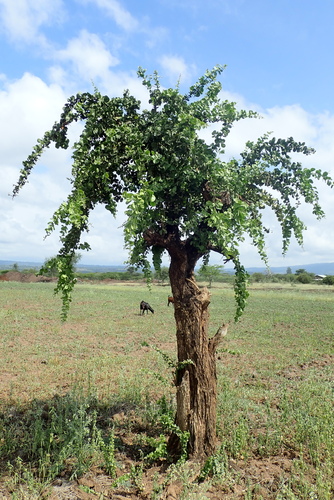
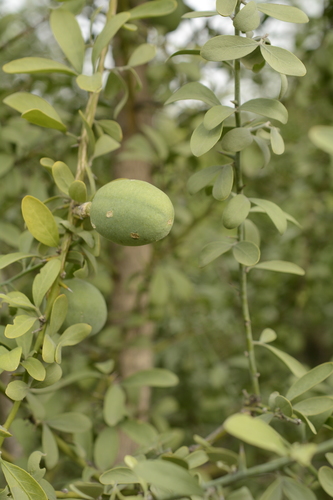
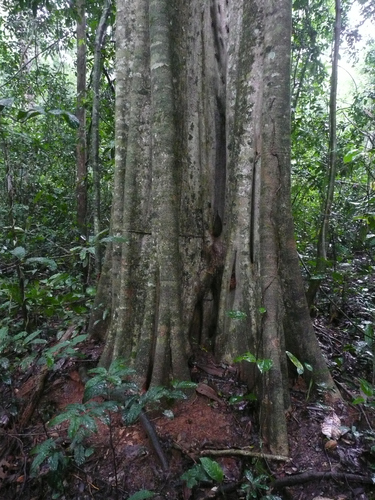
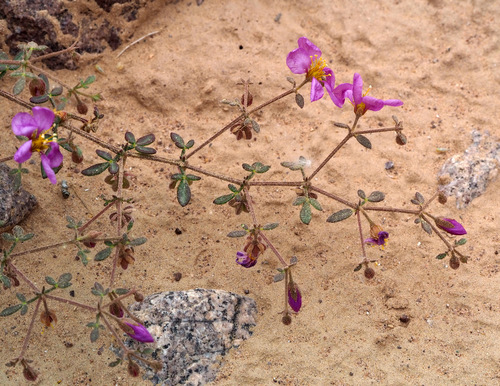
Balanites aegyptiaca var. quarrei
(De. Wild.) G. Gilbert
gbif· cc-by
Meise Botanic Garden
gbif· cc-by
Royal Botanic Gardens, Kew
gbif· cc-by
Meise Botanic Garden
Summary
Source: WikipediaBalanites aegyptiaca (also known as the Desert date, Egyptian balsam and Lalob in Sudan) is a species of tree, classified as a member of either the Zygophyllaceae or the Balanitaceae. This tree is native to much of Africa (excluding South Africa, Namibia, Madagascar, Senegal and Tunisia) and parts of the Middle East (from Syria south to Yemen). It can be found in many kinds of habitat, tolerating a wide variety of soil types, from sand to heavy clay, and climatic moisture levels, from arid to subhumid. It is relatively tolerant of flooding, livestock activity, and wildfire. It is an important food tree, with edible leaves and fruits, and has countless local uses. The generic part of the binomial Balanites derives from the Greek word for an acorn and refers to the fruit. This name was coined by Alire Delile in 1813. In Descr. Egypte, Hist. Nat. 221 1813, the specific name aegyptiaca was applied by Carl Linnaeus as the species was initially described from specimens collected in Egypt. The orthographic variant name that complies with ICBN Art 62.4 for this species is Balanites aegyptiacus.
Description
A small tree native to tropical Africa, found in Miombo woodland and on termite mounds, belonging to the Zygophyllaceae family.
This description is brief — help expand it
Edible Uses
The fruit is edible.
Medicinal Uses
Desert date fruit is mixed into porridge and eaten by nursing mothers, and the oil is consumed for headache and to improve lactation. Bark extracts and the fruit repel, or destroy, freshwater snails and copepods, organisms that act as intermediary hosts of parasites including Schistosoma, Bilharzia, and guinea worm. Worm infections are likewise treated with desert date, as are liver and spleen disorders. A decoction of the bark is also used as an abortifacient and an antidote for arrow poison in West African traditional medicine. The antigiardial (combating Giardia parasites), antiamoebic, antimicrobial, antioxidant activity and cytotoxicity of the fruits extract has been studied. The seed contains 30-48% fixed (non-volatile) oil, like the leaves, fruit pulp, bark and roots, and contains the sapogenins diosgenin and yamogenin. Saponins likewise occur in the roots, bark wood and fruit.
Distribution
It is a tropical plant. It grows in Miombo woodland. It grows in termite mounds.
Where It Grows
Africa, East Africa, Zambia,
Synonyms
Also Known As
Mubambwangoma
References (1)
- Malaisse, F., 2010, How to live and survive in Zambezian open forest (Miombo Ecoregion). Les Presses Agronomiques de Gembloux.