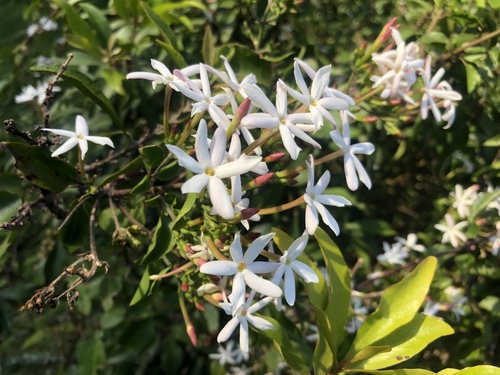
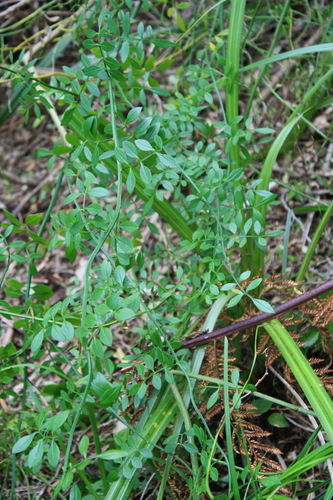
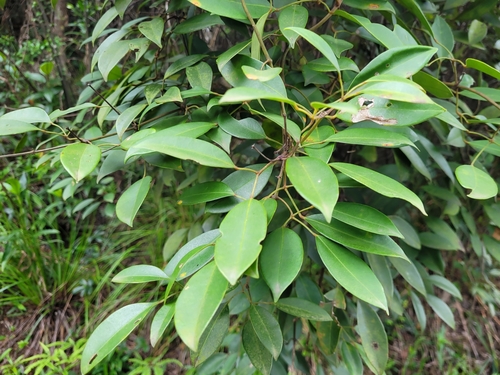
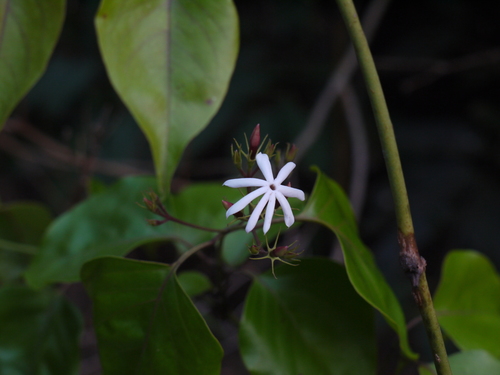
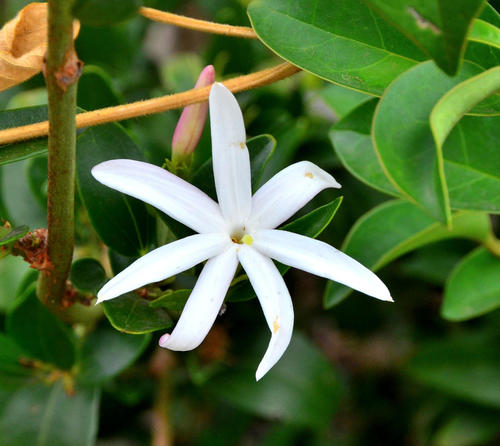
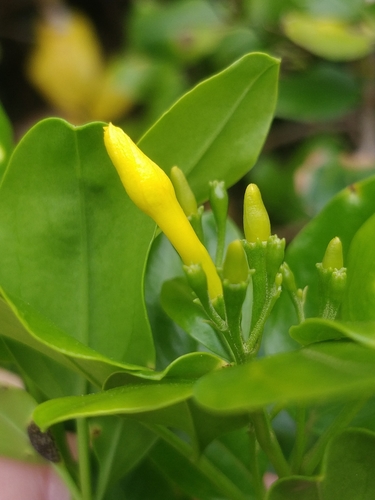
Ligustrum ovalifolium
Hassk.
iNaturalist· cc0
no rights reserved, uploaded by Stephen James McWilliam
iNaturalist· cc-by-nc
(c) Pam, some rights reserved (CC BY-NC), uploaded by Pam
iNaturalist· cc-by
(c) Sandy Wolkenberg, some rights reserved (CC BY), uploaded by Sandy Wolkenberg
Summary
Source: WikipediaLigustrum ovalifolium, also known as Korean privet, California privet, garden privet, and oval-leaved privet, is a species of flowering plant in the olive family Oleaceae. The species is native to Japan and Korea.
Description
Ligustrum ovalifolium is an evergreen shrub growing 4 m tall by 3 m wide at medium rate. It remains in leaf year-round, flowers in July, and produces seeds ripening in October. Hardy to UK zone 5 and not frost tender. Hermaphroditic flowers are insect-pollinated. The plant tolerates light sandy, medium loamy, and heavy clay soils, including nutritionally poor clay. It grows in mildly acid, neutral, or mildly alkaline soils. Adapts to full shade, semi-shade, or full sun, and tolerates both dry and moist conditions with drought resistance. Maritime exposure and atmospheric pollution tolerance make it suitable for challenging locations.
Edible Uses
None known.
Traditional Uses
The fruit are boiled and eaten.
This uses section is brief — help expand it
Medicinal Uses
None known.
Known Hazards
Although no reports of toxicity have been seen for this species, at least one member of this genus is recorded as being mildly toxic and it is quite possible that other members of the genus also contain toxins.
Distribution
It is a temperate plant.
Where It Grows
Asia, Korea, St Helena,
Cultivation
A very tolerant and easily grown plant, it succeeds in any soil that is not impoverished. Dislikes very alkaline soils. Grows well in heavy clay soils. Succeeds in dark corners or places starved by tree roots. Shade tolerant, established plants also tolerate drought. Plants are hardy to about -15°c. They can be cut back to the ground in very severe winters but usually resprout from the base. Plants are often deciduous in cold winters, when grown in poor soils, near the coast or in an exposed position. A moderately fast-growing plant, though it is also very greedy, robbing the surrounding soil of more nutrients and moisture than most hedging plants. Some named forms have been developed for their ornamental value. This species is notably susceptible to honey fungus.
Propagation
Seed requires no pre-treatment and can be sown in spring in a cold frame. Prick seedlings into individual pots when large enough and grow on under glass for at least their first winter. Plant out in late spring or early summer after the last expected frosts. Cuttings of half-ripe wood, 5–10 cm with a heel, taken in July or August in a frame — very easy. Cuttings of mature wood, 20–30 cm, in a sheltered outdoor bed in November or December give a high success rate.
Other Uses
An excellent hedging plant that tolerates maritime exposure and many difficult growing conditions. It responds well to hard trimming but is slow growing, particularly in exposed positions where it can take 9–10 years to reach 3 metres. The cultivars 'Aureum' and 'Argenteum' are especially recommended for hedging.
Synonyms
Also Known As
Kkaettingnamu
References (1)
- Ong, H. G., et al, 2015, Ethnobotany of the wild edible plants gathered in Ulleung Island, South Korea. Genet Resourc Crop Evol. Springer (As Ligustrum foliosum)