Actinidia rubricaulis
Dunn
Chinese Egg Gooseberry
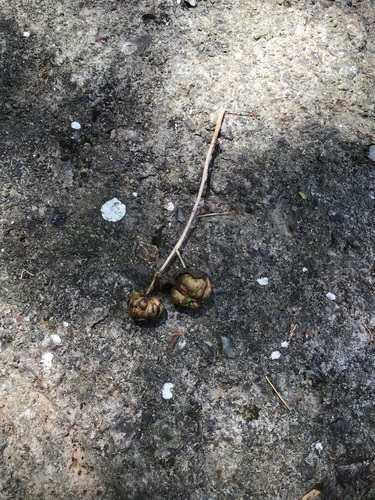
iNaturalist· cc-by-nc
(c) 綾蛾Actias, some rights reserved (CC BY-NC), uploaded by 綾蛾Actias
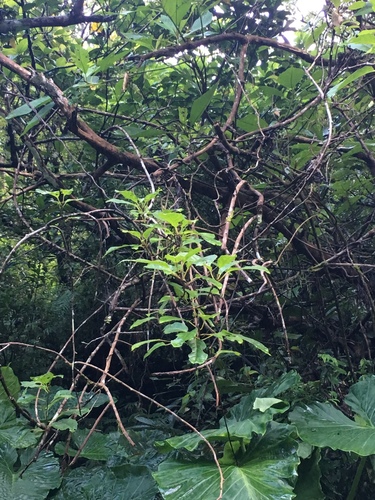
iNaturalist· cc-by-nc
(c) 江国彬, some rights reserved (CC BY-NC)
Summary
Source: WikipediaActinidia rubricaulis is a species of plant in the Actinidiaceae family. It is found across southern China and southeast asia as far as northern Thailand.
Description
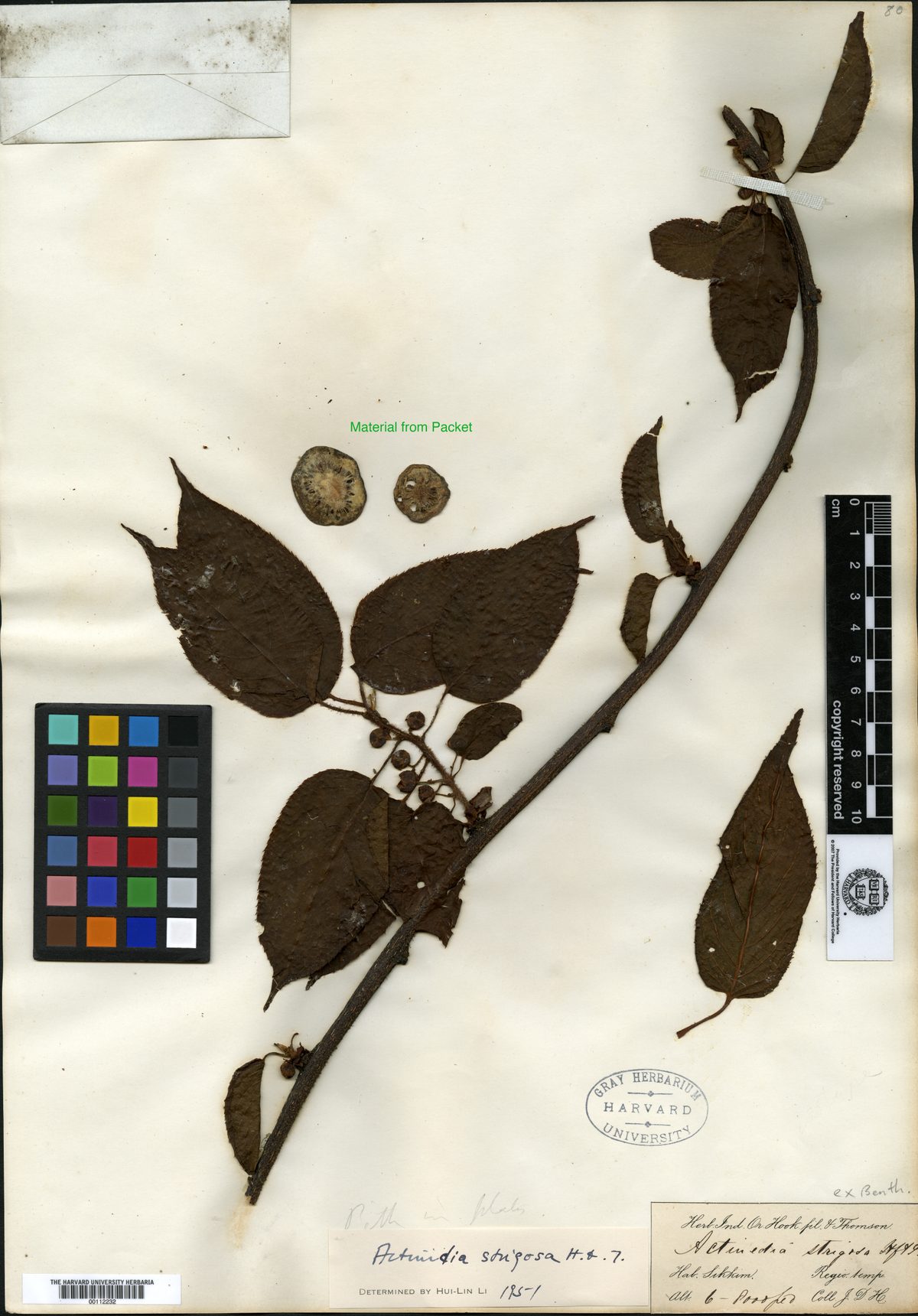
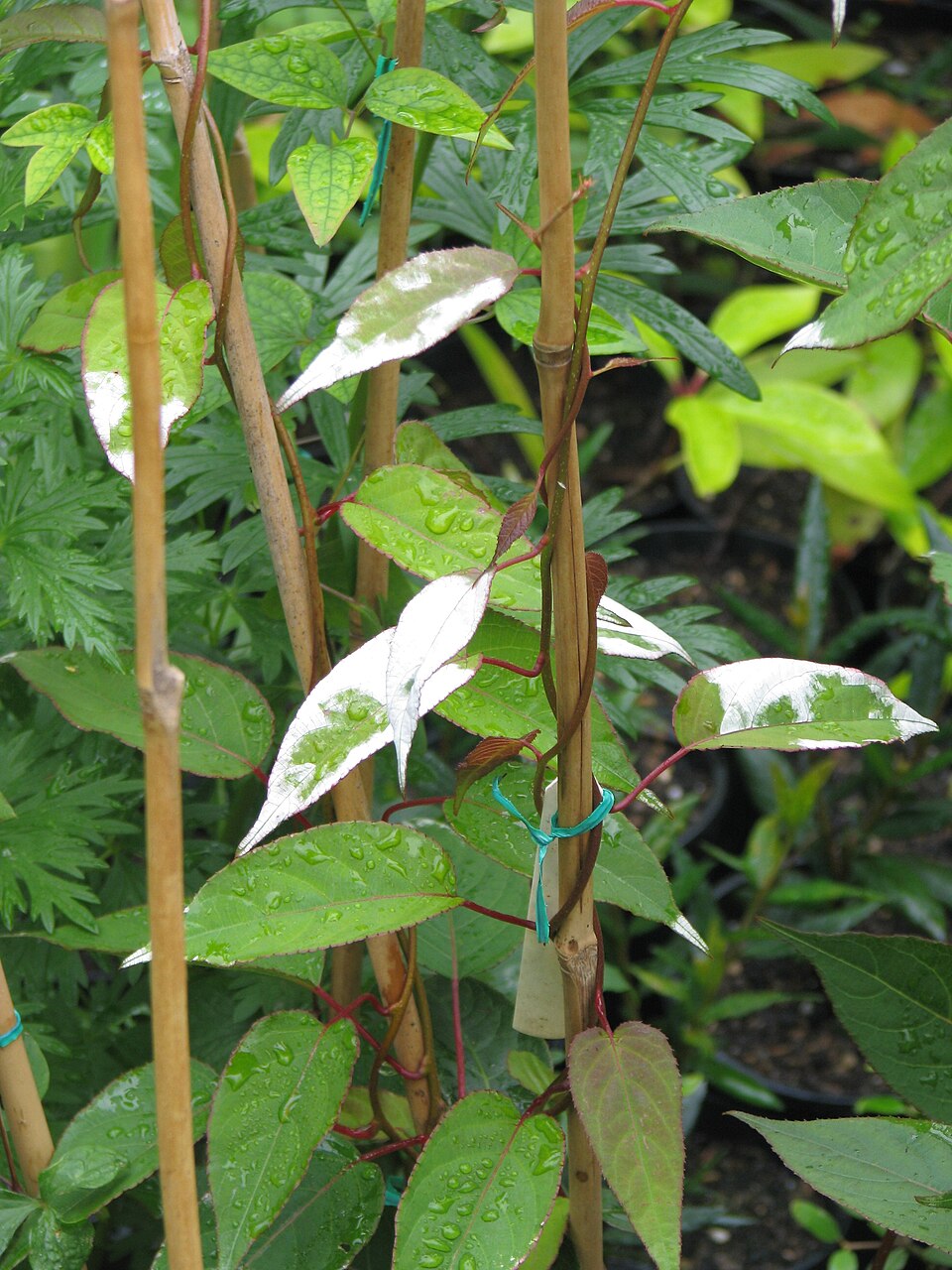
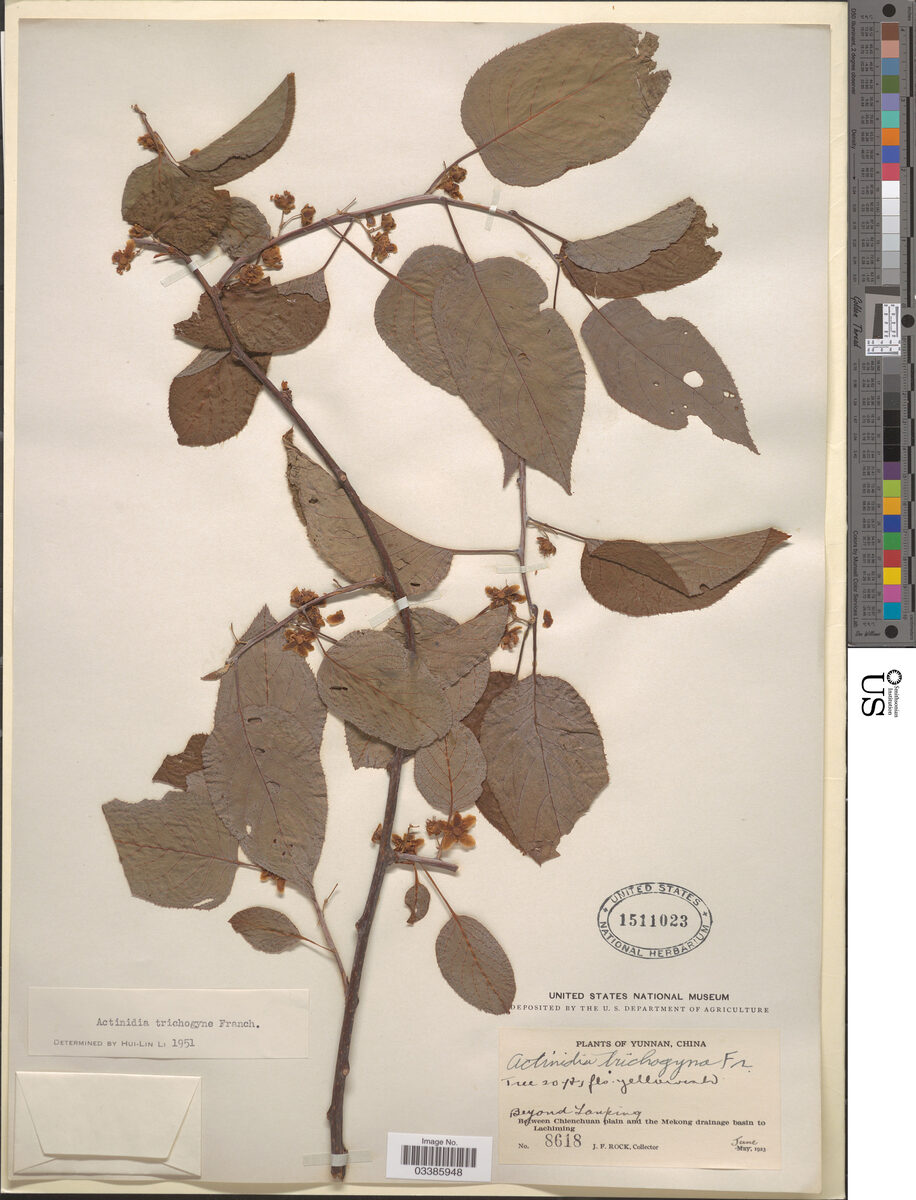
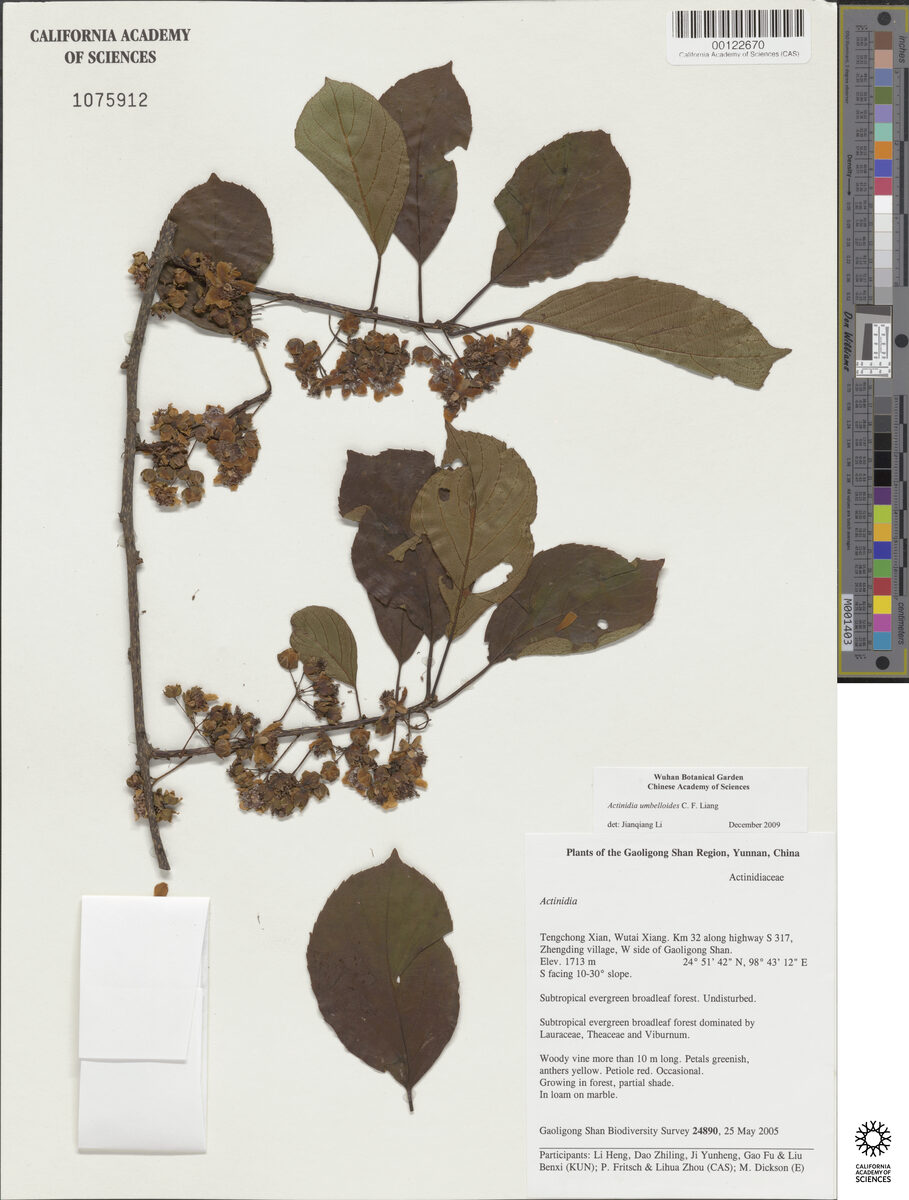
A woody climber. It grows 10 m long. The branches are purple. The leaves are papery and narrowly sword shaped. There are teeth along the edge. The fruit is 1.6 cm long and 1.3 cm wide.
Edible Uses
The fruit can be eaten raw or cooked and has a small, sweet character. When fully ripe, the ovoid fruit is dark green and hairless, measuring about 1.6cm long and 1.3cm wide. It contains several small seeds, though these are soft enough to eat along with the rest of the fruit.
Traditional Uses
The fruit is eaten raw or cooked.
This uses section is brief — help expand it
Medicinal Uses
None known
Distribution
It grows naturally in Yunnan in SW China in hedges and woods in mountains, 1500 - 2300 metres. It grows in subtropical broad-leaved evergreen forest. In Sichuan.
Where It Grows
Asia, China, Indochina, SE Asia, Thailand,
Cultivation
Prefers a sound loamy neutral soil. Succeeds in semi-shade but full sun is best for fruit production. Prefers a sheltered position. Young spring growth is susceptible to frost damage. Fruits are formed on second year wood and also on fruit spurs on older wood, any pruning is best carried out in the winter. This is a climbing plant, supporting itself by twining around branches etc. Closely related to A. coriacea, it is part of the A. callosa group but with smaller fruits. Cultivated for its edible fruit in China. Plants in this genus are notably resistant to honey fungus. Dioecious. Male and female plants must be grown if seed is required.
Propagation
Sow seed in spring in a greenhouse, ideally after 3 months of stratification. Alternatively, sow fresh seed in a cold frame as soon as it is ripe in November or upon receipt. Fresh seed germinates in 2–3 months at 10°c; stored seed may take longer. Once seedlings are large enough to handle, prick them out into individual pots and grow on in light shade in the greenhouse for at least their first winter. Plant out into permanent positions in late spring or early summer, after the last expected frosts, once plants are 30cm or more tall. Note that most seedlings are male. Seedlings are prone to damping off and must be kept well ventilated. Softwood cuttings can be taken as soon as growth is ready in spring in a frame. Half-ripe cuttings can be taken in July/August in a frame, with a very high success rate. Ripe wood cuttings can be taken in October/November in a frame.
Other Uses
None known
Other Information
It is a cultivated food plant.
Notes
There are 40-60 Actinidia species. The Actinidiaceae are a mainly tropical family.
Nutrition
| Part | Moisture | kJ | kcal | Protein | Vit A | Vit C | Iron | Zinc |
|---|---|---|---|---|---|---|---|---|
| Fruit | 78.8 | — | — | — | — | 12.8 | — | — |
| Fruit | — | — | — | — | — | — | — | — |
Also Known As
Magala
References (5)
- Arora, R. K., 2014, Diversity in Underutilized Plant Species - An Asia-Pacific Perspective. Bioversity International. p 56
- Bircher, A. G. & Bircher, W. H., 2000, Encyclopedia of Fruit Trees and Edible Flowering Plants in Egypt and the Subtropics. AUC Press. p 9
- Bull. Misc. Inform. Kew 1906:2. 1906
- Jin, Chen et al, 1999, Ethnobotanical studies on Wild Edible Fruits in Southern Yunnan: Folk Names: Nutritional Value and Uses. Economic Botany 53(1) pp 2-14
- Plants for a Future database, The Field, Penpol, Lostwithiel, Cornwall, PL22 0NG, UK. http://www.scs.leeds.ac.uk/pfaf/