Copernicia prunifera
(Mill.) H. E. Moore
Brazilian wax palm
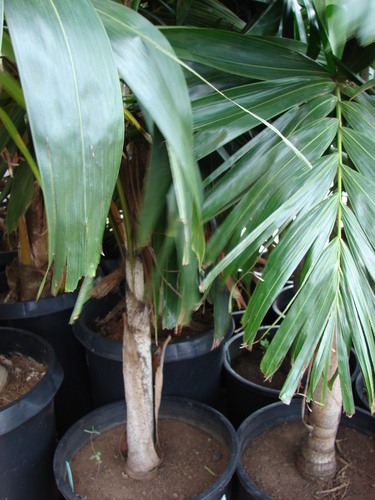
iNaturalist· cc-by-nc
(c) ecesana, some rights reserved (CC BY-NC)
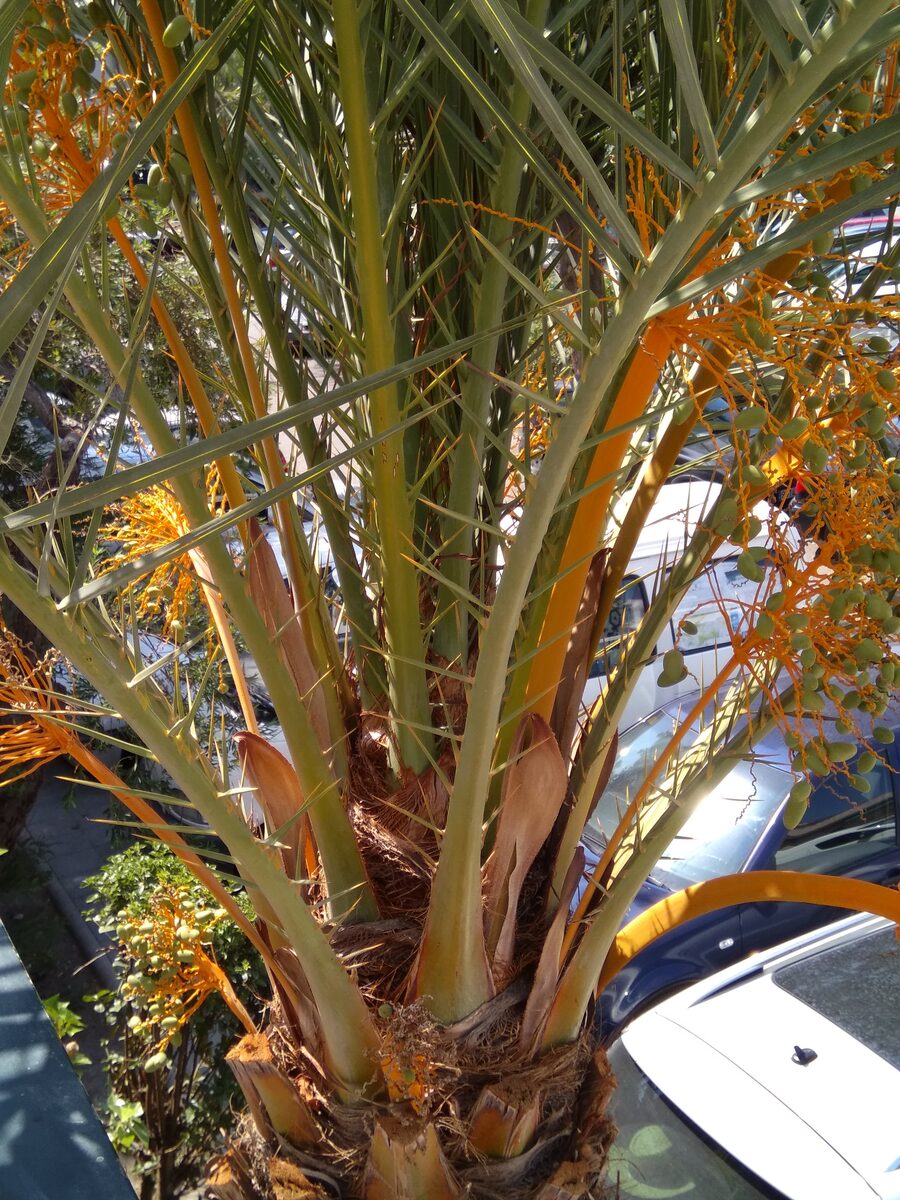
iNaturalist· cc-by-nc
(c) A. Thiago A. Farias, some rights reserved (CC BY-NC)
Summary
Source: WikipediaCopernicia prunifera or the carnaúba palm or carnaubeira palm (Portuguese pronunciation: [kaʁnaˈubɐ]) is a species of palm tree native to northeastern Brazil (mainly the states of Ceará, Piauí, Maranhão, Rio Grande do Norte and Bahia). Known by many as 'tree of life' because of its many uses, the Carnaúba is also the symbol tree of Ceará. The initiative to use it as a symbol vies to promote its conservation and sustainable use.
Description
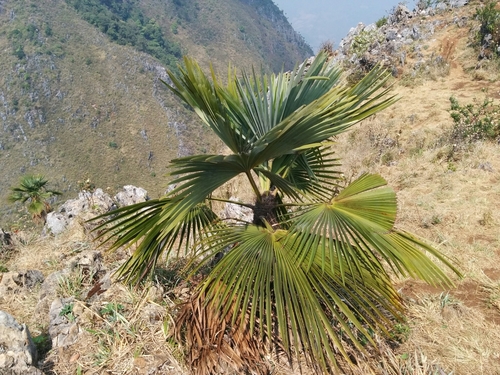
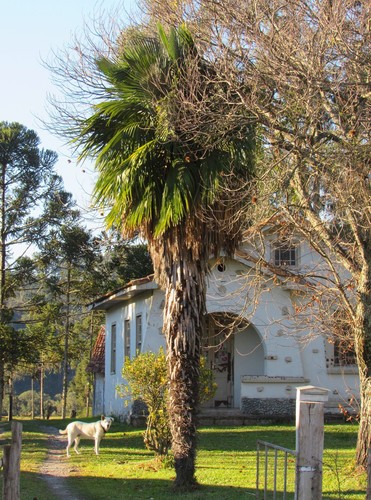
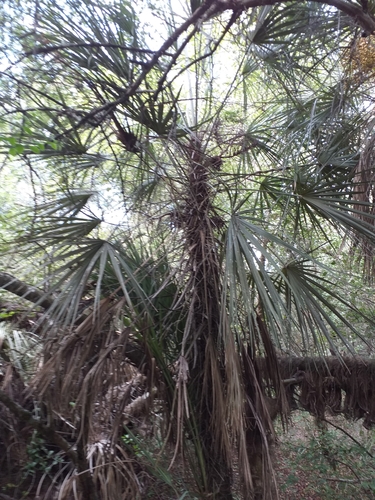
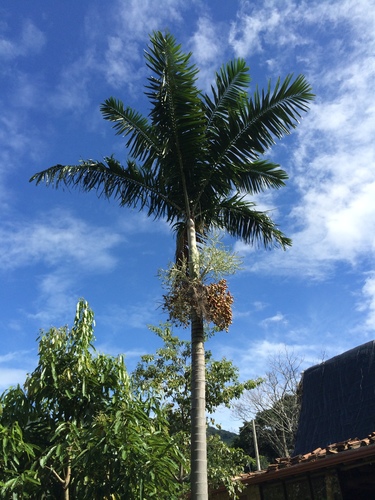
A fan palm. It grows about 10-15 m high. The trunk is 15-25 cm across. The trunk is hard and patterned with the bases of fallen leaves. It has a large round crown of leaves. The leaves are deeply divided and fan-shaped. They are on long leaf stalks. The flowering stalks are 1.5-2.7 m long. They extend beyond the leaves. The fruit are oval and 27 mm long by 22 mm wide.
Edible Uses
The pith of the trunk is rich in starch and is used to make sago. An edible gum is also obtained from the trunk. Young inflorescences are edible. The seed serves as a coffee substitute. Leaves are eaten cooked. The apical bud — commonly known as palm heart — is eaten as a vegetable, though harvesting it kills the tree as it cannot produce side shoots.
Traditional Uses
The sap is used to make a starch and also for drinks. The fruit are eaten raw. The trunk is a source of sago starch. The seed is oily and edible. The roots are used as a substitute for sarsaparilla. The young flower is eaten. The seeds are used as a coffee substitute.
Medicinal Uses
The roots are depurative and diuretic. A decoction is considered a specific treatment for syphilis and is also used for arthritis, rheumatism, dermal afflictions, and oedema. A wax obtained from the leaves is used in the preparation of ointments and cataplasms.
Distribution
A tropical plant. It grows in tropical and subtropical regions. It is drought resistant. It can grow in arid places. It can tolerate considerable cold. It grows best with adequate moisture. In Brazil it grows in river valleys from sea level to 500 m altitude. It can tolerate flooding and burning. It suits hardiness zones 10-12.
Where It Grows
Amazon, Asia, Australia, Brazil*, Central America, East Africa, India, Madagascar, Mauritius, SE Asia, Singapore, South America, Sri Lanka, West Indies,
Cultivation
Plants are grown from seed. Seed take 4-10 months to germinate. It is best to use fresh seeds. Drier seeds should be soaked in water.
Propagation
Seeds do not need to be separated from the fruit before sowing. Pre-soak stored seed for 24 hours in warm water before sowing. Sow in a lightly shaded position in a nursery seedbed or individual containers. Germination can take 2–3 months and sprouting is slow, with a low germination rate. Young seedlings grow slowly.
Other Uses
A high-quality wax obtained from the undersides of the leaves is very hard with a high melting point. It is used to produce premium polishes, varnishes, phonographic records, lubricants, soaps, and candles. The leaves are used for thatching and woven into mats, baskets, and hats; fibre from the leaves is also made into ropes. An oil is obtained from the seeds. The wood is soft, moderately heavy, long-lasting in salt water, and easy to work. It is used for fencing, rustic buildings, laths, and turned items such as walking sticks. Whole stems are used as poles, and the wood is also used as fuel.
Production
Plants grow slowly.
Other Information
It is grown commercially for the production of wax.
Notes
There are 13 (24-25) Copernicia species and several hybrids. The wax from the underside of leaves is used for coating of medicinal capsules. It has antioxidant properties.
Nutrition
| Part | Moisture | kJ | kcal | Protein | Vit A | Vit C | Iron | Zinc |
|---|---|---|---|---|---|---|---|---|
| Fruit | 70.7 | — | — | — | — | 78.1 | — | — |
Synonyms
Also Known As
Carnahuba, Carnauba, Carnauba wax palm, Carnaubeira, Palmeira-carnauba, Wax Palm
References (27)
- Ambasta, S.P. (Ed.), 2000, The Useful Plants of India. CSIR India. p 139 (As Copernicia cerifera)
- Balick, M.J. and Beck, H.T., (Ed.), 1990, Useful palms of the World. A Synoptic Bibliography. Colombia p 70 (As Copernicia cerifera), 212 (As Copernicia cerifera), 321,
- Blomberry, A. & Rodd, T., 1982, Palms. An informative practical guide. Angus & Robertson. p 90 (As Copernicia cerifera)
- Burkill, I.H., 1966, A Dictionary of the Economic Products of the Malay Peninsula. Ministry of Agriculture and Cooperatives, Kuala Lumpur, Malaysia. Vol 1 (A-H) p 661 (As Copernica cerifera)
- Bussmann, R. W., (Ed.), 2020, Biodiverse food plants in the semiarid region of Brazil have unknown potential: A systematic review. Plos ONE 15(5): e0230936
Show all 27 references Hide references
- Cundall, P., (ed.), 2004, Gardening Australia: flora: the gardener's bible. ABC Books. p 408
- Etherington, K., & Imwold, D., (Eds), 2001, Botanica's Trees & Shrubs. The illustrated A-Z of over 8500 trees and shrubs. Random House, Australia. p 224
- Facciola, S., 1998, Cornucopia 2: a Source Book of Edible Plants. Kampong Publications, p 28
- Fagg, C. W. et al, 2015, Useful Brazilian plants listed in the manuscripts and publications of the Scottish medic and naturalist George Gardner (1812–1849). Journal of Ethnopharmacology 161 (2015) 18–29
- Henderson, A., Galeano, G and Bernal, R., 1995, Field Guide to the Palms of the Americas. Princeton. p 61
- Hibbert, M., 2002, The Aussie Plant Finder 2002, Florilegium. p 72
- Johnson, D.V., 1998, Tropical palms. Non-wood Forest products 10. FAO Rome. p 129
- Johnson, D., 1972, The carnauba wax palm (Copernicia prunifera) Principes 16(1): 16-19, 16(2)42-48, 16(3)111-114, 16(4):128-131,
- Jones, D.L., 1994, Palms throughout the World. Smithtonian Institution, Washington. p 200
- Jones, D.L., 2000, Palms of Australia 3rd edition. Reed/New Holland. p 150
- Kermath, B. M., et al, 2014, Food Plants in the Americas: A survey of the domesticated, cultivated and wild plants used for Human food in North, Central and South America and the Caribbean. On line draft. p 259
- Lorenzi, H., 2002, Brazilian Trees. A Guide to the Identification and Cultivation of Brazilian Native Trees. Vol. 01 Nova Odessa, SP, Instituto Plantarum p 294
- Martin, F.W. & Ruberte, R.M., 1979, Edible Leaves of the Tropics. Antillian College Press, Mayaguez, Puerto Rico. p 210
- Menninger, E.A., 1977, Edible Nuts of the World. Horticultural Books. Florida p 132,
- Nunes, E. N., et al, 2018, Local botanical knowledge of native food plants in the semiarid region of Brazil. Journal of Ethnobiology and Ethnomedicine (2018) 14:49
- Oliviera V. B., et al, 2012, Native foods from Brazilian biodiversity as a source of bioactive compounds. Food Research International 48 (2012) 170-179
- Purseglove, J.W., 1972, Tropical Crops. Monocotyledons. Longmans p 423 NB Different authority
- Riffle, R.L. & Craft, P., 2003, An Encyclopedia of Cultivated Palms. Timber Press. p 314
- Rufino, M. M. et al, 2010, Bioactive compounds and antioxidant capacities of 18 non-traditional tropical fruit from Brazil. Food Chemistry 121: 996-1002
- Rufino, M. M., et al, 2009, Quality for fresh consumption and processing of some non-traditional tropical fruits from Brazil. Fruits, Vol. 64, p 361-370
- Wickens, G.E., 1995, Edible Nuts. FAO Non-wood forest products. FAO, Rome. p165
- World Checklist of Useful Plant Species 2020. Royal Botanic Gardens, Kew