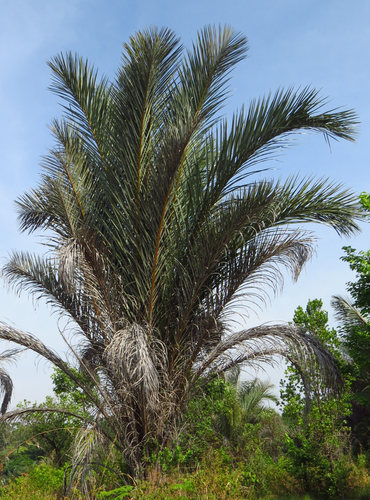
Wettinia quinaria
(C.F. Cook & Doyle) Burret
iNaturalist· cc-by-nc
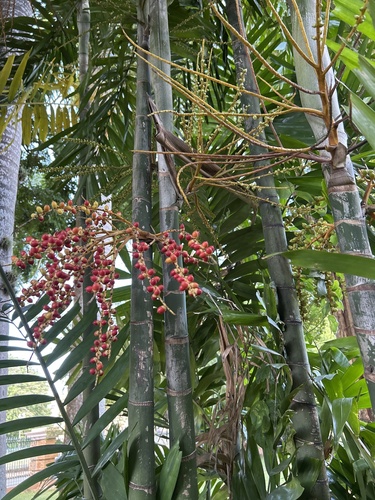
(c) Jan Meerman, some rights reserved (CC BY-NC), uploaded by Jan Meerman
iNaturalist· cc-by-nc
(c) gustavocamacho05, some rights reserved (CC BY-NC)
iNaturalist· cc-by-nc
(c) gustavocamacho05, some rights reserved (CC BY-NC)
Description
A palm. It has a single stem. It grows 8-15 m tall. The stems are 10-20 cm wide. The leaves are 3-6 m long with 35-60 leaflets on each side. There are 5-7 flowers at each node on the stem. The fruit are green. They are 2-3.5 cm long by 1.5-2.5 cm wide. They occur in 4-7 long clusters.
Edible Uses
The palm heart, fruit, and seeds are edible.
Distribution
It is a tropical plant. It grows in wet forest up to 1,000 m above sea level.
Where It Grows
Andes, Central America, Colombia, Ecuador, Panama, Peru, South America,
Other Uses
The outsides of the stems are hard. They are a popular material for use in making walls and also as posts in construction. The stems are also used for making blowpipes.
Other Information
It is cultivated.
Synonyms
Also Known As
Ban chi, Bisala, Bunchim Cade, Chinta, Gualte, Gualte bola, Meme, Palmira, Pistula, Yaanchi, Zancona
References (8)
- Barfod, A. S. & Kvist, L. P., 1996, Comparative Ethnobotanical Studies of the Amerindian Groups in Coastal Ecuador. The Danish Academy of Sciences and Letters. p 77
- Grandtner, M. M. & Chevrette, J., 2013, Dictionary of Trees, Volume 2: South America: Nomenclature, Taxonomy and Ecology. Academic Press p 704
- Lopez-Diago, D. & Garcia, N., 2021, Wild edible fruits of Colombia. Biota ColomBiana 22 (2) p 32
- Marcia, M. J., et al, 2011, Palm Uses in Northwestern South America: A Quantitative Review. Bot. Rev. (2011) 77:462-570
- Palmpedia
Show all 8 references Hide references
- Roa, J. A. G. & Boada, D. S. G., 2018, Fundación para el Fortalecimiento de la Fruticultura y Plantas Alimenticias no Convencionales en Colombia.
- Torre, de la L., et al, 2008, Enciclopedia de las Plantas Útiles del Ecuador. Herbario QCA. Pontificia Universidad Católica del Ecuador. p 210
- World Checklist of Useful Plant Species 2020. Royal Botanic Gardens, Kew