Flueggea virosa subsp. melanthesoides
(F. Muell.) G. L. Webster
White currant
Phyllanthaceae Edible: Fruit
gbif· cc-by-nc
Rachel Reese
gbif· cc-by-nc
Rachel Reese
gbif· cc-by-nc
Rachel Reese
Description
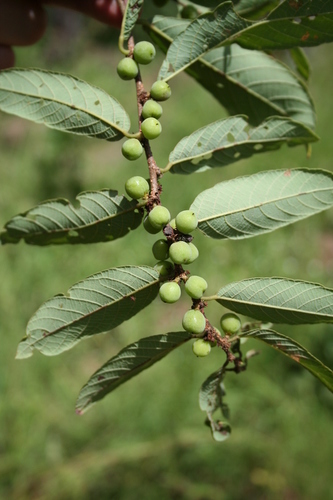
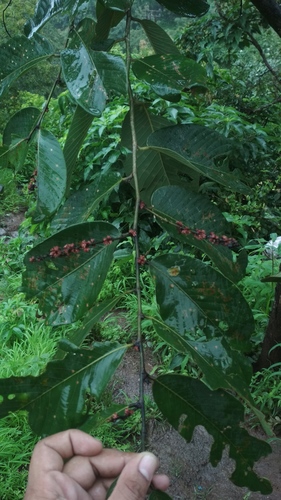
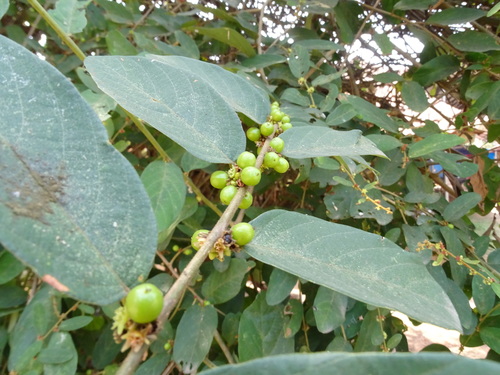
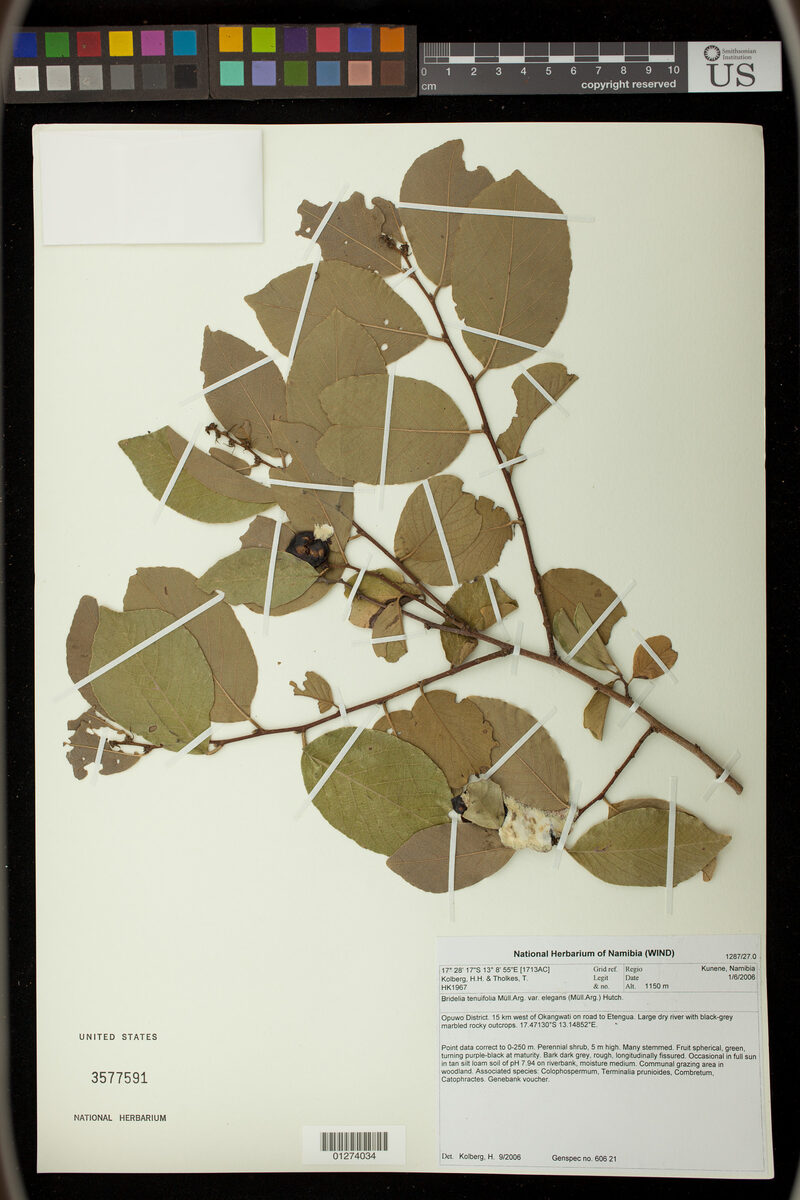
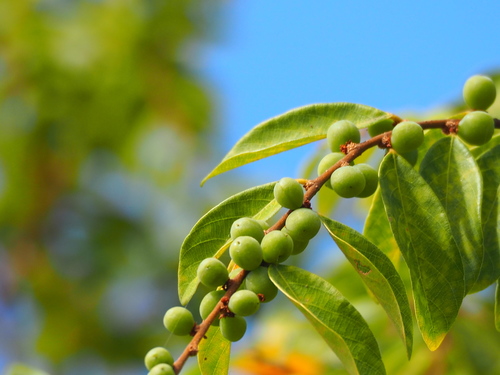
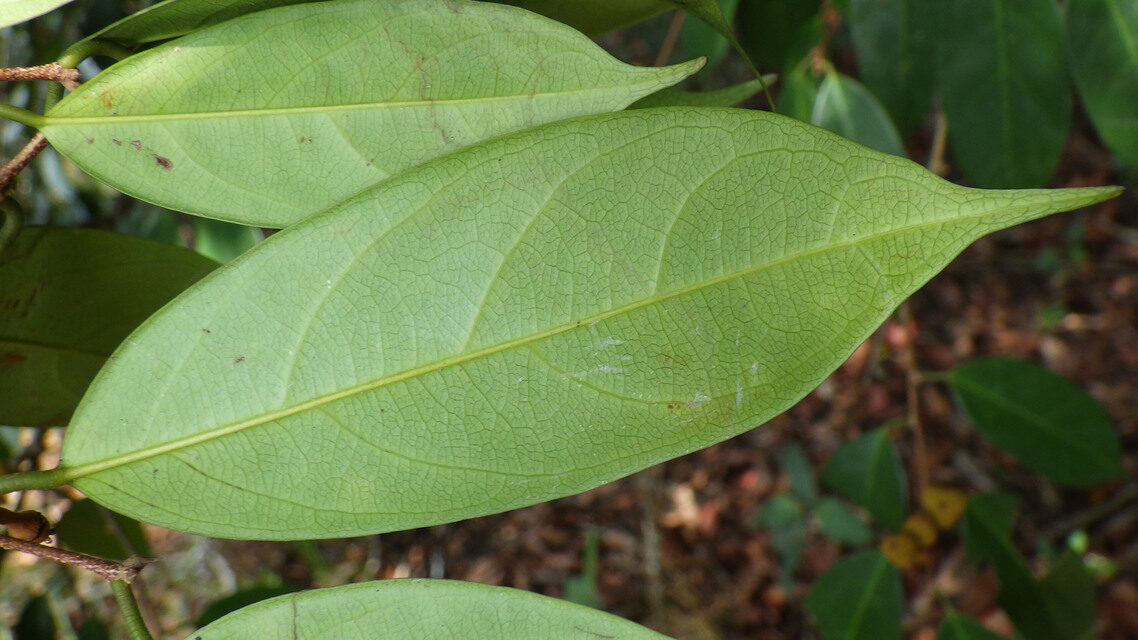
A shrub. It grows 1-4 m tall. The leaves are on long shoots. The leaves are 3.5-6.5 cm long by 2-3.5 cm wide. Flowers are in groups of 10-20. The flowers are 2 mm across. The fruit are round and white.
Edible Uses
The ripe fruit are eaten raw.
Traditional Uses
The ripe fruit are eaten raw.
This uses section is brief — help expand it
Distribution
It is a tropical plant. It grows from sea level to 400 m above sea level.
Where It Grows
Australia*, New Guinea, Torres Strait,
Synonyms
Flueggea keyensis (Warb.) Boerl.Flueggea melanthesoides (F.Muell.) F. Muell.Flueggea novoguineensis Valeton ex Hallier f.Flueggea virosa var. aridicola DominFlueggea virosa f. reticulata DominLeptonema melanthesoides F. Muell.Securinega keyensis Warb.Securinega melanthesoides (F. Muell.) Airy ShawSecurinega melanthesoides var. aridicola (Domin) Airy ShawSecurinega virosa var. australiana Baill.
Also Known As
Anbamar, Guralga, Snowball bush
References (5)
- Crawford, I. M., 1982, Traditional Aboriginal Plant Resources in the Kalumburu Area: Aspects in Ethno-economics. Records of the Western Australian Museum. Supplement No. 15 (As Securinega melanthesoides)
- Fell, D.G. & Stanton, D.J., 2015: The vegetation and flora of Mabuyag, Torres Strait, Queensland. Memoirs of the Queensland Museum – Culture 8(1):1-33. Brisbane. ISSN 1440-4788.
- Mua Bioversity Profile, 2013, Profile for Management of the Habitats and Related Ecological and Cultural Resources of Mua Island. Torres Strait Regional Authority Land & Sea Management Unit. p 142
- Smith, M & Kalotas, A. C., 1985, Bardi Plants: An Annotated List of Plants and Their Use by the Bardi Aborigines of Dampierland, in North-western Australia. Rec. West Aust. Mus. 1985, 12(3): 317-359
- Vigilante, T., et al, 2013, Island country: Aboriginal connections, values and knowledge of the Western Kimberley islands in the context of an island biological survey. Records of the Western Australian Museum Supplement 81: 145-182