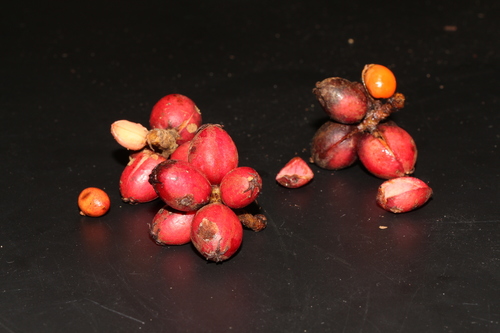
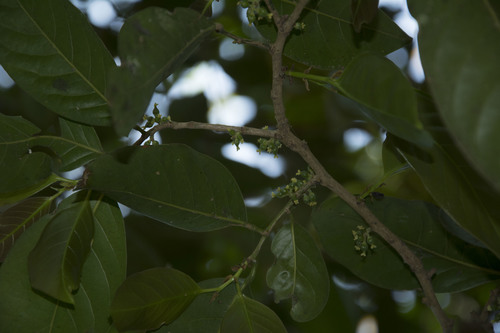
Bridelia scleroneura
Mull.-Arg.
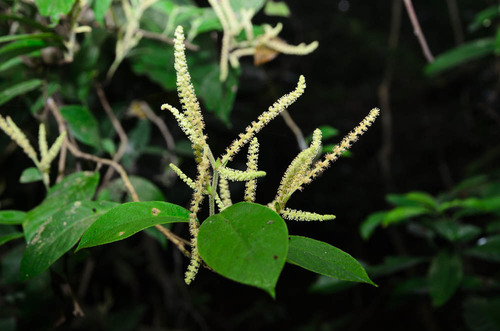
Haragillo
iNaturalist· cc-by-nc-sa
(c) Marco Schmidt, some rights reserved (CC BY-NC-SA)
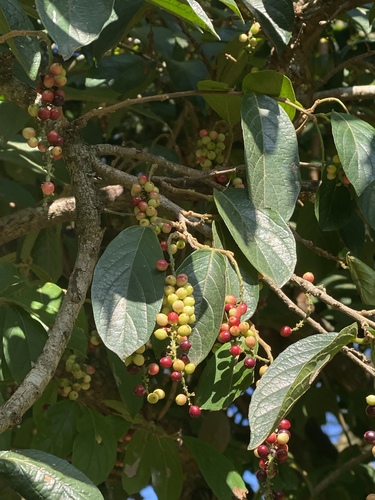
iNaturalist· cc-by-nc-sa
(c) Stefan Dressler, some rights reserved (CC BY-NC-SA)
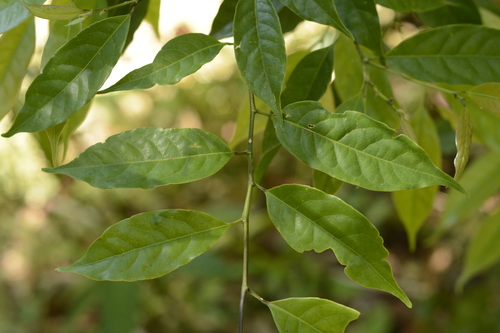
iNaturalist· cc-by-nc-sa
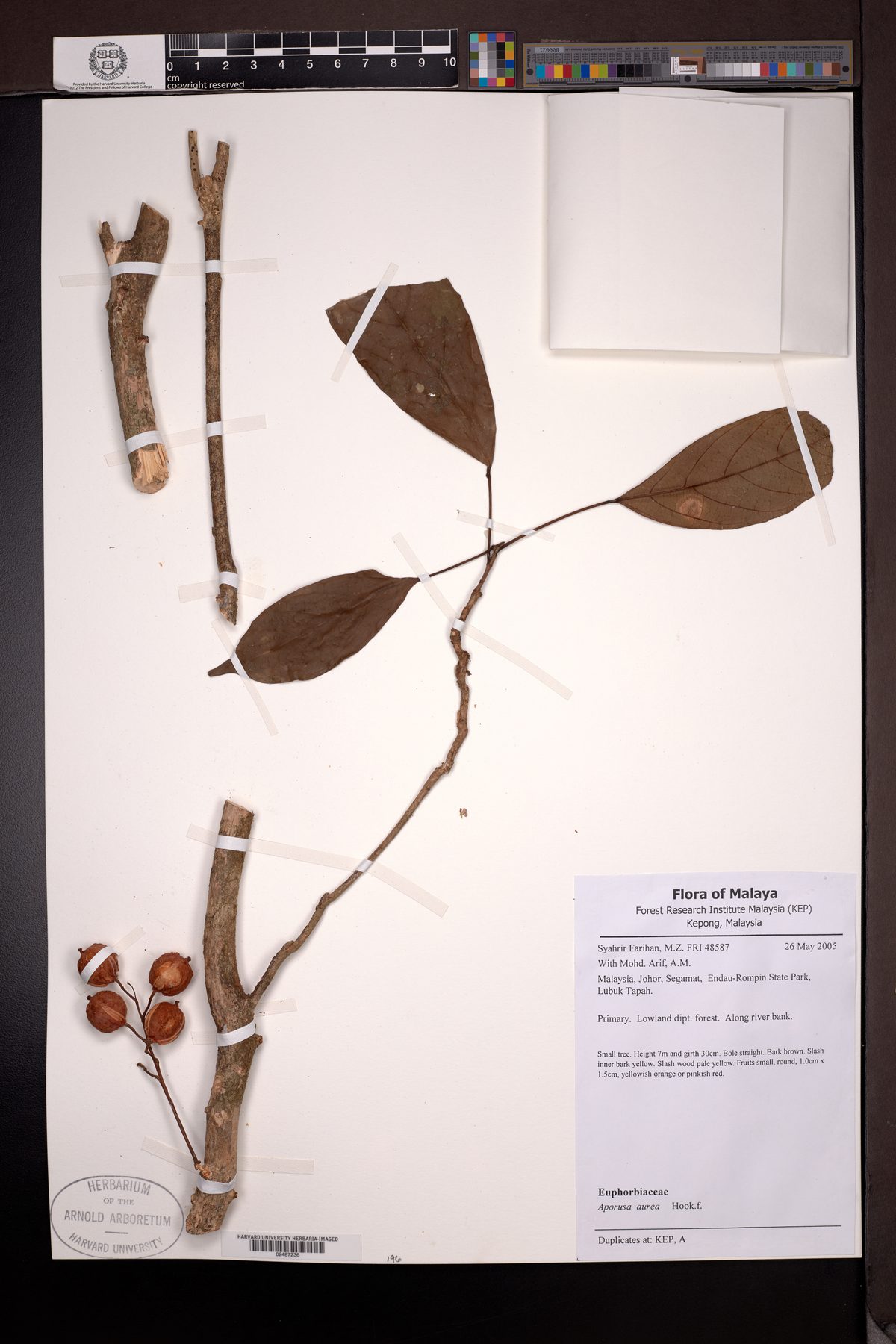
(c) Smithsonian Institution, National Museum of Natural History, Department of Botany, some rights reserved (CC BY-NC-SA)
Description
A shrub or small tree. It grows 6 m high. The leaves are narrow with scalloped edges. They are stiffly leathery. The flowers are in small clusters. They are yellow. The fruit have 2 cells. They are black, succulent and edible.
Edible Uses
The ripe fruit are eaten raw, especially by children.
Traditional Uses
The ripe fruit are eaten raw.
This uses section is brief — help expand it
Distribution
A tropical plant. It grows in the savannah in Guinea.
Where It Grows
Africa, Benin, Burkina Faso, Cameroon, Central Africa, Congo, East Africa, Ethiopia, Ghana, Guinea, Guinée, Kenya, Middle East, Nigeria, Southern Africa, South Sudan, Sudan, Tanzania, Togo, Uganda, West Africa, Yemen, Zimbabwe,
Other Information
The fruit are eaten especially by children.
Notes
There are about 60 Bridelia species.
Nutrition
| Part | Moisture | kJ | kcal | Protein | Vit A | Vit C | Iron | Zinc |
|---|---|---|---|---|---|---|---|---|
| Fruit | — | — | 5.7 | — | 24 | 2.6 | — | — |
| Leaves | — | — | — | — | — | — | — | — |
Synonyms
Also Known As
Ajega, Ba-Udiga, BuneGalday, Dayita-arba, Ekabolobolo, Emuduku, Erieco, Erweco, Eryeco, Haragjello, Hay birria, Kirni, Kizni, Larwece, Larweco, Orweco
References (25)
- Abbiw, D.K., 1990, Useful Plants of Ghana. West African uses of wild and cultivated plants. Intermediate Technology Publications and the Royal Botanic Gardens, Kew. p 46
- Acipa, A. et al, 2013, Nutritional Profile of some Selected Food Plants of Otwal and Ngai Counties, Oyam District, Northern Uganda. African Journal or Food, Agriculture, Nutrition and Development. 13(2)
- Addis, G., Asfaw, Z & Woldu, Z., 2013, Ethnobotany of Wild and Semi-wild Edible Plants of Konso Ethnic Community, South Ethiopia. Ethnobotany Research and Applications. 11:121-141
- Asfaw, Z. and Tadesse, M., 2001, Prospects for Sustainable Use and Development of Wild Food Plants in Ethiopia. Economic Botany, Vol. 55, No. 1, pp. 47-62
- Ashagre, M., et al, 2016, Ethnobotanical study of wild edible plants in Burji District, Segan Area Zone of Southern Nations, Nationalities and Peoples Region (SNNPR), Ethiopia. Journal of Ethnobiology and Ethnomedicine (2016) 12:32
Show all 25 references Hide references
- Berihun, T. & Molla, E., 2017, Study on the Diversity and Use of Wild Edible Plants in Bullen District Northwest Ethiopia. Hindawi Journal of Botany. Article ID 8383468
- Bircher, A. G. & Bircher, W. H., 2000, Encyclopedia of Fruit Trees and Edible Flowering Plants in Egypt and the Subtropics. AUC Press. p 66
- Burkill, H. M., 1985, The useful plants of west tropical Africa, Vol. 2. Kew.
- Daziel, 1937,
- Gallagher, D. E., 2010, Farming beyond the escarpment: Society, Environment, and Mobility in Precolonial Southeastern Burkina Faso. PhD University of Michigan.
- Gilbert, T., et al, 2017, Diversity and local transformation of indigenous edible fruits in sahelian domain of Cameroon. Journal of Animal & Plant Sciences Vol. 26 (2): 5289-5300
- Goode, P., 1989, Edible Plants of Uganda. FAO p 30 (As Bridelia scleroneuroides)
- Goode, P., 1989, Edible Plants of Uganda. FAO p 37
- Jardin, C., 1970, List of Foods Used In Africa, FAO Nutrition Information Document Series No 2.p 62, 123
- Lulekal, E., et al, 2011, Wild edible plants in Ethiopia: a review on their potential to combat food insecurity. Afrika Focus - Vol. 24, No 2. pp 71-121
- Martin, F.W. & Ruberte, R.M., 1979, Edible Leaves of the Tropics. Antillian College Press, Mayaguez, Puerto Rico. p 88, 191
- Masters, T., 2021, Traditional food plants of the upper Aswa River catchment of northern Uganda—a cultural crossroads. Journal of Ethnobiology and Ethnomedicine (2021) 17:24
- Moksia, F., et al, 2019, Diversity and Socio-Economic Value of Wild Edible Plants in the Mounts Mandara Region, Cameroon. International Journal of Sciences. Vol. 8:10
- Mutie, F. G., 2020, Conservation of Wild Food Plants and Their Potential for Combatting Food Insecurity in Kenya as Exemplified by the Drylands of Kitui County. Plants 2020, 9, 1017
- Mutie, F. M., et al, 2023, Important Medicinal and Food Taxa (Orders and Families) in Kenya, Based on Three Quantitative Approaches. Plants 2023, 12, 1145
- Ojelel, S. & Kakudidi, E. K., 2015, Wild edible plant species utilized by a subsistence farming community in the Obalanga sub-county, Amuria district, Uganda. Journal of Ethnobiology and Ethnomedicine. 11:7
- Ojelel, S., et al, 2019, Wild edible plants used by communities in and around selected forest reserves of Teso-Karamoja region, Uganda. Journal of Ethnobiology and Ethnomedicine (2019) 15:3
- Oryema, C., et al, 2013, Edible wild fruit species of Gulu District, Uganda. International Journal of Biology and Biological Sciences Vol 2(4) pp 068-082
- Peters, C. R., O'Brien, E. M., and Drummond, R.B., 1992, Edible Wild plants of Sub-saharan Africa. Kew. p 108
- World Checklist of Useful Plant Species 2020. Royal Botanic Gardens, Kew