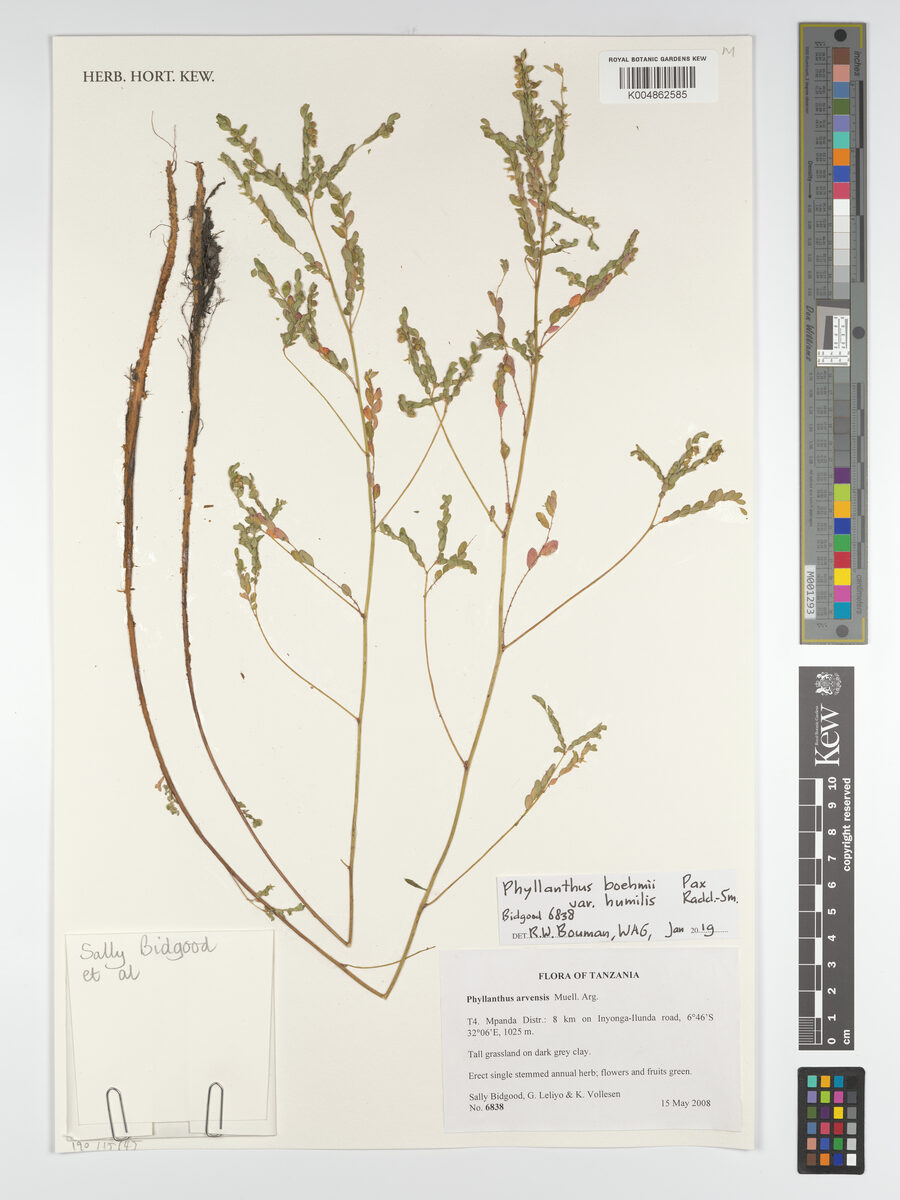
Bridelia tomentosa
Bl.
Kenidai
iNaturalist· cc0
no rights reserved, uploaded by 葉子
iNaturalist· cc0
no rights reserved, uploaded by 葉子
iNaturalist· cc0
no rights reserved, uploaded by 葉子
Description
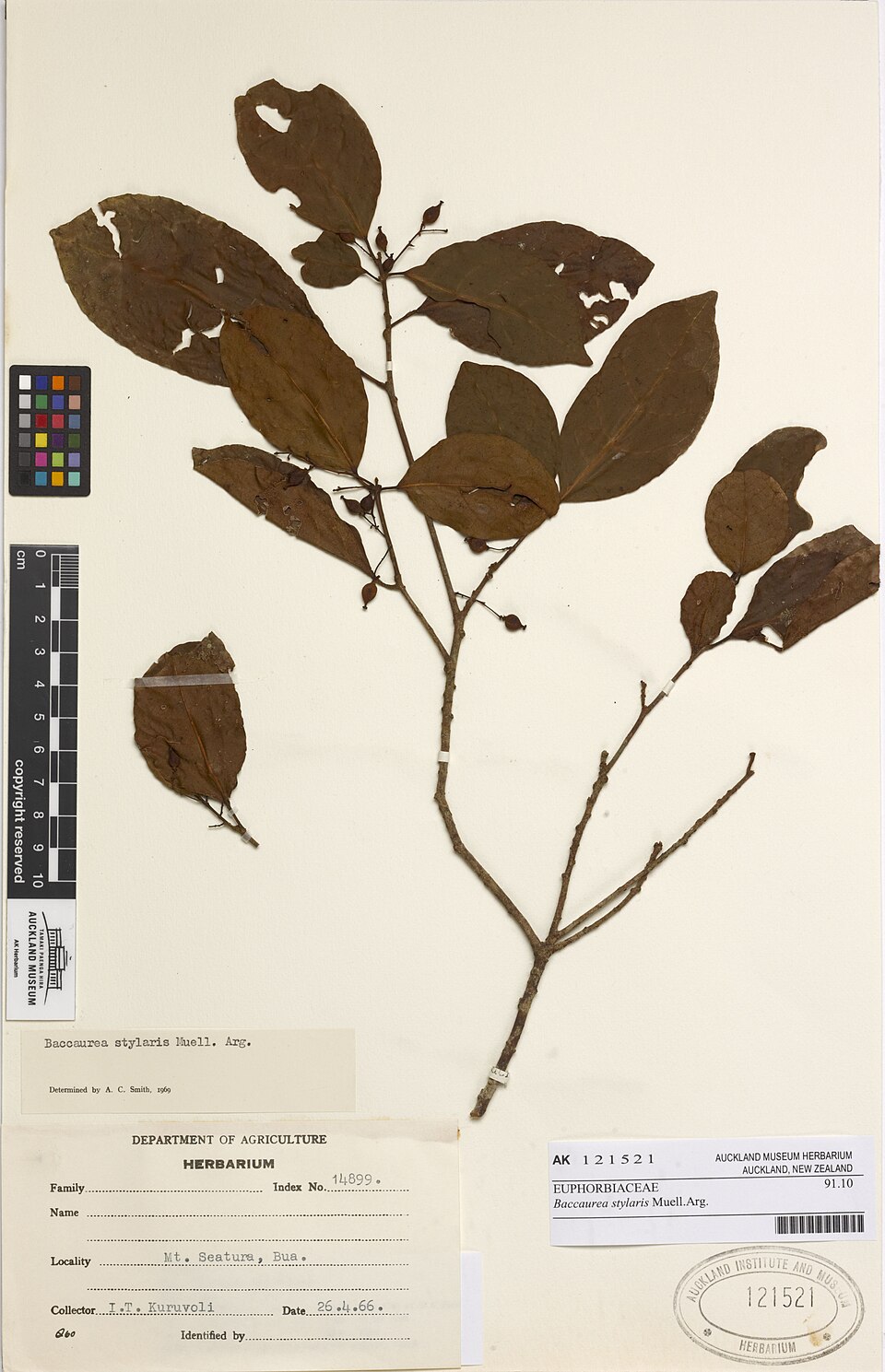
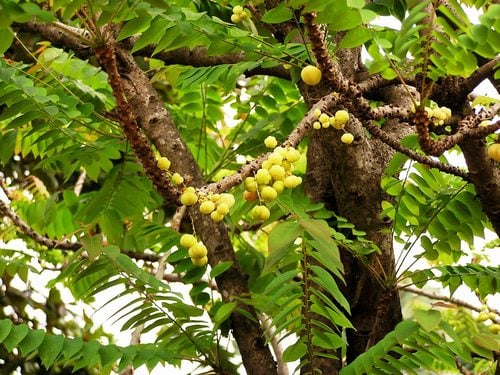
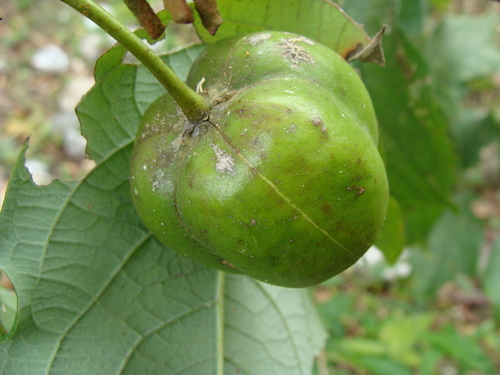
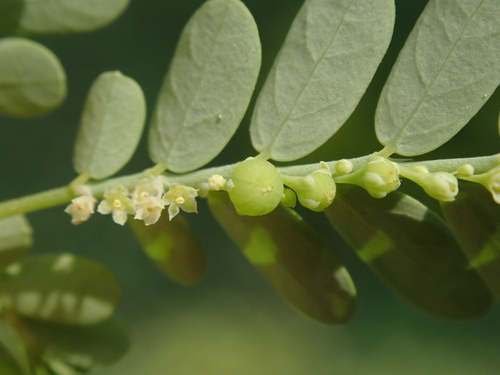
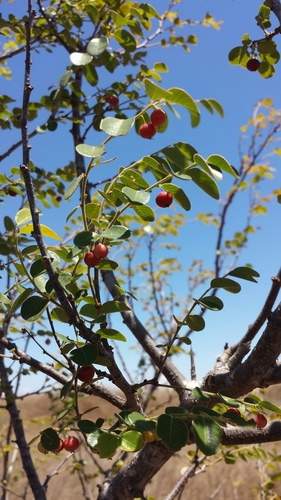
A small spindly shrub 2-3 m high. They can grow to 10 m high and be 2-3 m across. The young shoots are covered with short tangled hairs. The tree loses many of its leaves during the year. The bark is tight and smooth and mottled creamy-grey. The leaves are small and not shiny. The leaf shape and size varies considerably even on one plant. Leaves are 3.5-8.5 cm long by 1-5 cm wide. They are light green above and paler underneath. The leaf tip can be rounded or pointed. The veins are easily seen. The flowers are small and green. They can occur on their own or in small groups. It produces small berry like fruit along the twigs. The fruit are green when young and turn black when ripe. They are 0.4-0.6 cm across. These enclose one or two hard shelled seeds.
Edible Uses
The small ripe fruit are eaten raw and have been used in pepper.
Traditional Uses
The small ripe fruit are eaten raw. The fruit have been used in pepper.
This uses section is brief — help expand it
Medicinal Uses
The bark is astringent. It is used in the treatment of colic. The leaves are used in the treatment of colic.
Distribution
A tropical plant. It grows in open savannah grassland and in secondary regrowth. It grows in tropical lowland areas below about 450 m altitude. The plant occurs in countries from India to Australia. In Yunnan.
Where It Grows
Asia, Australia, Bangladesh, Bhutan, Cambodia, China, East Timor, Himalayas, India, Indochina, Indonesia, Laos, Malaysia, Myanmar, Nepal, Northeastern India, Pacific, Papua New Guinea, PNG, Philippines, SE Asia, Singapore, Taiwan, Thailand, Timor-Leste, Vietnam,
Cultivation
Plants grow wild. They can be grown from seed or cuttings.
Other Uses
The bark is a source of tannins. The bark is used to colour wood black. The seeds used by children as bullets in bamboo guns. The light olive-brown wood is hard and close-grained. It is suitable for baskets, carts, wheels, and tool-handles.
Production
In Australia they flower in March to May and fruit from April to June.
Other Information
A very minor edible fruit from wild plants in the Western Province of Papua New Guinea.
Notes
There are about 60 Bridelia species.
Nutrition
| Part | Moisture | kJ | kcal | Protein | Vit A | Vit C | Iron | Zinc |
|---|---|---|---|---|---|---|---|---|
| Fruit | — | — | 7.9 | — | 1 | 17.5 | 3.1 | — |
| Fruit | 78.5 | — | — | 3.2 | — | 22.2 | — | — |
Synonyms
Also Known As
Amam, Anbirlemanjwarre, Anngawokngawok, Baung-bin, Chinya, Dieng-soh-puetparao, Gandri, Kandri, Kang pla, Kanyere, Kenidai jantan, Lahpawk, Mindri, Patkunti, Seik-chi-nwe, Sirai, Thebihi
References (26)
- Ambasta S.P. (Ed.), 2000, The Useful Plants of India. CSIR India. p 87
- Bircher, A. G. & Bircher, W. H., 2000, Encyclopedia of Fruit Trees and Edible Flowering Plants in Egypt and the Subtropics. AUC Press. p 66 (As Bridelia monoica)
- Brock, J., 1993, Native Plants of Northern Australia, Reed. p 102
- Burkill, I.H., 1966, A Dictionary of the Economic Products of the Malay Peninsula. Ministry of Agriculture and Cooperatives, Kuala Lumpur, Malaysia. Vol 1 (A-H) p 369 (As Bridelia monoica)
- Cherikoff V. & Isaacs, J., The Bush Food Handbook. How to gather, grow, process and cook Australian Wild Foods. Ti Tree Press, Australia p 145 (As Bridelia monoica)
Show all 26 references Hide references
- Cherikoff V. & Isaacs, J., The Bush Food Handbook. How to gather, grow, process and cook Australian Wild Foods. Ti Tree Press, Australia p 145, 198
- Cooper, W. and Cooper, W., 2004, Fruits of the Australian Tropical Rainforest. Nokomis Editions, Victoria, Australia. p 175
- Cowie, I, 2006, A Survey of Flora and vegetation of the proposed Jaco-Tutuala-Lore National Park. Timor-Lests (East Timor) www.territorystories.nt/gov.au p 47
- Elliot, W.R., & Jones, D.L., 1982, Encyclopedia of Australian Plants suitable for cultivation. Vol 2. Lothian. p 381
- Facciola, S., 1998, Cornucopia 2: a Source Book of Edible Plants. Kampong Publications, p 100
- French, B.R., 1986, Food Plants of Papua New Guinea, A Compendium. Asia Pacific Science Foundation p 299
- Garde, M., et al, 2003, A Preliminary List of Kundedjnjenghmi Plant Names. Northern Land Council. (Arnhem Land, Australia)
- Kachenchart, B., et al, 2008, Phenology of Edible Plants at Sakaerat Forest. In Proceedings of the FORTROP II: Tropical Forestry Change in a Changing World. Bangkok, Thailand.
- Kar, A., & Borthakur, S. K., 2008, Wild edible fruits of Karbi's of Karbi Anglong district of Assam, India, Pleione 2(2): 175-181
- Kenneally, K.E., Edinger, D. C., and Willing T., 1996, Broome and Beyond, Plants and People of the Dampier Peninsula, Kimberley, Western Australia. Department of Conservation and Land Management. p 100
- Lazarides, M. & Hince, B., 1993, Handbook of Economic Plants of Australia, CSIRO. p 39
- Martin, M.A., 1971, Introduction L'Ethnobotanique du Cambodge. Centre National de la Recherche Scientifique. Paris. (As Bridelia monoica)
- Morley, B.D., & Toelken, H.R., (Eds), 1983, Flowering Plants in Australia. Rigby. p 134, 135 (As Bridelia monoica)
- Paczkowska, G. & Chapman, A.R., 2000, The Western Australian Flora. A Descriptive Catalogue. Western Australian Herbarium. p 244
- Roth, W.E., 1901, (As Bridelia monoica)
- Smith, M & Kalotas, A. C., 1985, Bardi Plants: An Annotated List of Plants and Their Use by the Bardi Aborigines of Dampierland, in North-western Australia. Rec. West Aust. Mus. 1985, 12(3): 317-359 (As Bridelia tomentosa var. glabrifolia)
- Specht, R.L., 1958, (As Bridelia monoica)
- Vigilante, T., et al, 2013, Island country: Aboriginal connections, values and knowledge of the Western Kimberley islands in the context of an island biological survey. Records of the Western Australian Museum Supplement 81: 145-182
- Wheeler, J.R.(ed.), 1992, Flora of the Kimberley Region. CALM, Western Australian Herbarium, p 596
- World Checklist of Useful Plant Species 2020. Royal Botanic Gardens, Kew
- www.nationalherbarium.nl/thaueuph/ Flora of Thailand.